
“Your child isn’t speaking? Don’t worry, there’s still time until the age of three.” “Two languages at once? The child will get confused.” “Still not speaking — maybe they need a massage?”
Sound familiar? Advice like this can still be heard when it comes to children’s language and speech development. Yet behind these simple and familiar explanations are often myths that modern speech and language therapy has long since challenged.
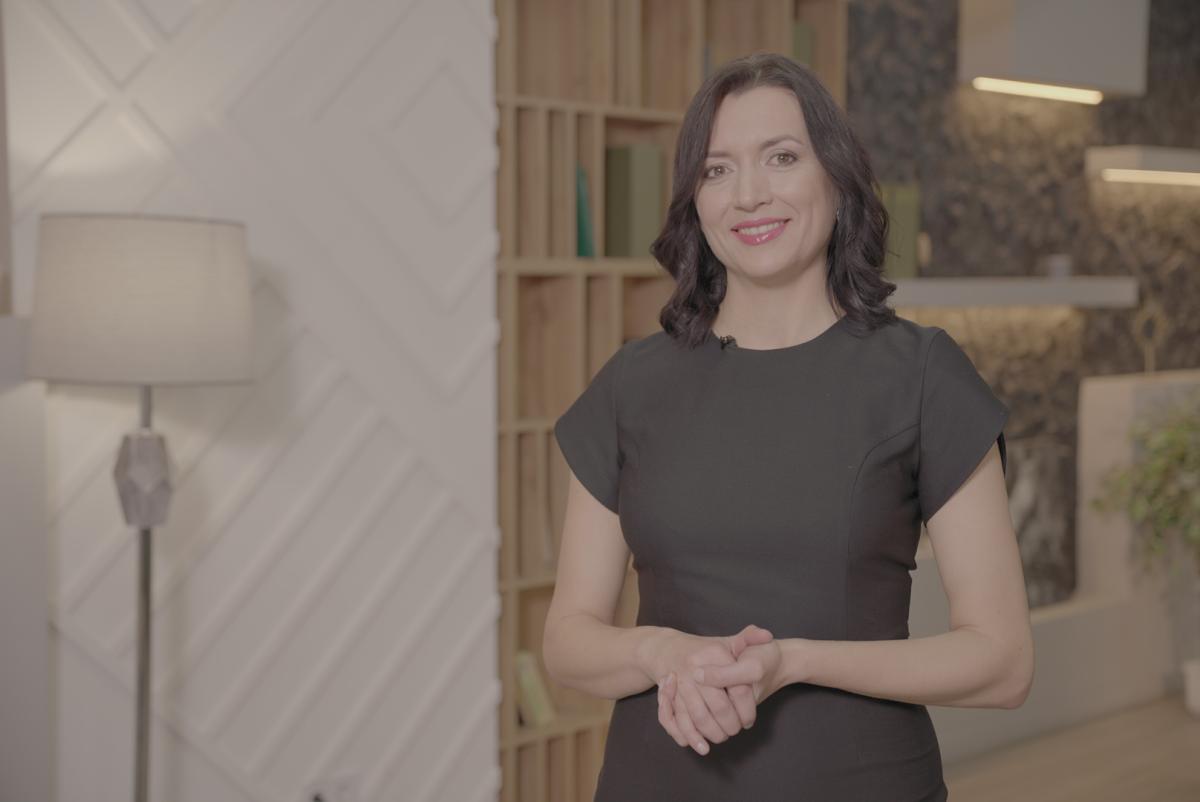
To understand how a child’s language actually develops, when we should start paying attention to that development, and why the ability to speak is only the “cherry on top” of a much more complex process, we spoke with Oksana Lialka, founder and chair of the Ukrainian Society of Speech and Language Therapy.
Oksana is a linguist by training, holds a PhD in cognitive science, and specialises in language pathology. She was a Fulbright scholar at the University of Colorado in the United States and has studied and gained academic and professional experience in the United Kingdom, Australia, Germany, Italy, and the Netherlands. Today, she is one of the professionals developing the speech and language therapy profession in Ukraine and helping to build a new professional community around it.
Our conversation went far beyond the topic of a child’s first words. We talked about language, speech, and the right to communicate. About environments that can support development — or, conversely, restrict it. About war, digital devices, preschool, artificial intelligence, and technology. And most importantly, about how to give a child the opportunity not simply to speak, but to be heard.
A Profession That Did Not Yet Exist in Ukraine
Ms Lialka, for many years the Ukrainian Society of Speech and Language Therapy has brought together professionals working to develop the profession and introduce modern approaches to speech and language therapy. How do you see the mission of your organisation today and its role in developing this field in Ukraine?
Our organisation was established in 2018 to introduce and develop the profession of speech and language therapist in Ukraine in line with the best standards of developed countries, so that Ukrainian adults and children with communication and swallowing disorders could receive high-quality care.
One of the main factors behind its creation was the war, which has been ongoing since 2014, and the servicemen who, as a result of head injuries, experienced difficulties with communication and language use, speech disorders — including functional speech disorders (what is often referred to as logoneurosis) — swallowing disorders, cognitive disorders, and other difficulties. Our initial motivation was therefore to give them the opportunity to communicate again, or to achieve the greatest possible level of independence in communication and safety in swallowing.
But the need for these services is much broader and is not limited to servicemen or even to adults. Speech and language therapy covers people of all ages — from prematurely born babies to older adults.
When was the Ukrainian Society of Speech and Language Therapy established? And what was the situation with this profession in Ukraine at the time?
The organisation was established in December 2018. At that time, Ukraine did not yet have a regulated profession of speech and language therapist, and there was essentially no understanding of what the profession encompassed. A number of disorders, including swallowing disorders, were not covered by existing services at all. Yet swallowing disorders do not merely affect quality of life; they can be life-threatening. If food or liquids enter the airway, a person can die, and there are many such deaths. For example, approximately 60% of people in intensive care die not from their primary condition, but from a swallowing disorder.
And this is where it is important to look at the name itself — speech and language therapist. Although the title refers to speech and language, the profession covers a much broader spectrum of disorders.
We look not only at speech, but also at language, voice disorders, communication pragmatics — in other words, social interaction — and cognitive functions that are important for communication, among other areas. Overall, we are talking about a whole range of functions and possible disorders for which, at that time, we essentially had neither appropriate services nor an understanding that such support was possible or what it should look like.
Rehabilitation had been developing actively in Ukraine since 2014, but it was focused primarily on physical therapy and occupational therapy. Communication and swallowing disorders, as well as cognitive impairments related to communication, remained outside the focus of the rehabilitation movement.
Our mission, therefore, was to establish within the healthcare system a profession that would work with this range of disorders and support people across different age groups.
Over the years, the Society has already come a long way. Which projects and changes do you consider the most important results of your work?
One of our main objectives was to establish the profession of speech and language therapist as an independent healthcare professional with appropriate regulation.
Today, this profession exists, and a speech and language therapist can assess the full spectrum of communication and swallowing disorders and determine not only whether a disorder is present, but also its nature, and then plan and provide the appropriate intervention.
For example, if a person does not speak, it is important to understand why: Are they unable to articulate what they want to say? Are they unable to initiate a message? Do they have no voice? Or are they unable to find the word they need? The next step for the speech and language therapist is to identify the mechanism underlying the disorder. Based on that mechanism, the therapist works together with the patient and/or people in their environment to plan an appropriate intervention that will enable the person to achieve the highest possible quality of life.
The same applies to children. A specialist needs to determine whether the child has a developmental disorder or a delay affecting language, speech, pragmatics and social interaction, voice, cognitive functions, or another area. Then, depending on the nature of the difficulty, the specialist can propose therapy together with the parents, educators, and other important people in the child’s environment.
Of course, speech and language therapists do not work in isolation — they are part of a team. But for us, it was extremely important to establish in the regulatory framework that there is a professional responsible for this whole range of disorders.
The profession has passed through several important milestones: in 2020, the profession of speech and language therapist was introduced by the Ukrainian Law “On Rehabilitation in Healthcare” as a mandatory member of the rehabilitation team; in 2021, the relevant requirements were included in the service packages of the National Health Service of Ukraine (NHSU); in 2023, qualification requirements were approved; in 2024, an educational standard was introduced; and in 2025, a professional standard was adopted, replacing the previous qualification requirements.
Our organisation was actively involved and served as one of the leaders and initiators at each of these stages. We also participate in developing standards of care for various conditions, including the standard of care for children with cerebral palsy and the rehabilitation standard for prematurely born children, among others.
You speak a great deal about the profession itself. Who can become a speech and language therapist in Ukraine today?
Today, becoming a speech and language therapist requires completing a master’s degree programme. Professionals with qualifications in speech therapy, philology, or psychology can enter the master’s programme. There are some indications that this list may be expanded, but for now these are the three main categories.
Ukraine’s first master’s programme in speech and language therapy is currently running at Ivano-Frankivsk National Medical University. Its first year has now been completed. And from our experience, I can say that even professionals who entered the programme confident that “I’ve worked in a hospital for many years and I know what this profession is” gradually realised how much they needed to learn in a completely new way.
It really is a complex and new field that had not previously developed in Ukraine and requires an appropriate level of professional preparation at the undergraduate level.
Does this profession exist in other countries? What international experience did Ukraine draw on?
Yes, of course. We are not reinventing the wheel. Our mission and our task are to establish in Ukraine a profession that has long been established abroad and to synthesise the best international experience.
To some extent, this is also connected to my personal experience. I had the opportunity to study in the United States, the United Kingdom, Australia, Germany, Italy, and the Netherlands, and I saw the differences in how each country approaches language disorders. Switching between different schools of thought and approaches was quite a challenge for me, but at the same time, it gave me the opportunity to see the strengths and weaknesses of each of these schools within elite academic environments.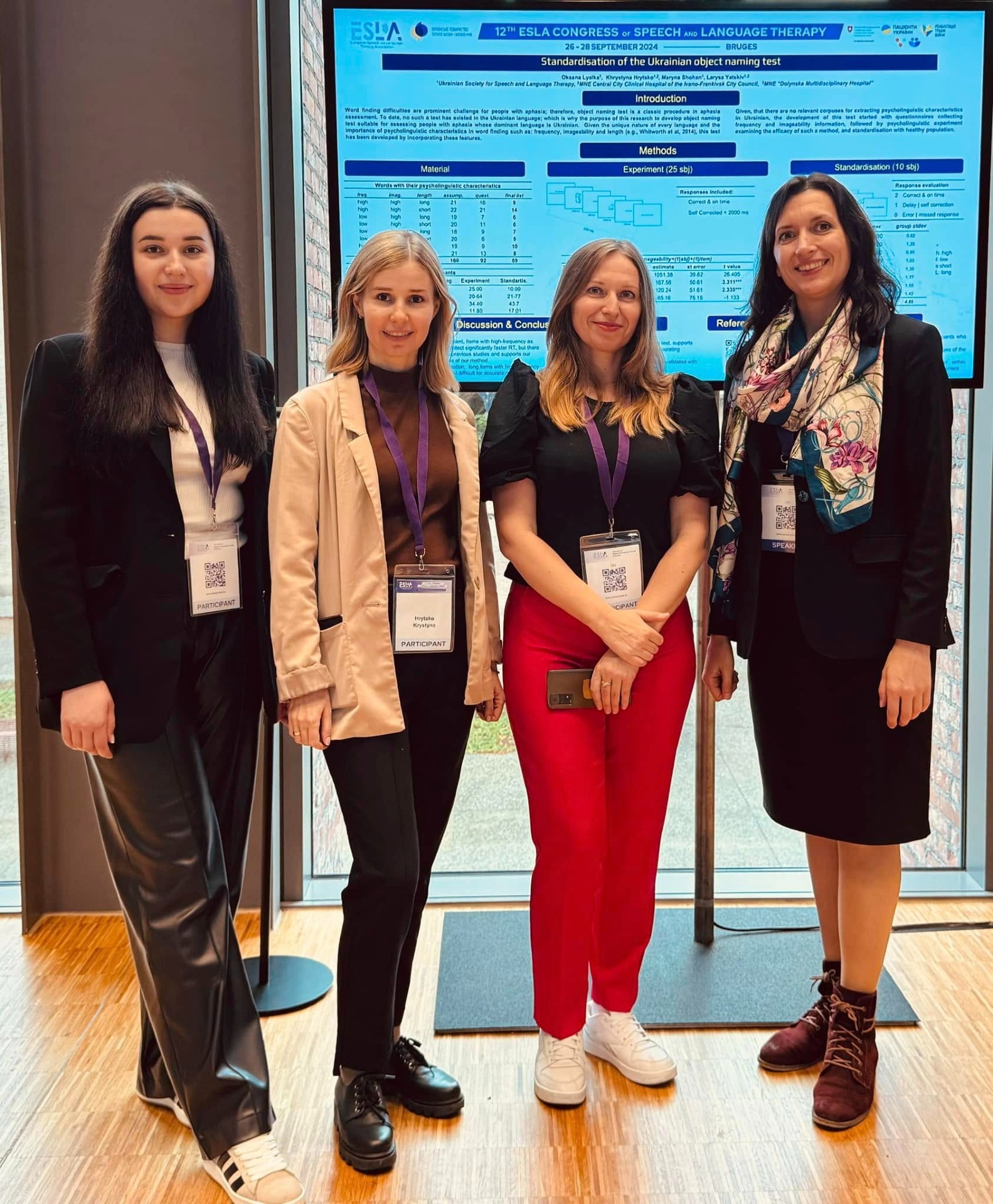
When I returned to Ukraine after my studies, I wanted to bring here at least part of the world of speech and language therapy that I had seen abroad. It was this synthesis of different experiences that became the foundation for establishing the profession in Ukraine. We did not create something entirely new — we brought together the best elements of different countries’ experience and laid the foundations for the development of speech and language therapy in Ukraine.
“Don’t Wait for the Child to Start Speaking”: Language Development, Communication and Common Myths
Moving directly to child development, which myths about language, speech and communication do you find yourself having to debunk most often as a specialist?
Oh God, I don’t even know which myth to start with.
The first one is that if a child is not speaking, they need a massage. Let’s forget about massage for at least five years. Let massage therapists do massage. Language development is not about massage.
There is, for example, a practice of performing massage with special metal instruments known as speech therapy probes. But massage does not develop language, because language is the product of complex processes in our brain, whereas massage has a mechanical effect on the tongue or face without stimulating those areas of the brain.
And this brings us straight to another important point: we very often talk only about speech. But there is a clear distinction between language and speech.
Language is a cognitive function. When we say, “I know Ukrainian,” “I know English,” or “I know Polish,” a particular network of neurons has formed in our brain that enables that language to function. Importantly, these networks are not random; they have a particular structure, and science has already made considerable progress in understanding how they work and how they can be influenced.
Let me explain with a very simple example. I see a pen and a pencil. I need to distinguish why this is a pen and that is a pencil. When my brain makes that choice — “pen” rather than another word — when the correct word, sentence and linguistic information are formed, that is language.
Once that linguistic information is ready and I want to communicate it orally, the process of motor speech begins. The brain sends signals to the articulatory system, and the muscles have to work in a coordinated way so that I can say the word “pen”. That is speech.
That is precisely why our field is called speech and language therapy. These are two major parallel domains, and we cannot say that one is more important than the other.
But today the profession is not limited even to language and speech. There is also communication — the way people interact with one another.
A person may have a language or speech disorder and still be able to communicate. We say: the absence of language does not mean the absence of a message. Even if a child cannot say or articulate a word, they can still communicate, because communication is interaction. But to make that interaction possible, we need to involve the people in the child’s environment and teach them appropriate ways of communicating with the child.
So when someone says, “The child isn’t speaking,” we cannot mix everything together into one big “salad”. We need to distinguish clearly what exactly is preventing the child from speaking: is it language, speech, communication, or something else?
Once we understand the mechanism, it becomes clear why, for example, massaging the tongue cannot build an appropriate vocabulary in a child with neurodevelopmental differences affecting language. Or why it is inappropriate to “teach language” if a child has a disorder affecting the pragmatics of communication.
Another very common myth is that you should wait until the age of three or four and the child will start speaking on their own.
In fact, language begins to develop not after birth, but even before it. During pregnancy, around the third trimester, processes related to language perception already begin. The baby hears the mother’s voice, can distinguish it from other voices, and hears the voices of people close to the mother, as well as music.
So when a child starts speaking, this is not the beginning of language development. It is the completion of the first major stage of that development.
By the end of the first year, important stages in the development of the articulatory system of the child’s native language take place, while the core language system is formed approximately by the age of five or six. So waiting until the age of three or four before starting to pay attention to language development is far too late.
There is another myth that is particularly relevant today for Ukrainian families living in different countries: that a child should first begin speaking one language, and only then be introduced to another, because two languages supposedly delay development.
That is not true. Developing two languages in parallel does not in itself mean a developmental delay — quite the opposite.
A child may begin speaking orally somewhat later because their brain is processing a larger and more complex amount of information. But starting to speak later does not automatically mean that the child has a developmental delay.
Their brain is effectively developing networks that support the functioning of two languages. Naturally, this is a greater load and may require more time. The other extreme is trying to expose a young child to three, five or ten languages at the same time. This may be difficult for the child, but again, it does not mean that they have a developmental delay.
Another very important myth is that using augmentative and alternative communication (AAC) slows language development or prevents a child from learning to speak. AAC includes different methods that help a person communicate when spoken communication is unavailable or limited. These can include gestures, images, pictograms, buttons and various digital tools.
The claim that using these methods interferes with language development is false. On the contrary, alternative forms of communication can support its development. But there is another uncomfortable issue here. For AAC to work, people in the child’s environment need to use it as well, because a child cannot communicate with themselves using these tools. And most people in their environment are not prepared to do that.
A child may simply repeat words after you without understanding what they are repeating. Alternative communication tools, however, make it possible to establish the first stage of communicative interaction: joint attention, interaction, engagement, the child’s active participation, and the intention to communicate something.
A child needs to participate actively, interact with other people and be socially engaged. They need to know how to ask for something, how to say “no” or “yes”, how to make a choice and communicate it to another person. At the same time, the people around the child need to know how to communicate with them, because communication is possible without language, but it is impossible without people to communicate with.
Some children are physically or physiologically unable to communicate through speech in the way we do. For them, alternative forms of communication are a way to maintain social participation. Otherwise, a child may become socially isolated, which can prevent them from fully participating in education, interacting with others and developing.
So alternative communication is not an enemy. It is a friend. I would even say that it is a kind of first aid for communication.
First, we give a person the ability to communicate and interact here and now. Then we work on other possibilities.
Another myth is that if a child is not speaking, you need to work only with the child. That is also incorrect. Communication requires the involvement of other people. It is not enough to focus all our attention solely on the child and wait for them to start speaking. We need to make communication accessible to them here and now.
This is where so-called communication partners — the people in the child’s environment — have a major role and responsibility. These include parents, peers and preschool educators. If there is a child with a communication disorder in a group, it is important to organise the environment so that the other children can interact with them as well.
In other words, we need to create a communication-accessible environment.
I often explain it this way: if inclusion for a physical disability means a ramp, then for a communication disorder, inclusion is also you and me. It is the person’s environment.
No matter how effective, high-quality and professional the therapy is, if the people in the child’s environment do not communicate with them, that therapy will never be sufficiently effective.
When I worked with patients, I always divided the work conceptually into three equal parts. One third is the specialist. If the specialist does not work effectively, there will be no result. The second third is the person themselves: how engaged and motivated they are, and how actively they participate in the process. And the third, equally important part is their environment: family, loved ones and friends — and in the case of a child, parents, educators and peers.
When this three-part “pie” comes together, we can talk about effective communication and interaction. But if only the specialist is doing the work while everyone else simply waits for a result, the therapy will not be effective.
That is why we also need to assess the communication environment: how parents communicate with the child, how the educator interacts with them, how communication with peers is organised in preschool, and what barriers prevent the child from participating in social life.
We need to communicate with the child in a way that is accessible to them here and now. We need to be able to come down to the level of their development and communication abilities so that they can grow together with us.
You mentioned developmental delay and developmental language disorder. What is the difference between them? And is it really true that more children are experiencing these difficulties today?
There is indeed a tendency to say that the number of children with language delays or developmental language disorders is increasing. But first of all, I would distinguish between a delay and a disorder.
Developmental language disorder is when neurodevelopmental differences lead to atypical development of language or some of its components. A developmental delay is when a child’s language develops in the same way as that of other children, but more slowly. In other words, the child acquires certain language competencies later than their peers.
And here we have an important problem: in Ukraine, it is very difficult — in fact, virtually impossible — to speak objectively about trends over the past ten years, apart from expert observations.
We do not have standardised corpora showing the ages at which language skills are acquired, and consequently we do not have a standardised base of tests and assessments that would allow us to clearly identify what falls within the norm and what constitutes a disorder, and then compare these data over time.
There are specialists who have undergone additional training and use certain scales. There are translated tests and individual tools that are used, for example, in cases of autism spectrum disorder (ASD) or other conditions. But there is no systematic framework specifically from the perspective of speech and language therapy.
For our master’s programme, we purchased a wide range of paediatric assessment tools for different age groups. But even if I want to say objectively whether a three- or four-year-old child has a language delay or a developmental language disorder, we need to launch a series of studies, beginning with the development of appropriate corpora that would provide information about the ages at which children acquire particular words.
Ukraine does not currently have such a comprehensive corpus. So we can speak about our own observations, but this often leads to language delay being interpreted as developmental language disorder.
When there is no sufficiently thorough assessment, it is very easy to confuse a language delay with a developmental language disorder.
The Environment a Child Grows Up In: War, Digital Devices and the Role of Preschool
Today, Ukrainian children are growing up amid war, constant stress, air-raid alerts, displacement, and sometimes even a forced change in their language environment. How can all of this affect a child’s language, speech and communication development?
Stress can affect a child’s development. If a child is under constant stress, it can lead, for example, to delayed language development.
Other difficulties may also arise: feeding and swallowing disorders, functional speech disorders — for example, stuttering associated with a particular stressful situation. There may also be mutism, when, for psychological reasons, a child stops speaking in certain situations or environments.
So stress can manifest itself in different ways. And it is important to remember that a child’s safety should be one of our priorities.
Under stressful conditions, adults themselves are often exhausted, and it becomes very easy to give a child a phone or put on a cartoon to keep them occupied. But from a developmental perspective, it is important to minimise the impact of constant stress as much as possible and to maintain active, face-to-face interaction with the child.
You have mentioned phones several times already. How much do digital devices actually affect the language, speech and communication development of preschool children?
I believe that for preschool children, phones are harmful. Of course, today we cannot completely remove technology from our lives. We live in a world of technology, and children will inevitably interact with it. The real question is: what is the child doing with the device, and how active do they remain while using it?
Today, we can see that even countries that actively embraced digitalisation in education are reconsidering their approaches. For example, in Sweden, digital tools are no longer mandatory in school education. For the youngest children, the emphasis is shifting back towards analogue resources — books, reading, play and physical activity — while the use of digital tools is being significantly restricted. Germany also has recommendations to substantially limit screen time for young children.
For me, the important point here is the overall trend: we are beginning to understand that digitalisation should not automatically mean putting a child in front of a screen as early as possible and for as long as possible.
The problem with a phone or tablet is that very often the child becomes a passive consumer of information. They watch a cartoon or video and receive an enormous amount of visual and auditory information, but they themselves are not actually doing anything.
Development happens through activity and engagement. I always give a very simple example. You can watch a video on how to bake a cake a hundred times. But if you never try to bake one yourself, you will not learn how to bake a cake. The same applies to language and communication.
A child may watch a cartoon in which people talk a great deal. But that does not mean that the child is learning to communicate at that moment. Communication requires interaction: someone says something and the child responds; the child says or shows something and another person responds; the child makes a choice, asks a question, disagrees, requests something, or attracts someone’s attention. It is through this process that communication develops.
So for me, the key question is not only how much time a child spends looking at a screen, but also what that screen has replaced in the child’s life.
If it has replaced talking with their mother, playing together, going for a walk, interacting with other children, or actively exploring the world, then it becomes a problem.
So the problem is not so much the technology itself, but rather the child’s passivity?
Yes. Technology itself can be extremely useful. We have already talked about alternative communication and digital tools that enable a person to communicate.
The question is what we use technology for. If it helps a child to be active, interact, complete tasks, make choices and communicate, that is one situation. If it turns the child into a passive consumer of content, that is an entirely different one.
A child should be an active participant in communication.
What role do preschool and, more specifically, the educator play in this process?
A huge one. I would say that preschool has several very important functions.
The first is the child’s active development. A child should not be passive. They need to do things, interact and explore. In fact, I believe that a child’s passivity is the greatest enemy of their development. A child needs to be physically, communicatively and cognitively active. They need to be engaged in what is happening around them.
The second extremely important function of preschool is socialisation. Within the family, a child communicates mainly with adults and people close to them. Preschool gives them the opportunity to interact with their peers. And that is a completely different type of communication. A child needs to learn how to ask for something, negotiate, say “no”, ask for help, explain what they want, and sometimes wait. They may want the same toy as another child and need to find a way to resolve that situation. This creates an enormous number of communication situations that cannot be fully replicated at home.
And the third function is intellectual and cognitive development.
So preschool is not simply a place where a child stays while their parents are at work. It is an environment where they should have opportunities for active development, interaction, communication and learning. And the educator plays a central role here because they are largely responsible for organising that environment.
What practices can educators use every day to support children’s language and communication development?
From the perspective of speech and language therapy, the main principle for me is very simple: the child needs to be an active participant in the process.
This activity can be motor, verbal or cognitive. It is not so important what we call the particular exercise. What matters is that the child is not simply sitting and passively listening to an adult.
For example, if an educator is reading a book, the child does not have to simply listen. The educator can ask questions, ask the child to point something out, invite them to predict what will happen next, discuss a character, or give them an opportunity to express their own opinion.
In other words, any activity can be organised in a way that keeps the child actively engaged in interaction. And that is probably the main principle: not turning the child into a passive recipient of information, but creating conditions in which they act, respond and interact themselves.
Technology and Artificial Intelligence: Where They Help and Where They Create Risks
Let’s talk about artificial intelligence. Do you see potential for AI in speech and language therapy today? What opportunities does it offer, and what risks can it create?
There are both positive and negative aspects. The positive side is when we use artificial intelligence wisely — for example, to generate stimuli for therapy. We can generate images, which can be quick and inexpensive. We can give it a specific task, such as generating a set of sentences or words. Of course, any material generated by artificial intelligence must always be reviewed and adjusted.
So if AI is used by a specialist who clearly understands exactly what they need and can use it to build up a particular set of stimuli, tasks or materials for their work, then it can have a positive impact.
But if we use artificial intelligence as a source of information, there is a certain danger. It generates information based on a vast number of sources, but it is not always able to distinguish high-quality information from poor-quality information.
And, of course, we cannot use artificial intelligence as a guide for how to support the development of my particular child.
Today, people often ask ChatGPT: What should I do in this situation? What should I do in another situation? But in this sense, artificial intelligence cannot be an assistant that we rely on completely. It can make quite serious mistakes and lead us in entirely the wrong direction.
So if we use it as a tool in the hands of a specialist who understands what they are doing, that is one thing. If we use it as a source of ready-made solutions for the development of a particular child, that is already a risk.
Is it possible today to practise speech using mobile apps or digital platforms? Have you encountered such solutions in your own practice?
We have mostly been talking about language or speech development, but there are also children who, for physiological reasons, cannot develop spoken communication to the level at which you and I use it.
In such cases, augmentative and alternative communication (AAC) tools are used. And here, technology is undoubtedly extremely important because it becomes a direct tool for communication.
For example, together with programmers from Harmonic Advance, we developed the ViTA digital platform for the treatment of language impairment (aphasia). The platform allows users to actively complete specific therapeutic tasks.
When we talk about therapy, one of the key principles of functional therapy is repeated practice of the same type of task. When we know exactly which task a particular child or adult needs, repeating that task many times becomes important.
Providing such intensive therapy solely through repeated visits to a specialist can be expensive. High-quality therapeutic platforms and apps allow part of this work to be done at home — just as systematically, but more affordably.
Technology also opens up significant opportunities for communication itself. For example, in Ukraine, the NGO “Hovory!” actively develops augmentative and alternative communication and provides training for different groups, including educators. One example is their app “Ya Kazhu”.
A person who cannot communicate through speech can type or prepare a message in advance, and the app will voice it.
There is also TippyTalk, an alternative communication app that allows a person to create messages using images and pictograms. The completed message can then be voiced or sent to another person.
Another excellent example is an eye tracker — technology that tracks a person’s gaze. A camera detects eye movements, allowing the person to select symbols or response options on a screen simply by looking at them — for example, “yes”, “no”, or a particular image.
This is especially important for people with severe physical impairments, including some children with cerebral palsy, who may not be able to use spoken communication or physical movements in the way we do.
If these technologies are integrated into communication correctly and at the right time, they can fundamentally change what a person is able to do — enabling them to learn, interact with others, participate socially and, later, fulfil their potential.
So in this context, digital devices are undoubtedly useful. But if we are talking about cartoons and a child constantly sitting with a phone, that is an entirely different story and has an entirely different impact.
So digital devices, platforms and mobile apps can be used as tools to help a child who needs them. But if there is no such need, their use should be managed so that the child remains open to communication, stays active and spends less time with digital devices?
Yes. And here it is important to understand the difference between technology that replaces a child’s activity and technology that enables them to be active and communicate.
For children who, for physical or physiological reasons, cannot communicate in the way that is usual for us, alternative communication tools may be the best way to maintain their social participation. Otherwise, a child may become socially isolated, and this affects their opportunities to learn, develop and interact with other people.
So in this case, technology does not take communication away. It makes communication possible.
Where to Seek Help and What Parents Should Remember
If parents notice certain difficulties in their child’s language, speech or communication development, can they contact the Ukrainian Society of Speech and Language Therapy directly? Do you help families find a specialist?
We are an NGO that brings together professionals working in different institutions. Not all members of the Society are currently certified speech and language therapists, as the process of establishing the profession in Ukraine has only just begun.
When parents or adults who need support contact us, we can share their request within the Society and find out which specialists may be able to help. Sometimes the person’s place of residence is important; sometimes they are looking for a particular institution where they can receive services as part of rehabilitation. So we share the information with our specialists and, if someone is able to work with that child or adult, we help find an appropriate option.
And to conclude the professional part of our conversation: what would you like to say to parents who are facing certain challenges in their child’s development?
A child has the right to be happy, and for that, they need to feel safe and supported, and to be heard.
Whatever difficulties that child may have, they can be happy. It does not depend on their level of language or speech functioning. It depends on how we organise the environment around them.
And this is perhaps the primary mission and responsibility of parents — to do everything they can to make sure their child is happy.
🎭 Behind the Profession
At the end of each interview, we ask our guests a few personal questions that allow us to discover a different side of them — beyond their professional work.
What is your favourite children’s book — and why?
I like fairy tales that have a moral. For example, there is a fairy tale by the Brothers Grimm about a fisherman that I really like. I think it is a story that both children and adults can read.
For me, it is about how each of us is given a chance, but what matters is not to misuse it and to make the most of it. If life gives you an opportunity, you should use it to the fullest.
What advice would you give to your younger self?
To spend more time on myself. To live in the moment and enjoy it.
What might surprise our readers about you outside your professional life?
I have a fear of deep water, so I signed up for scuba diving lessons. I completed the training and even managed to enjoy the underwater world of the Pacific Ocean off the coast of Sydney.