Early childhood education is constantly evolving. Alongside these changes, the role of the teacher, educational approaches, and the responsibilities of leaders are also transforming. How do kindergarten communities experience these changes? What challenges do leaders and educators face in their daily work?
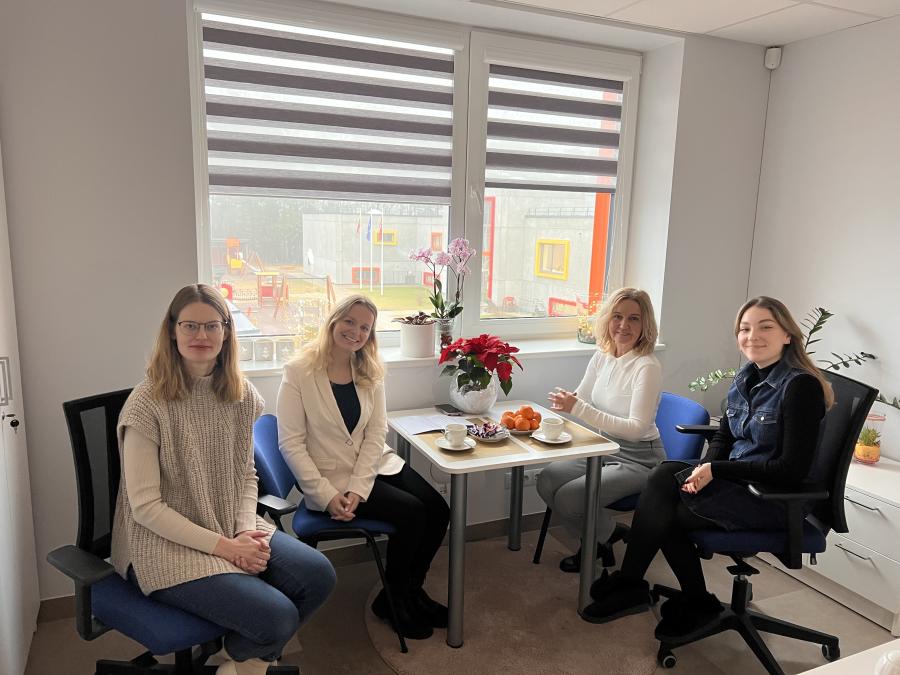
We discuss these topics with Agnė Ščebedienė, the head of Vilnius Kindergarten “Bajorėlis”, and teachers Šarūnė and Agnė. The conversation reveals the leader’s experience, her approach to teamwork and educational organisation, while the teachers’ insights provide a closer look at the educational process from their everyday perspective.
A Leader’s Journey: Experience and Everyday Challenges
Could you introduce yourself and tell us how long you have been working as a kindergarten leader?
I have been working at this institution for two years. During this time, I have experienced many different situations – both successes and challenges. A leader’s work is a continuous process of problem-solving, which also involves building a team, organising processes, implementing changes, and taking responsibility.
When everything seems calm, new situations soon emerge that need to be addressed – once one problem is solved, another one is already waiting. I see this as a natural and inseparable part of this role. A problem is a challenge that opens opportunities for growth, decision-making, implementation, and gaining experience.
Before becoming a leader, I worked as a deputy head for education for 18 years, so I have a strong understanding of the education system. However, becoming a leader brought new experiences and responsibilities. The most important thing in this work is the ability to remain calm in difficult situations and make the best possible decisions. After all, this work is about serving others, and I take responsibility for everyone.
Why did you choose the field of education?
I started my career as a teacher. I really enjoyed working with children – it brings many positive emotions. Even during challenging moments today, children remind me why I chose this profession.
I worked directly with children, later taught pedagogical knowledge to childcare workers, and after becoming a deputy head for education, I worked with teachers. I realised that as a leader, I could achieve even more – not only by taking action myself, but also by empowering others to create change.
What matters most to me is that everyone feels well: children, teachers, and staff. This naturally raises the question of what the word “well” actually means. When does a child feel good in kindergarten? When does a teacher feel good at work? Everyone may understand this concept differently.
I strive to create an environment where children feel happy and secure, and where teachers feel motivated, empowered, and able to pursue their goals.
What have been the biggest challenges you have faced throughout your career?
The first challenge was starting work in a new institution. The team was still forming, and I did not know the employees, so we had to adapt to each other – the team had to accept me, and I had to get to know and understand them.
At times, I had to deal with many different issues simultaneously – from employee-related matters to educational organisation. Often, a planned day would take a completely different direction, so I had to learn to react quickly and identify the most important priorities.
Over time, I understood that a leader must maintain a certain boundary – the team always sees you as a leader, regardless of everyday communication and relationships.
Motivation and Working with People
What do you enjoy most about your work?
What I enjoy most is the process itself – the opportunity to solve different situations and see real results. I like seeing how decisions contribute to the growth of the kindergarten and the strengthening of the team.
Decision-making and problem-solving are important parts of my work. Equally important is working with people and maintaining a connection with children. Communication with children motivates me, gives me a sense of purpose, and helps me stay connected with the educational process.
How do you build the kindergarten team?
For me, it is important that a person does not simply come to work, but genuinely wants to be there. Values and attitudes are extremely important to me. During recruitment conversations, I assess whether our values, perspectives, and goals align.
When building the team, I aim to create a supportive environment where teachers can express themselves, share ideas, and continue growing together as a team.
Changes in the Kindergarten and Educational Environment
Could you tell us what has changed in the kindergarten since it opened and what educational tools and practices are currently being used?
Agnė (teacher):
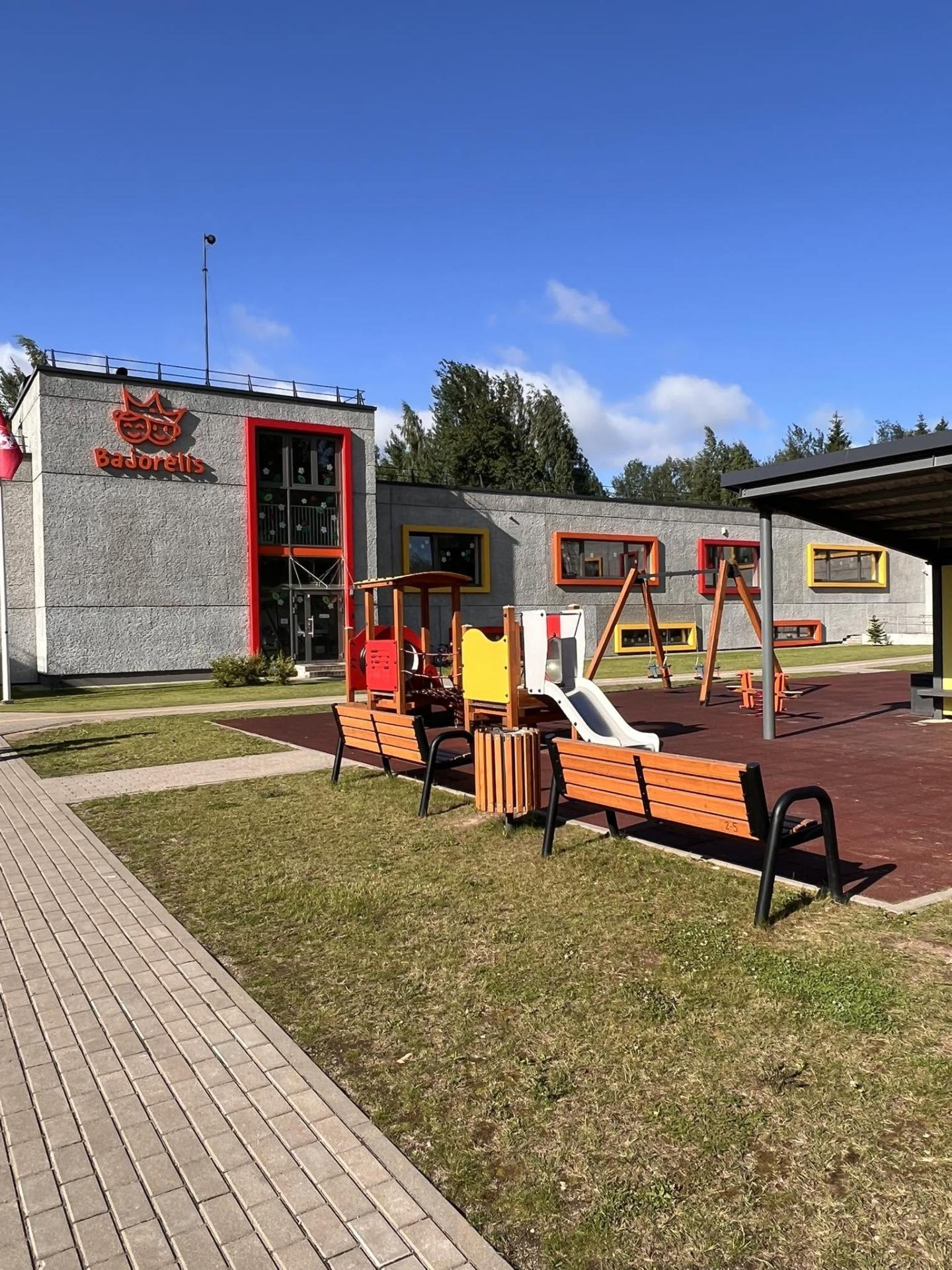
I am very happy that our head is highly proactive. Although the kindergarten has only been operating for four years, it has now truly “blossomed” – new spaces have been created, and we have significantly more educational resources.
At the beginning, we had almost nothing, but today we can offer children a much wider variety of activities. I believe these opportunities will continue to grow in the future – it is only a matter of time, and this is very important.
Children today are growing up in a modern world, so pictures alone are no longer enough – they want interactivity, variety, and new experiences. We are happy to have interactive boards, which we had been looking forward to, because they allow us to involve children even more actively in the learning process.
Agnė Ščebedienė (Head of Kindergarten):
Currently, we have 14 groups. My goal is to encourage teachers to express their needs and share what is necessary to create educational environments in their groups, because the quality of education and the right tools to support it are the most important priorities.
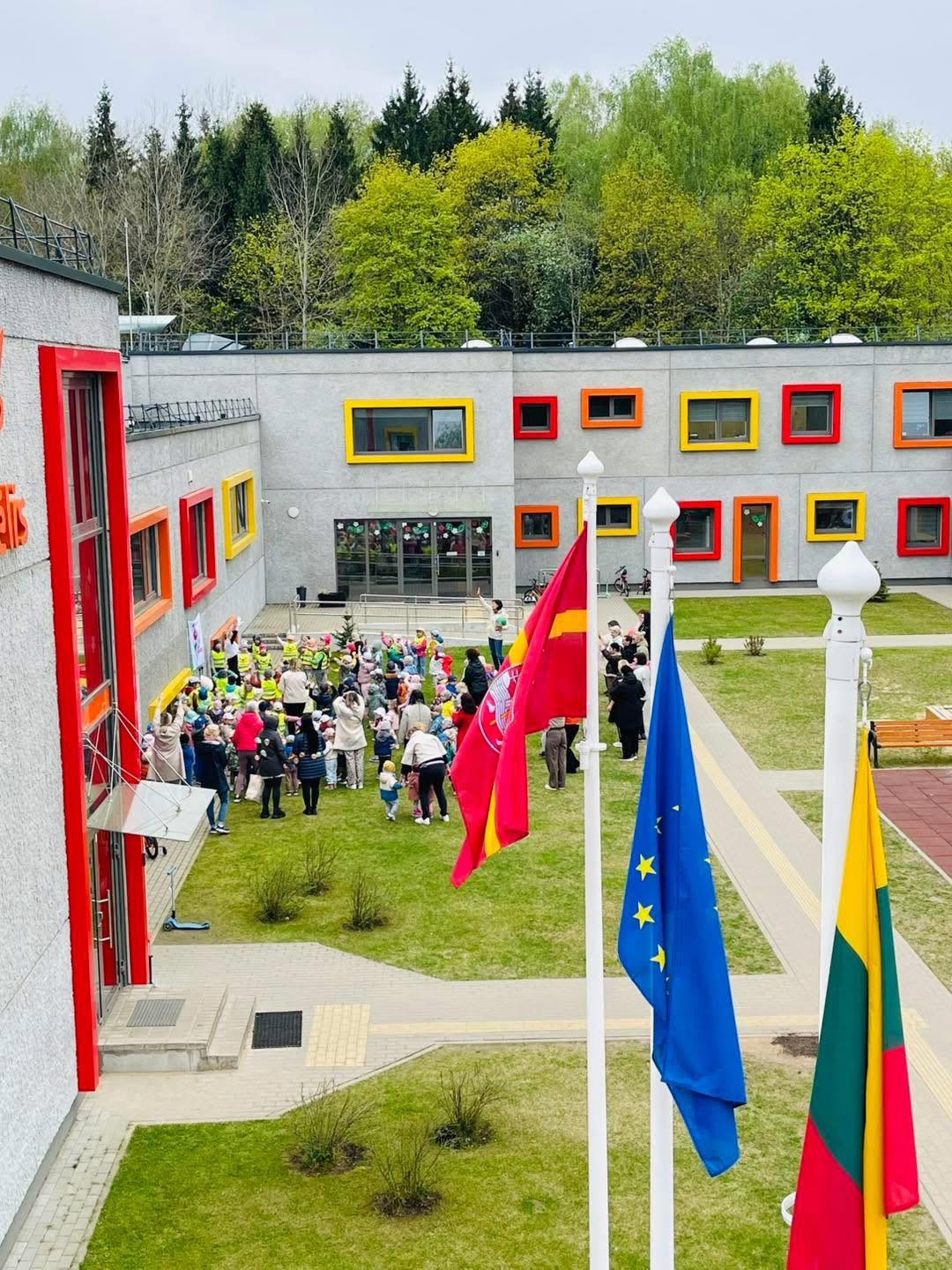
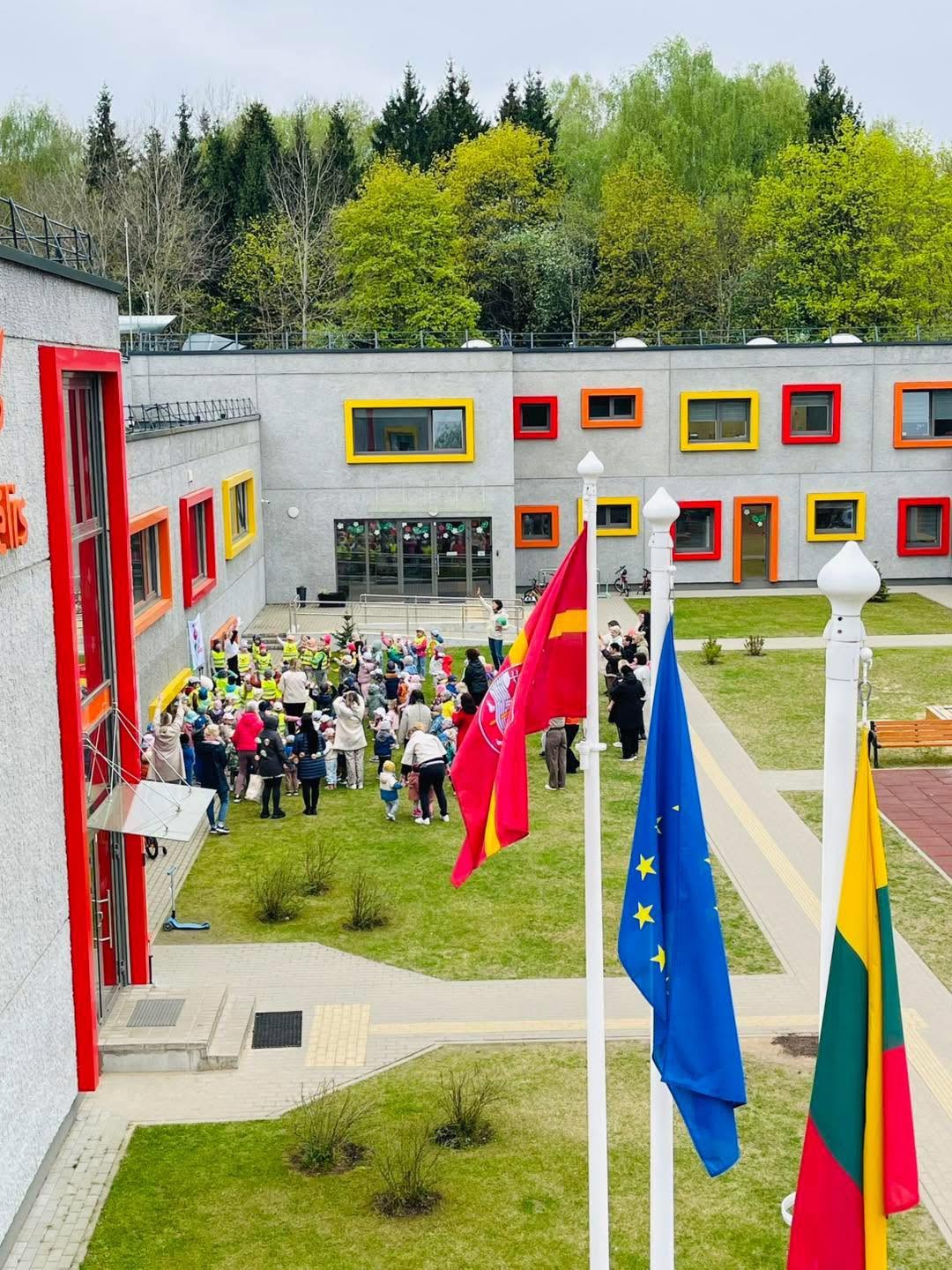
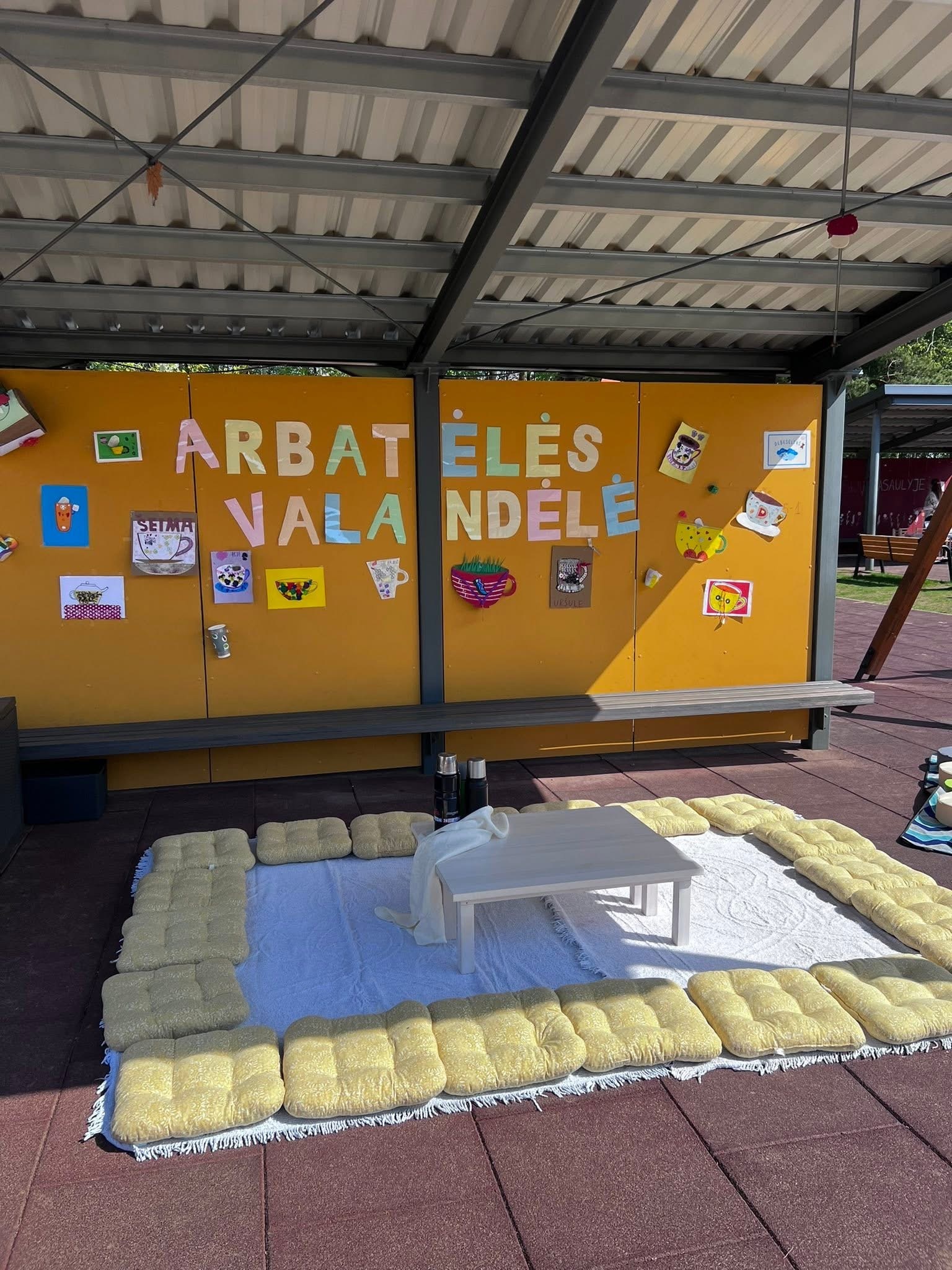
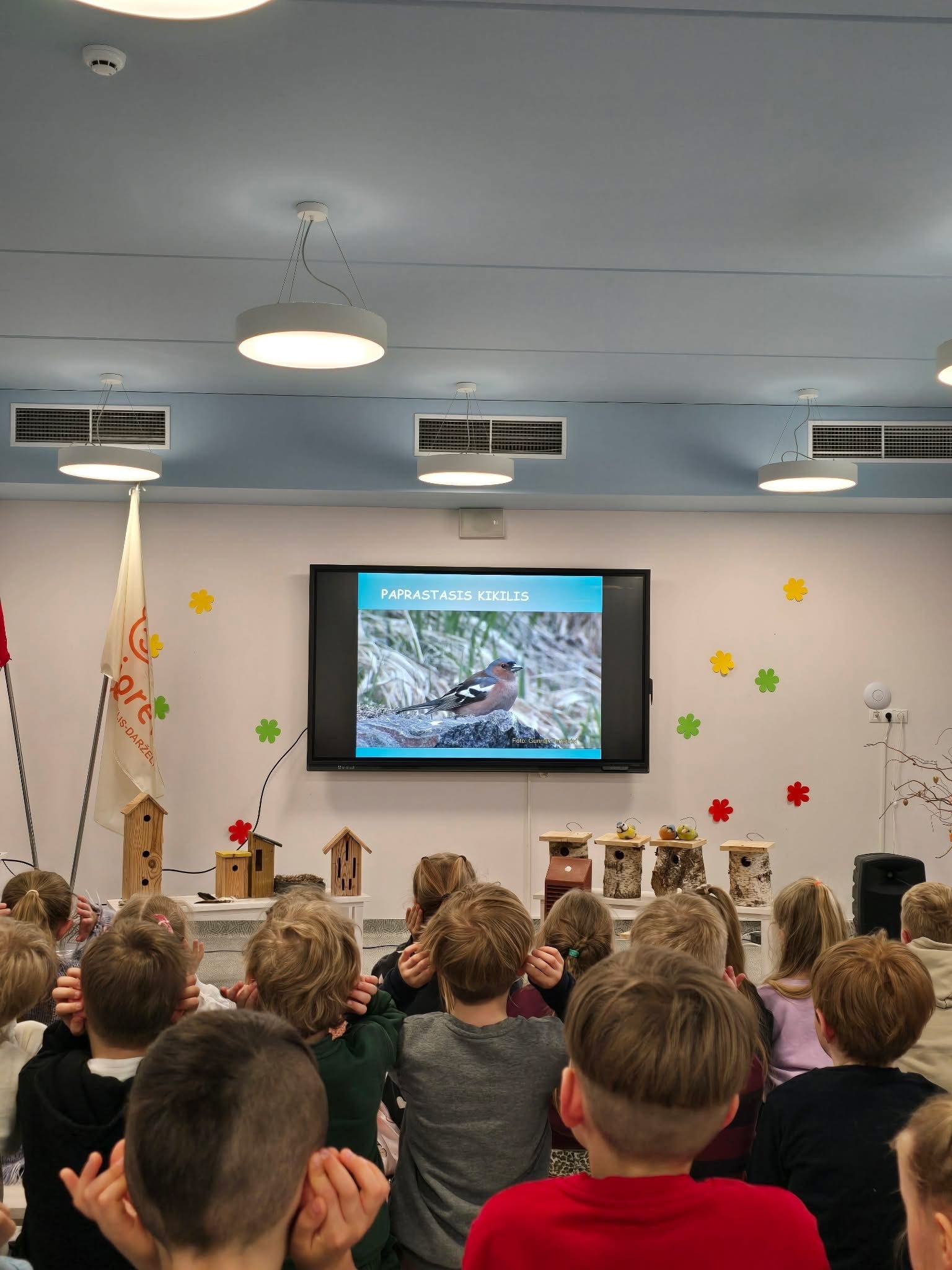
The uniqueness of our kindergarten lies in education beyond the institution’s walls – “education without walls”. This means that the educational process takes place not only in the kindergarten but also in museums, theatres, shops, fire and rescue services, cafés, libraries, and outdoor educational spaces such as forests, parks, and meadows. These experiences provide children with meaningful, real-life, and experiential learning opportunities.
I highly value teachers’ initiative. The corridor spaces have come to life – concerts, various activities, and physical activity sessions are organised there.
Šarūnė (teacher):
It is wonderful that we are not limited only to our group rooms. We can use different spaces – corridors, reading corners, and other areas. With children, we explore, observe, count, and discover things together – this greatly enriches the educational process.
What qualities are most important for today’s teacher, and how is the teacher’s role changing?
Šarūnė (teacher):
Communication is extremely important – both with children and with parents. Education today is a shared process, so involving parents is essential. Creativity and flexibility are also very important.
Today’s teacher needs to be more flexible and creative because they work with very different children, including children with special educational needs.
Agnė (teacher):
An educator needs to be modern, flexible, and able to reflect on their own work. Respectful communication with everyone is also essential.
Agnė Ščebedienė (Head of Kindergarten):
Today, the teacher’s role is inseparable from continuous professional growth – education and qualifications alone are no longer enough. A teacher must constantly learn, reflect on their practice, and be open to feedback.
Educational Approaches
What educational methods do you apply?
Agnė (teacher):
We use the context-based learning approach. It allows children to learn through experience – they can choose, experiment, and create.
We organise activities where children develop everyday skills – they cook, explore, and try things themselves. At first, they observe, but later they become interested and actively participate. In this process, the child becomes an active participant, who often only needs gentle encouragement.
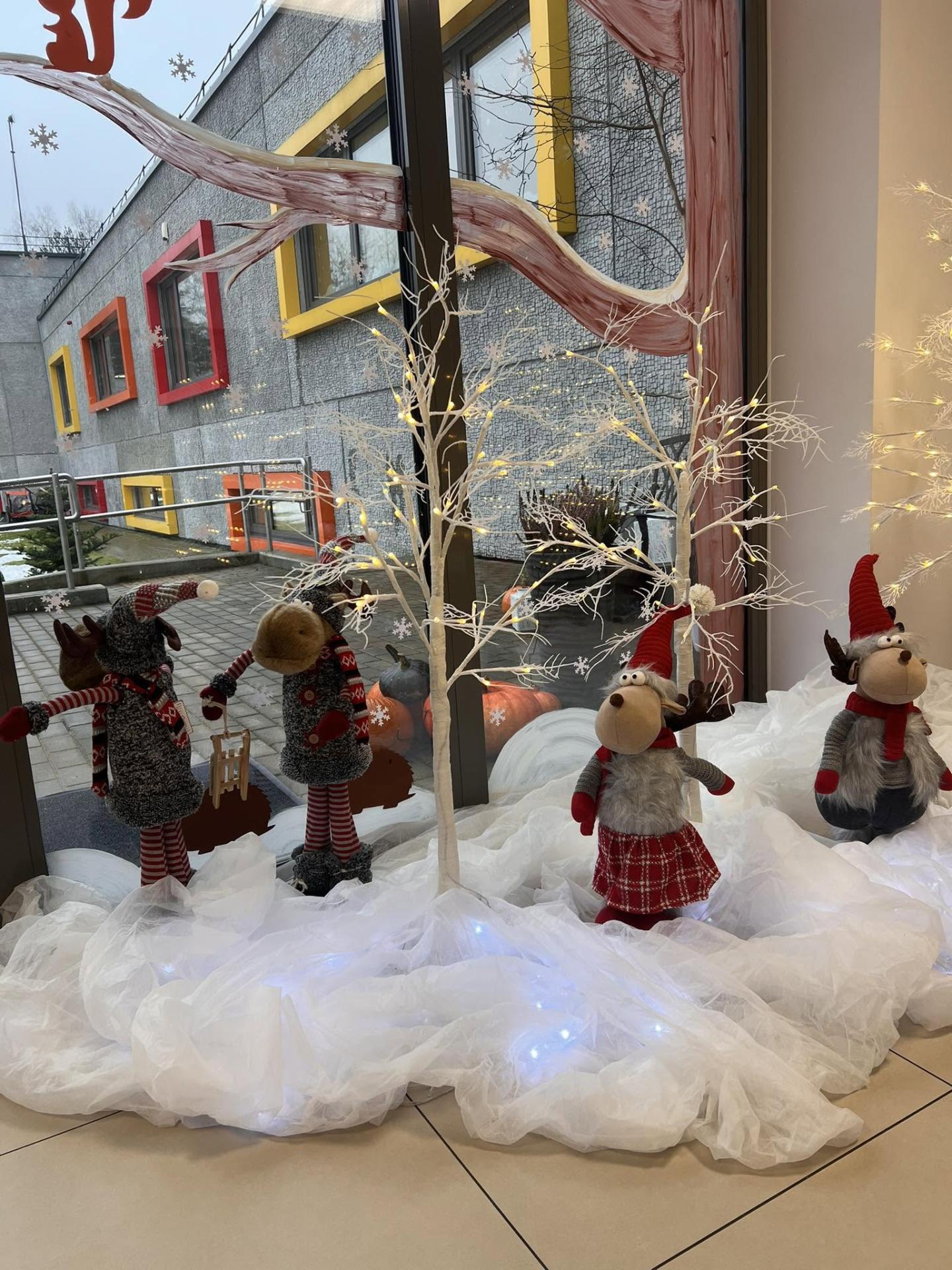
For example, children used simple cardboard boxes to create castles, houses, and tents. Later, this idea developed into an entire Christmas town.
Agnė Ščebedienė (Head of Kindergarten):
The most important thing is not the topic itself, but the abilities and skills we aim to develop. A teacher must clearly understand the educational goal and create an environment where children can learn naturally.
Children engage in different ways – some immediately, while others need more time. Therefore, freedom of choice and the opportunity for every child to discover their strengths and experience success are essential.
Education is based on each child’s individual progress, needs, and the development of abilities.
A teacher needs to trust themselves and be able to create or offer an appropriate learning context. Sometimes it can be a simple task, such as “draw a portrait”, which, with a clear goal and a variety of materials, becomes a creative and engaging learning process.
Mobile learning contexts are created for one or two weeks, while teachers continuously observe whether children need additional support or encouragement.
Šarūnė (teacher):
We try to create new contexts every week, although it is not always possible to implement everything exactly as planned. Sometimes activities develop in a completely different direction – then we have to adapt, rethink our approach, and find ways to involve children again so that they remain interested and engaged.
Community and the Future of Education
How do you involve parents?
Agnė Ščebedienė (Head of Kindergarten):
Parents actively participate in kindergarten life – in educational activities, celebrations, various initiatives, trips, and projects. Continuous communication is extremely important because only through cooperation can we build a shared understanding of children’s education and ensure smooth collaboration.
I strive for open communication. It is not always comfortable, but only an open dialogue – without hidden intentions or manipulation – allows us to solve challenges and build a strong community.
The chairperson of the Parents’ Council, Ana J., helps bring parents together for joint projects. This is how initiatives such as Christmas wreath-making workshops, the “Angel for the Teacher” campaign, and a blueberry planting activity were created. These initiatives strengthen our community.
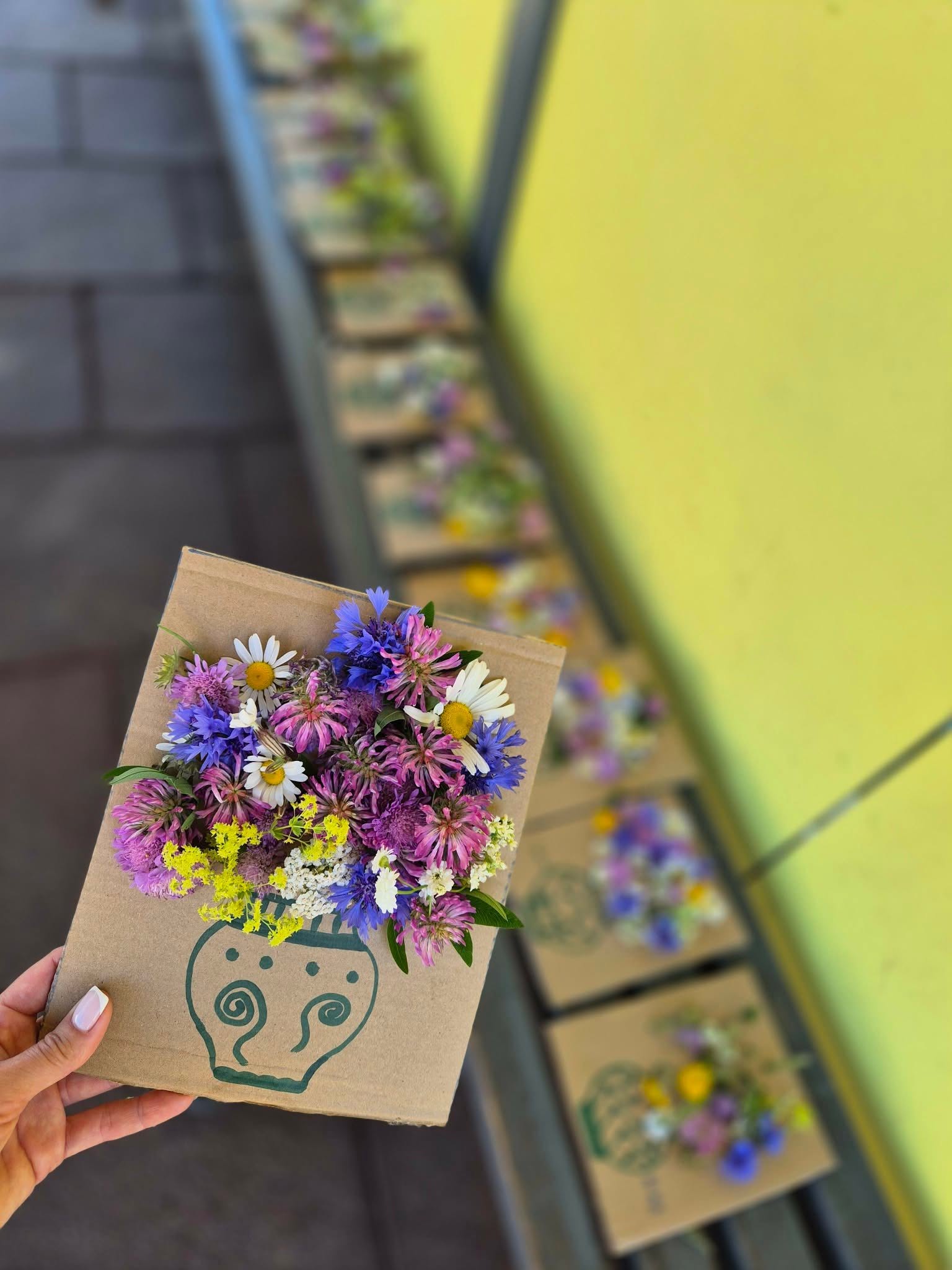
The spring volunteering event also brought parents from different groups closer together. By taking care of the kindergarten environment together, we remind children that it is important not only to have and use things, but also to maintain, respect, and protect them.
Changes in Education Today
How do you see the changes taking place in education today, and what do you think the future of education will look like?
Agnė Ščebedienė (Head of Kindergarten):
Although educational methods, technologies, and society itself are changing, children essentially remain the same – they will always need closeness, security, and a genuine connection with adults.
Modern children grow up surrounded by technology, so their thinking becomes more visual and their learning needs change. This encourages us to search for diverse and engaging educational approaches. However, we must not forget that children still need real communication, relationships, and learning through experience.
Teachers need to be creative, apply different educational methods, and consider children’s different ways of learning and understanding the world.
In recent years, there has been a growing trend of establishing groups for children from the age of one. This reflects the increasing need for early childhood education and families’ expectations to combine child-rearing with professional life. Kindergartens are creating safe environments to meet these needs.
Inclusive education is also becoming stronger, with various support systems increasingly contributing to ensuring that every child’s educational needs are met. It is important that children receive support as early as possible because this has a significant impact on their development and future path.
I believe that future education will be flexible, individualised, experiential, and focused on each child’s abilities.
This will require even more flexibility, creativity, and the ability to adapt to constantly changing situations. And, without a doubt, continuous learning.
Final Thoughts
All the stories shared during the conversation – from everyday work to educational methods and future visions – come together around one central idea: education is created by people.
As Head of Kindergarten Agnė says:
“What matters most to me is people. When the team feels good, it is directly reflected in children’s wellbeing.”