
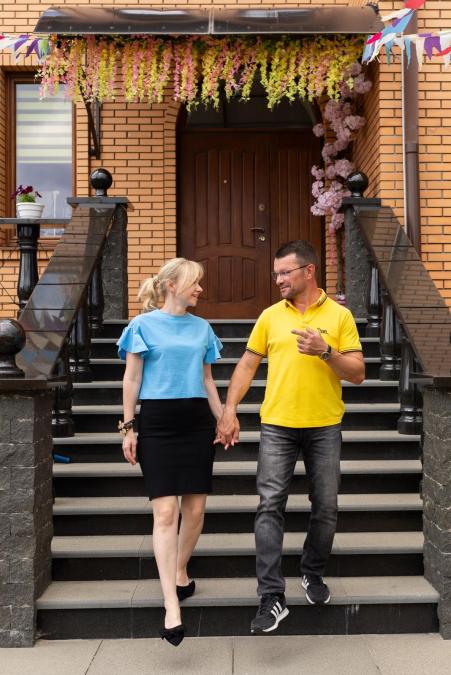
"Children should be taught not only to learn, but to love learning," says Inna Kuznetsova.
For more than 23 years, Inna Kuznetsova, has dedicated her life to education. During this time, she has grown from a teacher in a public kindergarten to the founder of the Modern Child Development Center "Brilliant Children" in Kyiv. She has developed her own educational approach, rebuilt her work after being forced to relocate because of the war, opened new educational spaces, and continues to create an environment where every decision begins with the needs of the child.
In this interview, we talk about much more than educational leadership and managing a growing team. We discuss today's children, neuropsychology, the role of parents, the challenges of the digital world, artificial intelligence, the importance of fostering a love of learning, and why the future of education begins with caring adults.
We invite you to join this inspiring conversation about education that goes beyond knowledge—education that helps children think critically, adapt to change, enjoy learning, and confidently build their future.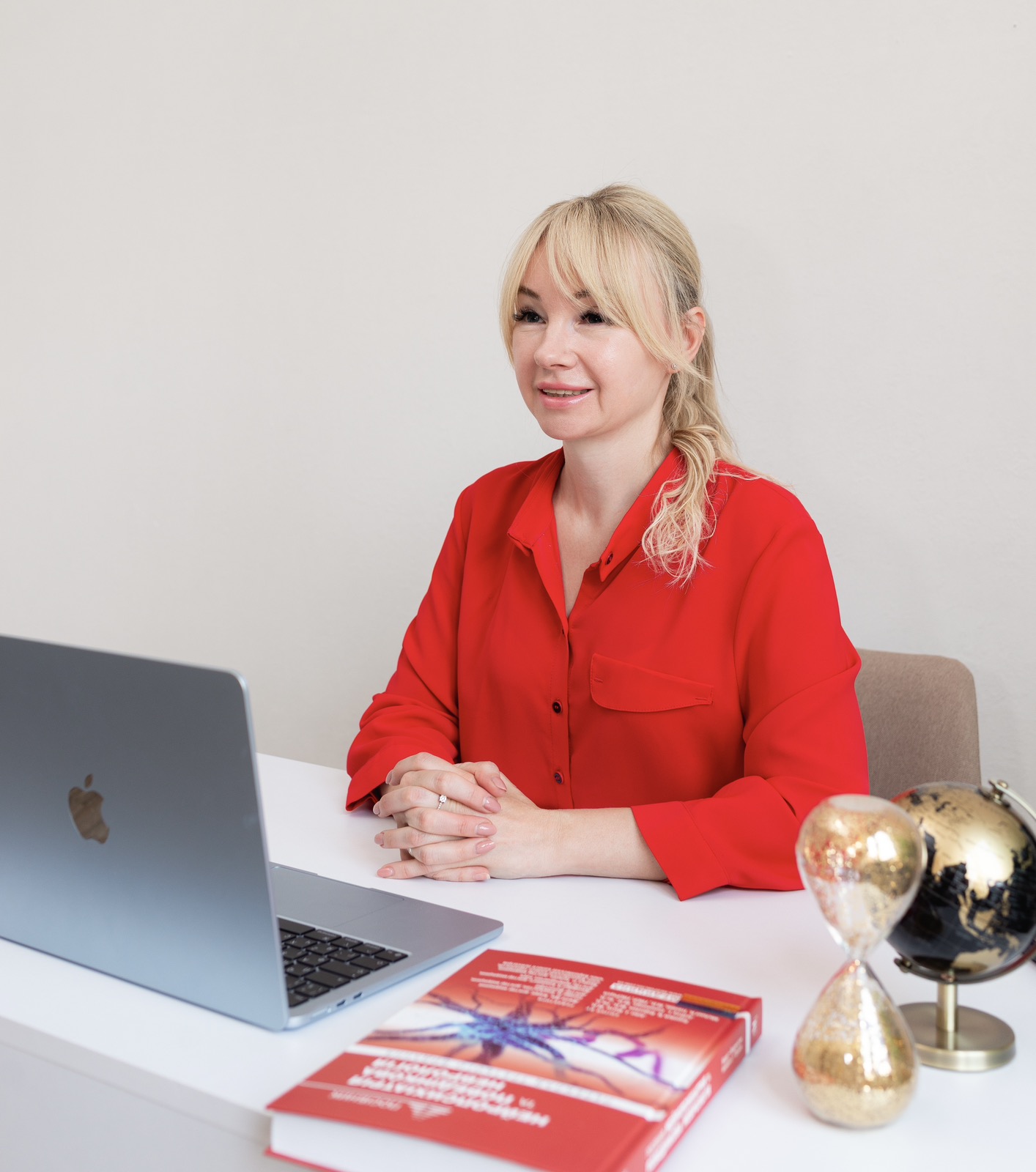
Could you tell us about your professional journey and how your story in education began?
I have been working in education for more than 23 years. To be honest, it is what I do best. People enter the education sector for many different reasons. Some parents create a preschool because they couldn't find the right one for their own child. Others identify a gap and decide to build something new. My story was different—I have simply spent my entire life in education.
Right after graduating from college, I began working with children. Later, I earned my university degree and continued developing professionally, but throughout all those years I remained in education. I never seriously considered pursuing any other career.
Children inspire me. Their sincere eyes, their openness, their honesty. Even today, despite all the challenges and responsibilities life brings, all it takes is walking into a kindergarten where a little child runs up to hug you, and in that moment you think, "Life is good."
I spent more than eleven years working in the public education system. During that time, I progressed from being a teacher to serving as acting head of a public kindergarten. Later, I also worked in a boarding school.
Then, one day, life pushed me toward a major change. I was going through a difficult personal period—a divorce, moving to a new place, and completely rethinking my future. That was when I decided to create my own educational space.
I still remember visiting the employment center, where someone suggested I consider entrepreneurship. I completed a business training program, received grant funding, and that became the turning point.
At that moment, I realized that I could finally build the educational environment I had always envisioned—not one limited by bureaucracy or rigid systems, but one where teachers enjoy working and children truly thrive. That is how everything began.
How long has your educational business been operating?
I started my entrepreneurial journey in education at the end of 2012. Today, it has been almost fifteen years filled with growth, continuous learning, important decisions, and a deep love for what I do.
How have the events of recent years affected your life and your business?
First of all, they made me much stronger. They also helped me discover something important about myself—I am highly adaptable. During difficult times, my greatest strengths have always been optimism and an inner sense of resilience.
When the full-scale invasion began, it was a tremendous shock. I don't think anyone could truly have been prepared for it. There was fear, uncertainty, evacuation. For a while, we lived in the Czech Republic, and that month abroad made me realize just how deeply I love Ukraine.
I love traveling and discovering new places, but I want to live and work here, in my own country. Family has always been my greatest priority, and that has never changed.
Another discovery I made during these years is the strength of my intuition. Today, it has become one of my greatest sources of support. I have learned to trust it. Returning to Ukraine was an entirely intuitive decision. Deep inside, I simply knew we belonged at home—and that everything would be all right.
My husband and I made a conscious choice: instead of focusing on problems, we would focus on opportunities.
Before the war, your educational business was based in Zaporizhzhia. How did you decide to relocate to Kyiv?
In Zaporizhzhia, we made the difficult decision to close our educational business. The city's proximity to the front line made it increasingly difficult to operate safely. There were very few facilities with proper shelters, and children's safety has always been our highest priority.
Relocating was a major challenge—not because we had to start from scratch, since we already had years of experience, but because we had to earn trust in a completely new community, build a reputation among parents, and assemble a team that shared our values.
Kyiv and the surrounding region represent a very different level of competition. Here, you constantly have to prove your expertise and the quality of your work. Interestingly, however, we had been thinking about moving to Kyiv even before the full-scale invasion.
I keep a special notebook where I write down my goals. Long before the war, I wrote one simple sentence there: "Live in Kyiv." At that time, my husband and I both felt that we had outgrown our hometown professionally and were ready for a bigger stage. I closed the notebook—and completely forgot about it.
Life eventually brought us there anyway. After returning from the Czech Republic, we were staying in Kolomyia and trying to decide what to do next. One day, my husband said, "Let's move to Kyiv." The moment I heard those words, I knew that was exactly what I wanted.
We settled in the Kyiv region, took time to adjust, and got to know our new surroundings. While looking for extracurricular activities for my daughter, I noticed something interesting. There were many kindergartens, but not enough high-quality child development centers and enrichment programs.
That was when I turned to my husband and said, "I think it's time for us to open a children's development center." At that moment, both the entrepreneur and the mother in me came together. I wanted to create a place where children would enjoy learning, making friends, discovering their talents, and growing with confidence.
Of course, we had to build a new system, create a new team, and find people who truly shared our values. But that was when I realized something important: it wasn't starting over—it was the beginning of a completely new chapter.
Your educational network is growing rapidly today. Could you tell us more about it?
Today, Brilliant Children (Genialny Dity) is much more than a kindergarten. We have a primary school, two kindergartens, and a wide range of extracurricular programs. In other words, we provide children with a comprehensive educational environment.
To be honest, we have been growing very quickly over the past few years. Sometimes I even catch myself thinking that I can hardly keep up with the pace of everything that's happening.
Over the last three years, we have opened three large campuses, each covering nearly 1,000 square meters. Our team now includes around 60 people, and we continue to expand. As our primary school grows and new classes open, I believe our team will soon reach about 70 employees.
What is your team like today, and how do you unite people around a shared mission?
I never say "my team." I always say "our team," because this project belongs to both my husband and me. We are a family of entrepreneurs. We each had our own businesses before, but as our educational organization grew, we realized it had become our shared mission.
My husband has always supported me—not only as my partner in life, but also as my business partner. His support has been emotional, financial, and strategic. I can honestly say that I would never have built our organization to its current scale on my own.
Quality has always been my highest priority. I don't believe in launching something quickly and trying to improve it later. For me, the process should work the other way around: first build quality, create a strong system, ensure stability—and only then focus on growth.
That is why I always say that everything we have achieved is a shared accomplishment, a shared vision, and a shared team. And our team is truly special. These are talented, dedicated professionals who genuinely share our values—supporting children's development, caring for families, delivering excellent service, and striving for quality in everything they do.
Building such a team has not been easy. Like many organizations today, we face a significant shortage of qualified professionals. Our center is located in Petropavlivska Borshchahivka, and sometimes candidates decide not to attend an interview simply because of the commute. For many people, spending an hour traveling one way is enough to decline the opportunity.
At the same time, we offer competitive salaries, official employment, transportation reimbursement, meals, and many additional benefits. Yet even that is not always enough. That is why I deeply value the people who choose to work with us.
My coaching background has also shaped the way I lead. I have a degree in psychology and am currently studying coaching. To me, coaching is about awareness and personal responsibility. When people take responsibility for their own lives, they also take responsibility for their work and for the results they achieve. Those are exactly the kinds of people we strive to bring into our team.
What does it mean to create a place where children and parents genuinely want to come back?
Quality is never an accident. Quality is a system. We have developed a well-structured system for staff training, clear standards, quality control, and careful attention to detail. And those details can be seen everywhere.
For example, we encourage our leaders to see the environment through the eyes of our families. As a director walks from the nearest bus stop to the school, she should notice exactly what a parent would notice. Perhaps flowers should be planted somewhere. Perhaps a piece of litter needs to be picked up. Perhaps another small detail could make the space feel warmer and more welcoming. People should enjoy coming here.
For me, quality is about much more than an educational program. It is about the atmosphere children and their families experience. It is the administrator's genuine smile, the attention given to every parent, and the feeling of being truly cared for.
For example, we regularly organize Days of Care for parents. On Mother's Day, our administrator baked beautiful homemade cupcakes for every mother who visited us that day.
What makes me happiest is that these ideas no longer come only from me. Years ago, I simply encouraged our team to find more ways to care for parents. Today, they create these ideas themselves. They suggest new initiatives, develop thoughtful traditions, and constantly look for meaningful ways to make families feel welcome.
That is when you realize your team has become something more than a group of employees. They become true co-creators of your shared vision—not simply carrying out tasks, but building something meaningful together.
What does an ideal transition from kindergarten to school look like to you?
For me, it is essential that this transition feels smooth and natural. School should be a continuation of a child's early learning journey—not a sudden leap into a completely different reality.
I believe children should enter first grade with much more than a strong knowledge base. It is not enough to simply fill them with information and send them off to school. What matters even more is that they are curious, eager to learn, and excited to discover new things. Social skills and emotional readiness are equally important.
I often compare it to a wheel. When intellectual development and emotional readiness are balanced, the wheel rolls smoothly. But if one develops much faster than the other, the child may struggle to adapt.
That is why I believe intellectual development alone is not enough. I strongly support building solid academic foundations. Today, we hear a great deal about soft skills, emotional intelligence, and other future-ready competencies—and they are indeed important. But children need balance: intellectual growth, emotional resilience, social skills, and adaptability. Together, these qualities prepare them not only for school but also for a successful and fulfilling adult life.
Which skills do you believe will be most important for children in the future?
If I had to choose just one, it would be adaptability. A child may be highly intelligent and possess extensive knowledge, but when faced with difficulties, knowledge alone is not enough if emotional resilience has not yet developed.
On the other hand, when children combine confidence, emotional stability, and strong knowledge, they become adults who can recognize opportunities even in times of crisis.
We witnessed the results of this approach after the full-scale war began. Many of our former students from Zaporizhzhia relocated to different countries around the world, and we started receiving messages from their parents. They told us that their children adapted remarkably quickly, made friends easily, learned new languages, and integrated into unfamiliar school communities with confidence.
For me, that was one of the most meaningful forms of feedback. It confirmed that we were preparing children not only academically, but also for life.
Today, there is a great deal of discussion about children's emotional well-being. What changes do you see in today's children?
Children are going through challenges just as adults are. The difference is that many adults do not fully realize it. Perhaps this comes from the way many of us were raised. In previous generations, parents focused primarily on making sure children were fed, clothed, and educated. Their emotional world often received far less attention. Many of us grew up in that environment.
Today's children are incredibly sensitive. They absorb everything happening around them. If a mother feels anxious because of the news or air raid alerts, her child experiences that anxiety as well—even if they appear calm on the outside. I often think about how to help parents understand this. Let me share a simple example from my own family.
My daughter is eleven years old and is in fifth grade. Recently, her class was assigned to read Pollyanna. Usually, students receive an adapted version of the text, but this time the teacher shared a link to an online edition. For nearly a week, my daughter tried to read it on her own. One evening, she came to me in tears.
"Mom, I've been sitting with this book for an hour, and I just can't read it. Tomorrow I have to discuss it in class, and I don't know what I'll say."
When I opened the website, I immediately understood the problem. Pop-up advertisements, banners, notifications, and links constantly interrupted the text. For an adult, they are a minor annoyance. For a child, they become a constant distraction. On top of that, the book contains many expressions and words that modern children simply do not know.
That evening we sat together with a laptop before bedtime. I read aloud, explaining unfamiliar vocabulary and discussing the meaning behind the story. Then she read, then I continued. At one point she smiled and said,
"Mom, you read it so beautifully that now I actually want to keep reading."
Today she is reading Pollyanna on her own.
The problem was never laziness or a lack of motivation. She simply needed an adult beside her. That is why I believe no technology—not artificial intelligence, online platforms, or digital tools—can fully replace a caring parent.
Children need our attention. Sometimes just a few meaningful minutes each day are enough: before school, after school, or at bedtime. Ask how their day went. What made them happy? What upset them? What do they need help with?
After all, they are still children, and what they need most is to know there is an adult beside them who is ready to listen and support them.
What educational approaches do you use in your work with children?
Today there are many excellent educational approaches, including Montessori, Reggio Emilia, and numerous author-developed methodologies. Each has its own strengths, which is why we do not limit ourselves to a single philosophy.
Our approach is holistic. I like to take the strongest elements from different educational models and combine them into one coherent system that truly serves the child's development.
Neuropsychology plays a central role in that system. For me, its greatest value is that it helps us understand the child. It explains how the brain works and why some children experience difficulties with learning or behavior.
It is easy to say, "This child is simply misbehaving." It is much harder—and much more important—to ask why. Why is this child struggling to concentrate? Why is reading difficult? Why is learning not coming easily? These are exactly the questions neuropsychology helps answer.
I hope this knowledge becomes more widespread—not only among educators but also among parents. Today's children are different from previous generations, and our educational approaches must evolve accordingly.
Fortunately, I already see encouraging changes. Neuropsychology is becoming increasingly integrated into both private and public education. The key is that educators remain willing to learn, embrace new ideas, and apply modern evidence-based practices.
After all, no educational method works unless the person using it truly understands its value and is committed to helping children grow.
How did your interest in neuropsychology begin?
It all started with reading. At one point in my career, I worked as a speed reading methodologist and became certified to train teachers and future instructors. But eventually, I encountered an interesting contradiction. To be honest, speed reading is mostly a marketing term. True speed reading only begins once a child is already a confident reader—able to read more than 100 words per minute aloud and much faster silently.
In reality, however, parents don't bring children who already read well. They come when their child is struggling—reading syllable by syllable, failing to understand what they've read, unable to transition to fluent reading, or constantly making mistakes.
That made me ask myself a simple question: How can you teach speed reading to a child who hasn't yet learned how to read properly?
That's when I began studying the subject in depth. I explored how reading skills develop, why children experience reading difficulties, and how the brain works during the learning process. That journey naturally led me to neuropsychology.
For me, it was the moment when all the pieces of the puzzle finally came together. I began to understand why children make certain mistakes, which brain functions may not yet be fully developed, why reading comes naturally to one child while another needs additional support. It was then that I created my own reading instruction system—the one we continue to use today.
So you developed your own methodology?
Yes. Today we use our own educational programs and teaching approaches, developed through many years of practical experience, pedagogy, and neuropsychology. I firmly believe that if a child learns to read correctly during the preschool years, many other learning processes unfold naturally afterward.
As the brain matures, skills become automated, and many early mistakes simply disappear with age. But if the foundation is built incorrectly from the beginning, those difficulties tend to accumulate.
Parents often hear the advice, "Just make your child read more." But if reading itself is difficult—if every page brings frustration, fatigue, or a sense of failure—simply reading more won't solve the problem.
I often explain it to parents with a simple example. When adults struggle with something, they usually don't want to return to it again and again. The brain naturally avoids experiences associated with failure. Children are no different.
That's why the goal shouldn't be to force children to read more, but to help them master the skill in a way that makes reading easier, more enjoyable, and more rewarding.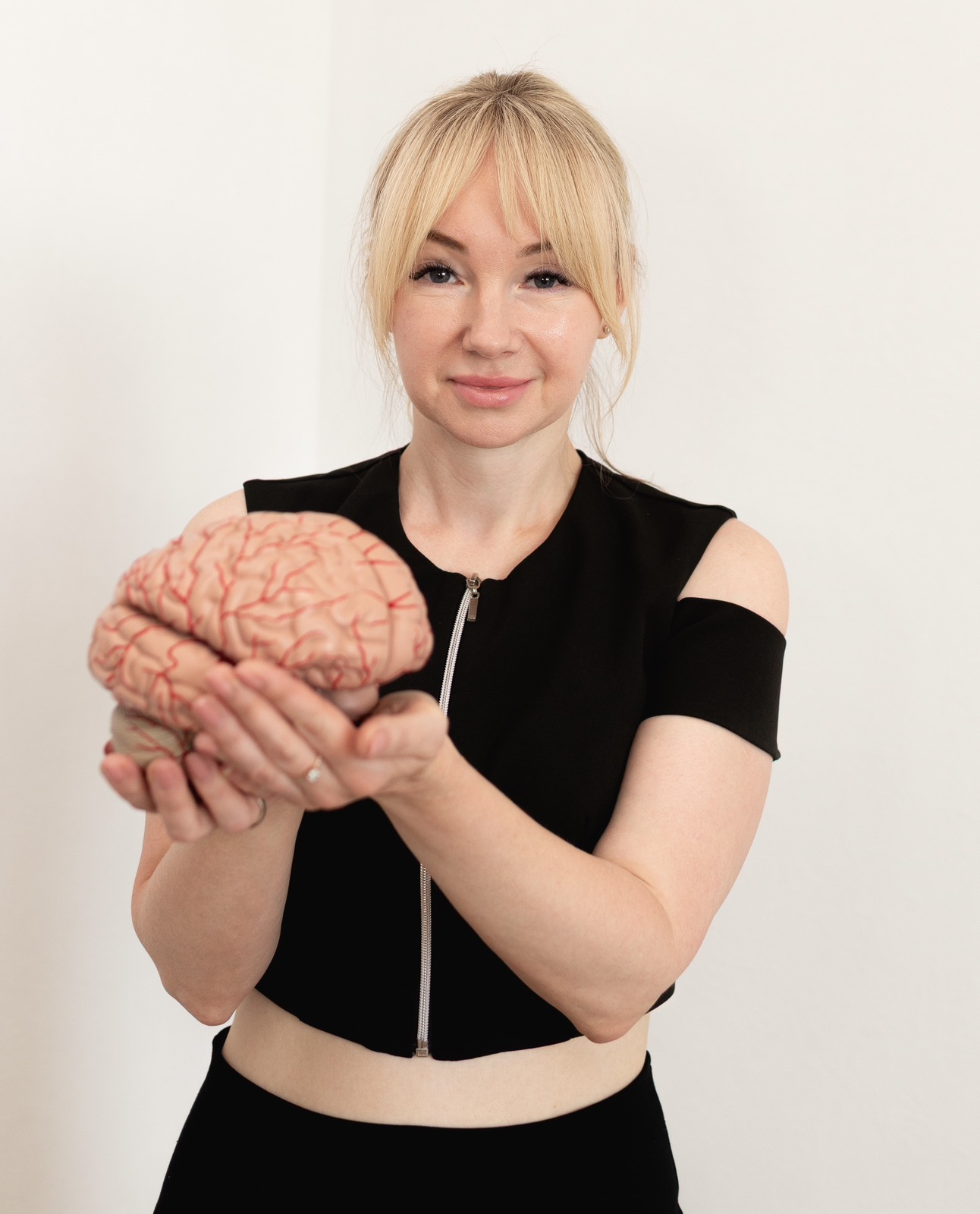
What approaches help children learn most effectively?
To be honest, there are countless exercises and techniques. Everything depends on the child's age, individual needs, and specific challenges. But I believe one of the most important factors is the teacher.
Even the best methodology won't work if a teacher is simply going through the motions. For me, it's essential that educators are genuinely present with their students—that they care about each child's progress, teach with enthusiasm, and truly love what they do.
Children can immediately sense when a teacher is passionate. That's why we invest so much effort into supporting our educational team.
What do you mean by a "teacher support system"?
We have developed a comprehensive educational support system of our own. It is an author-designed approach built on my many years of experience in education.
I personally created the core educational programs and learning pathways, and today, together with our academic team, we continue to refine, improve, and oversee the entire system. We have structured developmental programs, lesson plans, workbooks, teaching materials, and learning pathways for every age group.
Whenever I design a curriculum, I always begin with the end goal. I ask myself: Who should this child become in one year? In several years? What skills should they have? What should they be capable of at this particular stage of development?
Only then do we build the learning journey—from ages one to two, two to three, three to four, and beyond.
We take into account children's psychological development, neuropsychological characteristics, and the leading developmental tasks of each age. Every year has a clearly structured framework, and every lesson has a specific purpose and learning objective.
Of course, teachers are encouraged to bring in their own creativity and ideas. But at the same time, they have a strong foundation they can rely on. They don't have to invent lessons from scratch every evening or spend hours searching for materials.
Instead, they work within a high-quality system that allows them to devote more time to children, creativity, and meaningful interaction.
That said, I'll be honest—this approach isn't for everyone. Even with a well-designed system, teachers need to be emotionally engaged. They must genuinely want to work with children, care deeply about their development, and invest themselves in helping every child succeed.
Sometimes experienced educators join our team, but they discover they're not comfortable working this way. Our system isn't about formally delivering lessons. It's about engagement, responsibility, and giving children your very best.
That's why, for us, professional expertise alone isn't enough. What matters just as much is a teacher's willingness to stand beside each child and wholeheartedly invest in their growth.
Your educational network continues to grow. Are you currently looking for new team members?
Constantly. I often compare the hiring process to searching for gold. First, you sift through the sand, and then, eventually, you find that one precious nugget. To me, every employee is a true asset—and that applies not only to teachers.
Take our housekeeping team, for example. These incredible women are our "cleanliness fairies." Many of them have university degrees, strong personal values, and an exceptional sense of responsibility. They don't need someone constantly telling them what to do. They notice where something can be improved, made more beautiful, or more comfortable. They genuinely love what they do and approach their work with care and purpose.
Our role is simply to help that potential shine.
Just like a diamond becomes even more brilliant after it's been carefully cut and polished.
Which educational technologies or tools do you believe will shape the future of children's learning?
Technology is evolving at an incredible pace, and I admire the fact that Ukraine is among the leaders in many modern fields. I believe we must keep up with the times, embrace innovation, and integrate new technologies into education. At the same time, we must never lose sight of what matters most—the intellectual and psychological development of the child.
I constantly follow new educational approaches, programs, and research. I study international best practices and try to implement what genuinely works.
One program I particularly appreciate is Leader in Me, which helps children develop responsibility, independence, and leadership skills.
I'm also interested in international psychological support programs for children, particularly Think Equal.
When it comes to academics, I'm a strong supporter of the Intellect of Ukraine curriculum. It can certainly be modernized and adapted to today's realities, but it remains exceptionally strong in terms of both content and academic rigor.
I've seen this firsthand with my own daughter. After several years of studying under a different curriculum, she transferred to the Intellect of Ukraine program, and the difference in expectations was immediately noticeable. The transition wasn't easy, but within a year I could clearly see how much her thinking, language skills, and ability to express ideas had developed.
That's why I strongly believe in combining modern technology with a solid intellectual foundation.
What is your perspective on artificial intelligence in education?
Artificial intelligence has already become part of our daily lives, and we need to accept that reality. The real challenge is teaching children how to use it wisely.
These days, you sometimes receive a message and instantly realize it wasn't written by a person—it was generated by AI. More and more people simply copy ready-made texts instead of expressing their own thoughts.
I believe that's a dangerous direction. Artificial intelligence should be an assistant—not a substitute for independent thinking.
Children need to learn how to live in a technology-driven world while preserving their ability to think critically, form their own opinions, and remain intellectually active.
I closely follow international developments and observe how different countries are rethinking their educational systems.
Take Finland, for example. For years, schools enthusiastically embraced digital learning and electronic resources. But recently, discussions have increasingly focused on restoring balance between digital tools and traditional teaching methods. Some schools have even returned to printed textbooks after teachers and parents noticed that excessive screen use was affecting students' attention spans and learning outcomes.
I'm not against technology. Quite the opposite—I believe we should make the most of everything it offers. But we must never lose our ability to think. The human brain is naturally inclined to conserve effort. If it's constantly given ready-made answers, it gradually stops exercising itself.
Our task isn't to make learning as effortless as possible. Our task is to make learning so engaging that children genuinely want to think, analyze, ask questions, and discover answers on their own.
I truly believe education should be inspiring enough to make people want to keep learning throughout their lives. Because learning doesn't end after school or university. We'll all need to acquire new knowledge and new skills throughout our lives.
And for me, that's not a burden—it's a joy. I often tell my daughter, "Don't say, 'Oh no, I have to study again.' Your mom genuinely enjoys learning something new."
How do you manage to balance running a business with your personal life?
To be honest, I don't always succeed. My husband and I often joke about it. Sometimes he even tells me, "Switch off your director mode." It really isn't easy to be the leader of a large team while also being a wife, a mother, and simply a woman. Especially when you have a strong partner who also needs your support—not just a manager discussing work.
That's why it's so important for me to have things that keep me grounded. Sport is one of them. So are mindful nutrition, discipline, and learning to manage my thoughts and attention.
Over the past few years, I've realized something important. I often compare myself to a glass. When it's full, you have something to give—you can support others, inspire them, and create something meaningful. But when it's empty or only half full, there's simply nothing left to give.
That's why everyone needs to find what restores their energy. For me, it's movement, continuous learning, personal growth, and self-discipline. I'm naturally very emotional and full of ideas—I can easily start ten things at once. That's why I have to consciously slow myself down, refocus my attention, and keep returning to what truly matters.
That's what helps me stay energized, present, and able to give my best to both my family and my work.
What do you dream of as the founder of an educational project?
My greatest dream is for as many children as possible to enjoy learning—to find it easy, engaging, and inspiring. I want learning to be something children look forward to, not something that causes fear or stress, but a natural part of their growth and development.
Of course, I also have a very specific dream. My husband and I hope to build a large, modern school and kindergarten—a place where we can bring to life everything we believe education should be.
But on a broader level, I dream of seeing Ukrainian children grow into intelligent, proactive, and responsible people with strong values and a clear sense of purpose. Children are our future. I truly believe that we, as adults, are shaping that future today. My hope is that many years from now, we will look at the younger generation with pride rather than disappointment.
And I also dream of very simple things. I dream of a world without war. A world with less hostility and more understanding, wisdom, and harmony. Most of all, I hope our children will have the chance to grow up in such a world.
🎭 Beyond the Profession
At the end of each interview, we ask our guests a few personal questions that help us get to know them beyond their professional roles.
What is your favorite children's book, and why?
That's always a difficult question for me because I can't choose just one. If we're talking about children's stories, though, I've always loved Cinderella. I love its sense of magic, the kind fairy godmother who helps Cinderella believe in herself, and the idea that a kind, hardworking person will ultimately receive the life they deserve.
What advice would you give your younger self?
Never stop learning. Keep learning throughout your life and never stop growing. The world is changing incredibly fast, and continuous learning is no longer optional—it's essential.
And there's one more piece of advice I'd give myself: take care of your health and your well-being.
What might surprise our readers about you?
Many people are surprised to learn that my first qualification wasn't in education at all—I graduated from a sports college and earned a competitive basketball ranking. People often find that unexpected because today they associate me with education, neuropsychology, and child development.
What surprises them even more is that I was never particularly tall. In fact, I was quite short by basketball standards. But sport gave me something far more valuable than physical skills—it taught me discipline. And I believe discipline is the foundation for achieving meaningful results in any area of life, whether you're building a business, developing your career, or growing as a person.
That's one of the reasons I believe sport is so important for children. It helps shape character, teaches responsibility, and develops the determination to keep moving toward a goal.