
We teach children not to open the door to strangers. But do we know who is reaching out to them through a screen? We share photographs from kindergarten, but do we consider what information they reveal to people we do not know? We set up parental controls, but would a child feel able to tell us if someone frightened or blackmailed them?
Digital safety begins long before a child has their own smartphone. It concerns every adult in a child’s life: parents, early childhood educators and education leaders.
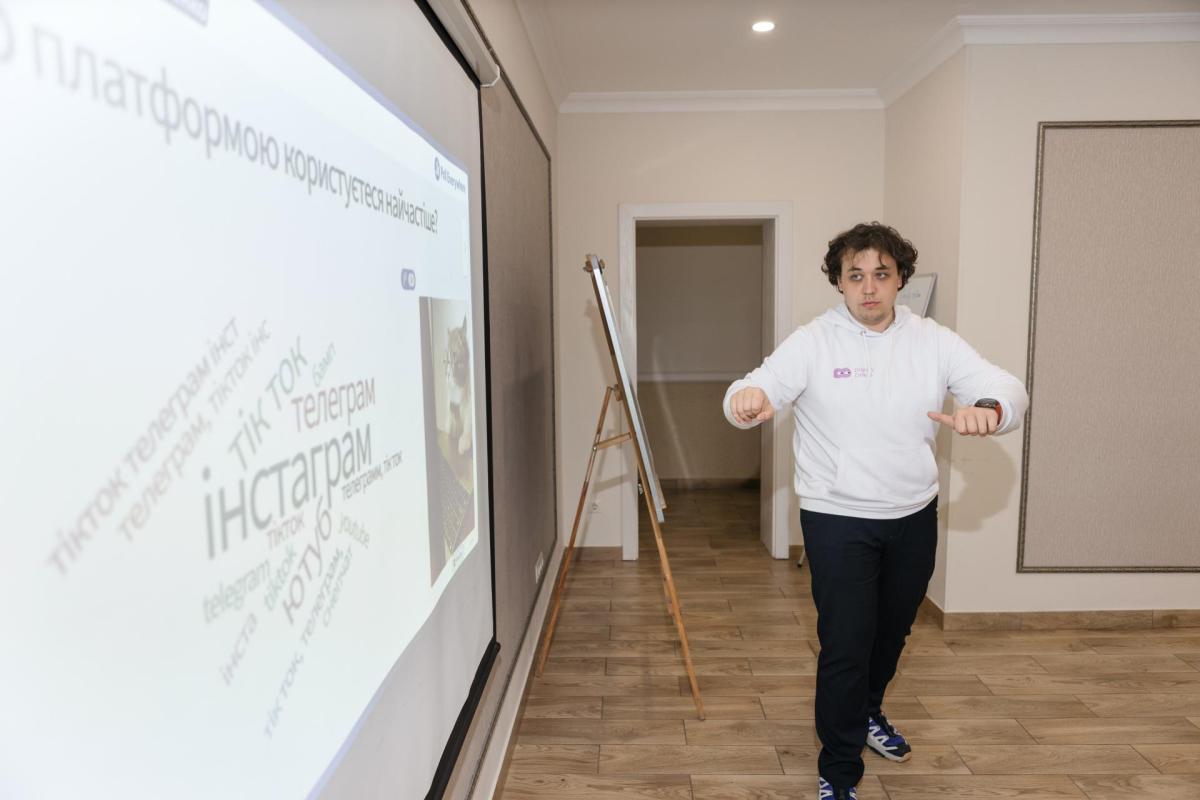
Our guest is Vasyl Filonenko, a trainer and educational methodology specialist at the non-governmental organisation Dignity Online. He explains which risks we underestimate, what artificial intelligence is changing, why a private parent chat does not guarantee that photographs are protected, and what to do if a child receives a threatening message. We also discuss what preschool children can learn without devices and how to build the trust that allows them to ask for help.
Does a child know who to turn to when something online frightens them? And what can we, as adults, do today to help them feel protected? These questions are the starting point for our conversation.
Vasyl, how did you become involved in children’s online safety, and what do you do at Dignity Online today?
I joined the organisation in August 2022. At the time, I was teaching history and law, but I felt I wanted to do more than teaching alone. I wanted to develop professionally and find another way to be useful to Ukraine. Being a teacher is wonderful, of course, but your direct influence is limited to a particular group of pupils. I wanted to reach more people.
I was asking myself: what can I do, and where can I be useful? Then I saw that the NGO #stop_sexтинг — as Dignity Online was called at the time — was looking for someone to teach educators about online safety. I got the job, and I have been with the organisation ever since.
My work has evolved over time. I am very grateful to our founder and CEO, Anastasiia Diakova, for being open to suggestions. Whenever I wanted to develop something new or deliver training for different audiences, those initiatives were supported.
Today, I develop lessons, manuals, guides and training programmes for children and adults: parents, educators, psychologists, social workers, children’s services staff and juvenile police officers. One project I am particularly proud of is a lesson for children with special educational needs, which I helped develop.
This year, I also began conducting research myself. That means going beyond finding information and teaching approaches as a methodology specialist to studying how Ukraine’s online environment is evolving.
If you compare the situation when I started with what we have now, the difference is night and day. At first glance, things may look very similar. But once you explore the subject in depth, you see how much has already changed and continues to change.
During wartime, we need to respond here and now, find new approaches to working with children, and take account of their experiences and the effects on their mental and physical health. It is difficult to find anything comparable to the experiences of children living through a full-scale war.
So I have gradually gone from someone who would come in and talk about online safety to someone who conducts research, shares it with others and gets them involved in this work. Someone who seeks out like-minded people and speakers around the world, because this is such an important subject.
One of my favourite questions at training sessions is: “When should we start teaching children about online safety?” My answer is: “Yesterday.”
What should people know about Dignity Online: who do you help, and what projects are you working on?
Our NGO has been operating since 2018. We deliver projects across several areas: communications, advocacy and education.
To give you a sense of the scale, in more than seven years we have trained over a million people: children, parents, educators, psychologists, social workers and law enforcement officers. We have delivered more than 30 programmes, developed 70 courses, held around 150 training sessions and produced over 30 educational videos. We have directly supported more than 900 people affected by abuse, while over a thousand children have received help through our chatbots. We have also trained 120 teenagers to become peer educators.
In 2021, our work led to the criminalisation of online grooming in Ukraine. We are now working on national policy in the digital environment: under a memorandum with the Ministry of Digital Transformation, we developed recommendations for the National Strategy for the Protection of Children’s Rights in the Digital Environment and its implementation action plan. While preparing these recommendations, we discussed them with our Children’s Council and incorporated children’s views into the final documents.
We have been conducting national research into children’s online safety since 2020. The latest study, in 2026, involved 5,737 schoolchildren aged 6–17 and 1,076 parents of preschool children. It found that 54% of schoolchildren had experienced cyberbullying over the previous year, 74% had seen graphic images of war online at least once, and 3.6% had received offers to take part in risky or illegal activities.
Among our international collaborations, I would highlight two important initiatives: Take It Down and the platform provided by the Internet Watch Foundation, or IWF. They help combat the spread of intimate images of minors and child sexual abuse material. IWF is one of the world’s leading organisations in this field.
In education, we have developed more than 14 lessons covering different aspects of safety — from online sexual abuse of minors to offline safety during wartime.
At the beginning of the full-scale invasion, people needed help finding a sense of grounding. From September 2022, in particular, we worked on materials for teachers about looking after their own mental health and supporting children during this time.
Educators are my main audience. Through them, we can reach both children and parents. Teaching today involves far more than education alone. In my personal view, under the current circumstances, educational objectives cannot always come first.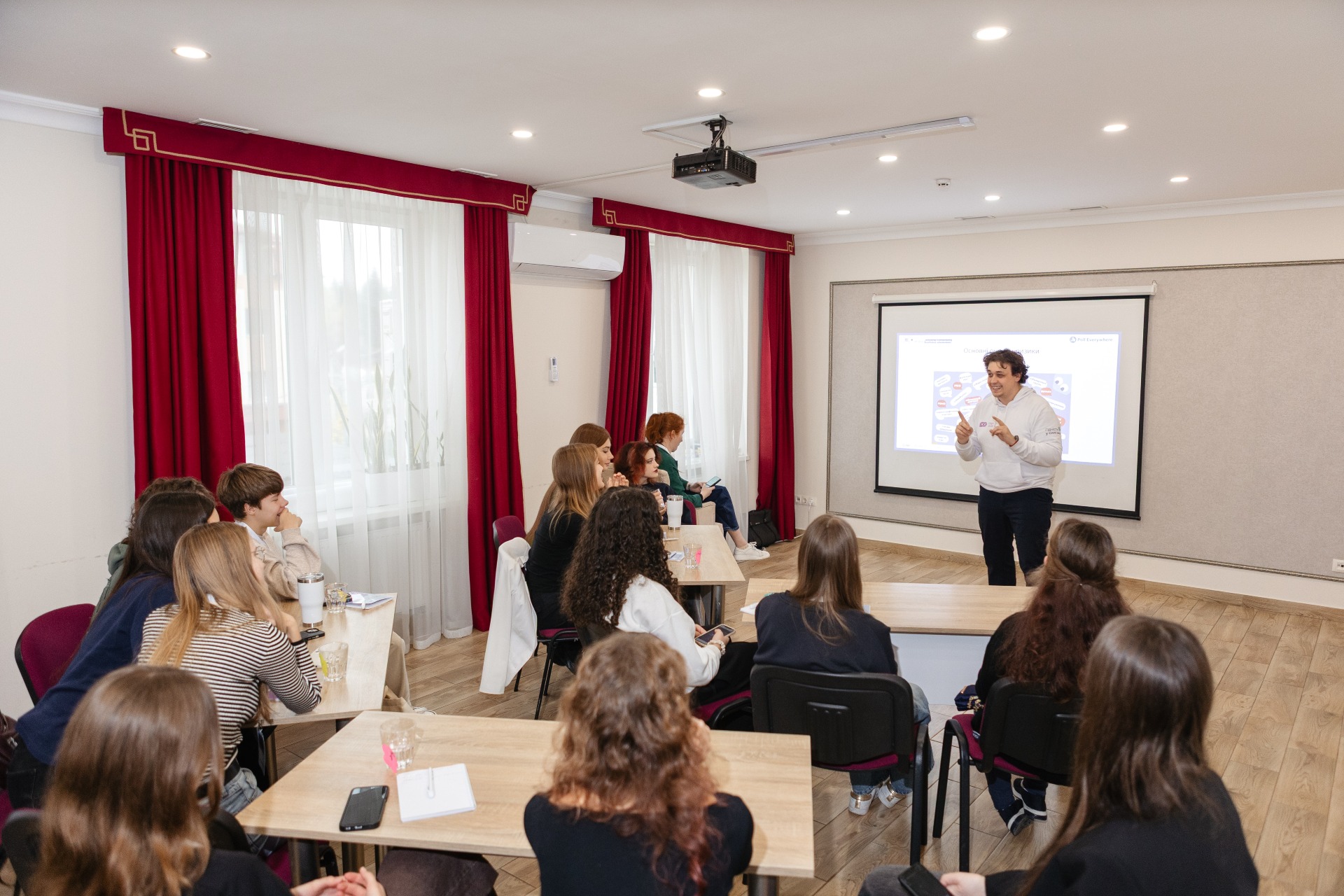
One of our recent projects is an online safety course for juvenile police officers. We continually add new sections and topics.
Since 2025, we have been developing the campaign “Don’t Fall for It. You’re Being Used”, which addresses the online recruitment of teenagers during wartime. We work alongside the National Police’s juvenile prevention unit, the Security Service of Ukraine and the Prosecutor General’s Office. Almost 15,000 people have attended our webinars for educators, and more than 89,000 children have taken lessons approved by the Ministry of Education and Science. The campaign received the Osvitoria Award 2026 and won an international Anthem Award.
Beyond training, we work with children and parents through less conventional formats. We created the world’s first VR quest exploring the experience of a child affected by online abuse, and Ukraine’s first support chatbot for teenagers. For younger children, there is the storybook “Happy and Her Superpower”. For parents, there is the Disney-supported podcast “Good Parents Don’t Get Blocked” and the book “Children and Parents on the Internet” by our founder, Anastasiia Diakova.
Another project consists of six lessons in Minecraft Education, created with our partners GoITeens. They built a game world based on our educational methodology. We also prepared a teaching guide. Children can run around, explore this world and learn more about online safety along the way.
When I was in eighth grade, for example, we typed in Word during computer science lessons. Here, children can learn by playing Minecraft. To me, that is quite a difference.
We provide our educational services free of charge. That includes the lessons we developed in Minecraft Education. However, the platform itself requires a paid licence, which creates a certain limitation. If we can, we will try to develop this project further, because it has the potential to engage many children.
Which adult misconception about children’s online safety do you consider the most dangerous?
It is difficult to single out just one — there is a whole set of beliefs involved. But I think the most misguided is: “Nothing bad will happen to my child.”
In our context, we have to take the war into account. Parents and children may perceive the online world as a safe space. As a result, adults may overlook its dangers, even subconsciously. For example: “My child is still very young; nothing can threaten them.” Or: “My child is different from other children.”
It is normal for parents to think this way; there is nothing wrong with it. But that belief can prevent them from recognising a problem.
According to the Study on Needs and Risks in the Field of Digital Safety of Children and Adolescents in Ukraine, 66% of Ukrainian parents believe that online risks do not affect their own child personally.
There is even a phenomenon known as the “bedroom illusion”. When a child is at home and physically safe, parents assume they are safe online too. If I am in the kitchen and my child is in the bedroom, what could possibly happen? They are under my supervision, they are nearby, and we are talking to each other.
Yet being physically close does not, in itself, mean that we can see everything happening to a child online.
Adults often have a similar misconception about themselves: “I am safe because I know what phishing is and I do not click on suspicious links.” But our online safety does not depend solely on what we know. It is also about vulnerability. Any of us can be psychologically, emotionally or physically vulnerable at any moment.
For example, you are walking to work when a passing car splashes you with water from a puddle. You arrive at work thinking about your appearance, and you are not always fully focused on what you are doing online or what you are telling other people. That can potentially create a risk.
Many online safety topics also remain taboo. People try not to bring them up. Online child sexual abuse, for example, is an enormous problem that is difficult to talk about.
According to our 2026 national study, around 16.5% of schoolchildren had encountered situations involving sexual abuse or sexual exploitation online at least once in the previous year: from sexually suggestive questions (9.5%) and requests to send nude photographs or videos (6.6%) to blackmail involving such material (2.3%).
Among children under six, parents reported that almost one in ten had experienced at least one such situation.
That is why we should not simply assume that our own family will be unaffected. We need to understand the risks and recognise situations in which a child may need help.
A child may not yet be able to read or have their own phone. Why should we already be talking about digital safety at preschool age?
Here is an interesting fact: the 2026 study I mentioned earlier found that most preschool children — around 58% — get their first internet-enabled device of their own between the ages of three and five. The most common age is three (26.5%), when a child cannot yet read or write.
For preschool children, the internet primarily means video: 81.5% use YouTube. Social media, including Instagram, which we discussed, remains the exception: overall, 4.6% of preschool children use social networks.
Not being able to read does not mean a child is not already using the online world. Children are incredibly curious and resourceful, especially at preschool age.
I have seen people I know hand a child a phone and say: “Here you go, I am going to get on with my own things.” What the child is doing online is unclear. But the adults think: “They cannot even read. What could they possibly do? They are three — what do they understand?”
That might seem reasonable. But it does not quite work that way. Children at this age can use Telegram: they know how to send voice messages, take photographs, record videos and send those “circles” — short video messages. At that point, a child can already encounter risks.
So it is important to consider not just age, but the developmental characteristics of that age. These determine how we connect with children and explain safety to them.
Adults need to understand what a child is doing online, what content they are consuming and what they might encounter. We should not wait until they can read or have their own phone before paying attention.
What can children aged three to six learn about safety, and how can we explain it in language they understand?
Young children discover the world through their senses: touching, smelling, tasting and moving. At this age, I would therefore focus first on simple actions, rather than words alone. A child may not remember an explanation, but they will remember the actions.
Cartoons, for example, can help explain things. We have collections of cartoons for preschool children. A child sees a character on screen and identifies with them. Through these situations, parents can show them: when you feel frightened, go to Mum or Dad.
This matters for several reasons. First, it builds trust in you for the future. Second, the child understands that if something happens, they do not have to go through it alone.
Acknowledging their feelings is important too. If you are frightened and want to cry, cry. If you are scared, you can say so. Children are sometimes judged for their emotions, and if that starts early, they may get used to keeping everything inside.
Then, when they are sixteen, we wonder why they do not want to tell us what is happening at school. Yet it may have started when they were four and we said: “Why are you crying? Stop crying.”
It is also important for a child to understand that, even at this age, they have personal boundaries and can stand up for them. Most likely, they are already trying to do so. But we adults are physically much stronger, and we may not even notice or may ignore their reactions.
As a child grows, at around five or six, it is worth beginning to discuss basic online safety rules as well. Here is an interesting observation: we tell children not to get into a stranger’s car or open the door to someone they do not know. Yet online, they can talk to anyone they like. I do not understand how that makes sense.
We need to explain: we do not send personal information to strangers. And it is important to explain what personal information actually is. Not everything on the internet is true. Not everything you see on a screen is true.
We also need to speak in language children understand. A child does not need complicated terms such as “sextortion” or “online grooming”. They need to understand what to do in a particular situation.
The most important message is: “If you feel frightened, or think you have done something wrong online, come to us. We will work it out together.”
What should adults know about the content a child watches, and why is it worth watching and playing together?
The first thing to understand is that content that looks child-friendly is not necessarily intended for children. For example, when I was growing up, there was an animated series called South Park — it is still around today. When my parents saw me watching it, they thought: “It is just a cartoon. What could he possibly see there?” But anyone familiar with it knows that it is definitely not a cartoon for children.
Today, there is also so-called “brainrot” content. This is an informal term for low-quality, chaotic and meaningless content consumed in large quantities through short videos. Take the “6–7” meme: walk into a kindergarten, say “6–7”, make the gesture, and the children will go wild. I guarantee it. There was also the Skibidi Toilet trend.
The risks associated with this kind of consumption include effects on attention and learning, sleep problems, and possible consequences for language and communication. There is also the risk of encountering hidden harmful content or coming into contact with strangers. Add to that comparing yourself with others and FOMO — the fear of missing out on something important.
That is why it is important to pay attention to the content a child consumes and understand what is happening in it. If your child wants to watch cartoons, please try watching them together.
In games, it is not only the content that matters, but also who a child can interact with. If they play Roblox, play together. This can help you understand their experience and notice situations in which someone encourages them to send photographs of themselves, share your banking details or do something else.
Adults need to understand children’s online world themselves. A child may be interested, for example, in how MrBeast, the popular YouTuber, will tackle his next challenge. That is what captures their attention.
So take an interest: “What are you playing? How do you spend your time there? What kind of game is it? Can I play with you?” And listen to what your child tells you. “Because children often tell us much more than adults are ready to hear.”
Do parental controls work? Which settings and family rules make sense?
The first thing I would say is that parental controls do not work on their own. That does not mean you should not set them up. You should, but it is important to explain to children why you are using them.
I would start not even with the technical settings, but with the “legal” ones, if you like — rules that everyone follows.
If you set limits for your children, such as no phones after a certain time or during dinner, you have to follow those rules too. When a child sees that you do not, they will also use their phone whenever they want. “You are allowed to, so why can’t I?” It is perfectly logical.
As for technical settings, there is no universal set of instructions, because they keep changing. It is worth choosing children’s versions of apps, such as YouTube Kids, and configuring them according to the child’s age and psychological and emotional development. General recommendations include turning off search and autoplay wherever those options are available. With regular YouTube, I would recommend that children watch videos together with their parents.
Next, set purchase restrictions wherever possible, especially on the phone. It is important that the child cannot change these settings themselves.
How adults configure the parental controls matters too. For example, a father uses the same password for the controls and his own phone because it is easier to remember. When the child gets a notification that their time is up, they simply enter the familiar password and carry on playing. That is why parental control settings need a separate password that is not used on other devices and that the child does not know.
Apps can also have technical flaws. Children have told me about cases where controls stopped working after a restart on a particular phone running a particular version of Android. Children are far more resourceful than we think.
In-game chats and the opportunities they provide for communication are another issue.
For preschool and younger primary school children, I would also recommend choosing a specific place to use devices — for example, in a shared room near their parents, rather than just anywhere. Set three or four simple rules: we play in an armchair near the adults, not in bed; a timer determines when our time is up.
For example, we might say: “Here is the timer. We are setting it for two hours. That is all your online time for Saturday. When the time is up, you put the phone down and do something else.” The child can see the time passing and gradually learns that there are limits to follow.
But settings alone are not enough. We need to speak in language children understand and understand for ourselves how they use the online world.
How can a kindergarten build the foundations of digital safety, even without devices?
First of all, these should be very simple, obvious things. Young children do not yet know much of what adults know, and we need to take that into account.
For example, when looking at an image, we can ask: “Could this happen in real life, or is it made up? How was this picture created?” Fire-breathing dragons guarding mountains of gold do not actually live in our world. But on a screen, things can be portrayed so that they seem real.
With younger primary school children, we often play a game called “Fact or Fiction”. We show them a situation or an image and ask: is it real or not? We can adjust the difficulty depending on how they respond. And it does not have to be about the online world — it can be about anything.
For example, a picture shows a cat flying with wings. We ask: “Could this happen in real life?” The children say: “No, it is made up.” Then we continue: “How did you work that out? How could someone have made this picture?” They say it was created using some kind of software, and we discuss their answers.
It is a form of Socratic dialogue: we ask questions, and the children respond. The aim of the game is not simply to teach them to distinguish a fake image from a genuine one, but to develop the habit of asking questions.
Gradually, as they grow older, those questions can become more complex: “Why is this content so emotional? What is the source? Is there a link to it? If I type the same headline into Google, which website will I end up on?”
And when it comes to communication: “Who is messaging me? What does this person want from me?” And then: “Mum, someone is messaging me. What should I do?”
Of course, we need to work towards this gradually. Critical thinking is a skill that takes time to develop. But it is important to encourage the habit of asking questions from an early age.
Children are naturally resourceful and curious. When we encourage their questions and ask further ones, we help them develop their ability to analyse.
How is artificial intelligence changing children’s safety? What should adults consider before uploading a child’s photographs or voice?
Artificial intelligence is developing very quickly. When we upload a child’s photograph or voice to an AI service, that data is processed. It is important to understand what happens to it afterwards: whether it is stored and how it is used.
When discussing the internet, I always stress that uploaded content will stay there forever. It can be copied, altered and used for fraud or manipulation.
We are seeing an increase in material depicting the sexual abuse of minors, including material created using artificial intelligence. Even bans and services’ rules do not always stop offenders.
So before uploading images of children, it is worth asking whether there is a real need to do so. For example, you might want to create a lovely picture of your child in a costume or a suit of armour. But it is important to consider where their photograph is going and how it could be used.
For me, the key is to understand what interests a child, who and what they interact with, and where their data ends up online.
What should parents and kindergartens consider before sharing photographs and videos of children? How do the risks differ between public social media and private groups?
I often see friends, former schoolmates, university classmates and acquaintances posting photographs with their young children on social media. I have nothing against it — it is each person’s choice. My job is to say: please think about it, because it could put your child at risk in the future.
A post will not necessarily have harmful consequences. But can you guarantee that it will not affect you personally? No. And there is another important question: did the child agree to those photographs being published? If they are very young, they may not understand what is happening at all.
On public social media, a photograph becomes public. It is very easy to take a screenshot, copy it, alter it and reuse it. Much depends on the imagination of whoever wants to use it.
Geotags, location information, uniforms and the location of the kindergarten can all help someone work out where a child spends time, get a sense of their routine, and learn what interests them and what they do.
Even knowing which kindergarten a child attended can later become a way to establish contact. For example, when the child is fifteen, someone writes: “Oh, I went to Kindergarten No. 12 too. You went there as well? Don’t you remember me? I remember you. You have grown up to be so beautiful.” And that is it — a conversation begins. There appears to be a shared experience connecting them.
Photographs posted by adults can also be used to intimidate a child. For example, someone threatens to hurt their mother unless they send nude photographs. To make the threat convincing, they send a photograph taken in the child’s kitchen — the same one their mother posted earlier. An image of a familiar place can make the threat feel more credible to the child.
This concerns more than parents alone. Educational settings sometimes overlook the risks too: they film children taking part in new TikTok trends and publish the content. It may look sweet and lovely, but we also need to consider the possible consequences for the child.
As for private groups — first, a screenshot remembers everything. Second, a group like this creates a sense of safety: “There are only twelve members here. I know everyone. Nothing bad will happen.”
Yet even in a private group, information can be copied or passed on. A member’s account could be hacked. That sense of security sometimes encourages people to share things they would never post publicly.
For kindergartens, it is important to have parents’ written consent to publication. If parents do not give that consent, I would advise against photographing the child.
Content should not be created when children are in vulnerable situations: washing, changing clothes or in other situations that should not become public.
There are ways to show what a setting does without making children’s faces the main focus of the image. For example, while children are in a lesson, we can photograph the teacher, what is written on the board, and the children from behind. Or, when children are working in groups, we can photograph them from above so that their faces are not visible.
For online events, Zoom masks and other features offered by these services can also make identification more difficult.
And, of course, photographs should not be captioned with children’s full names or include location information or geotags.
A child tells you that someone online is asking them to send a photograph or keep their conversations secret. How should an adult respond, and where can they find help?
First of all, do not punish or blame the child, or press them for details if they do not want to talk. When a child is in such a stressful situation, our job is to listen and hear them.
It is important to say: “We are here for you. We are ready to help and go through this together.” We should not promise that everything will definitely be fine, because we cannot guarantee that. But we can be there and offer support.
Adults themselves need to try to respond calmly. If a child sees intense fear or a strong reaction, they may think: “Why did I tell them? Now I will be in trouble because of this too.” Make sure you thank them for trusting you.
And it is important to remember: the child is not to blame. The offender alone is responsible. I want to stress that — the offender alone. There should be no stigma or blame directed at the child.
Next, do not delete the messages or wipe the device: law enforcement may need that information. Keep the other person’s username, a link to their profile, the dates and times of messages, and the conversation itself: how contact began, where they found the child and what they wrote.
Do not engage in a conversation with the offender, respond to them or threaten them. This could prompt them to act more aggressively. Communication needs to stop.
Do not share the material or show it to other people either. We are gathering information that could potentially become evidence; law enforcement will handle its further use.
Once the necessary information has been preserved, block the contact and report them on the platform or in the app. If the material has already been shared, also contact the platform to request its removal.
If a child has sent nude photographs or videos of themselves, experienced blackmail involving such material, cyberbullying, online grooming or online stalking, contact the cyberpolice. This is particularly important if the child’s life or health is at risk.
You can contact the 1545 helpline with any questions about online safety: for clarification, guidance or help in cases of abuse. Once connected, press the star key and then 3.
For content involving child sexual abuse, you can turn to the specialist portals Take It Down and the Internet Watch Foundation — IWF.
You can also contact our organisation. We have a psychologist who works with these cases, and we can help too.
Where should a kindergarten start if it wants to train its team and help parents? Where can people find your materials, and can they use them abroad?
First, I would recommend exploring our website. It has sections with examples and practical recommendations: how to talk to children, how to configure their digital environment and what to look out for.
To begin with, I would recommend three resources:
Lessons for primary school children aged 7–9 — for those working with younger schoolchildren.
The parents’ guide “Parental Controls to Protect Children from Online Risks”.
Our materials are available free of charge. We offer online courses for educators, school psychologists, education administrators, juvenile police officers and social workers.
There are fewer materials for early childhood education at the moment. It is a distinct field, particularly when it comes to communicating directly with children. I can go into a class anywhere from the second to the eleventh grade and deliver a lesson, but preschool children need a different approach: children of this age do not readily let an unfamiliar person into their world.
These materials therefore require separate development. We are currently exploring how we can support early childhood education and which lessons to develop.
At the same time, our guides contain recommendations for parents of children of different ages. They cover mental health, online safety more broadly, sexual abuse and communication with children. There is also a separate series of technical guides — covering everything from Telegram settings to televisions — to help parents address the technical side of their children’s safety.
We also have a YouTube channel. We run many live webinars, streamed on YouTube and social media. The recordings can be watched afterwards.
There is also a ten-episode podcast for parents about children’s online safety. It explores different topics in more depth, allowing listeners to choose what is relevant to them.
As for other languages, the materials we are discussing are available in Ukrainian. However, families and educators abroad may find the YouTube recordings useful: they can use automatic captions and automatic translation into another language.
What should adults change first to help children trust them and ask for help?
I would start with a conscious approach. Alongside configuring safety settings on devices, we need to talk to children about online safety.
Real protection is not simply a child knowing what cyberbullying is. It is a child knowing that they can come to an adult who will not punish them, but will support and help them.
So I would begin by trying to build trust. I see this with my own pupils: it is much easier to work with children when there is trust between us. They trust me and my judgement, and take a greater interest in what I suggest.
The most important thing is simply to talk to children. Ask how their day went. But there is an important detail here: do not just ask questions — share something about yourself too. Life is not an interview or a lecture that a child has to keep delivering to you.
For example: “Something happened at work today. How was your day?” The child may then share their own story or ask you another question. It is an exchange of real-life experiences.
At the same time, it is important to understand which of your own problems you can share. I do not mean telling a child that you cannot afford the utility bills or that your salary has been cut. Such conversations can place an additional emotional burden on them.
Telling them that someone stepped on your foot on public transport today and that it felt unpleasant is different. You are sharing your experiences and feelings without placing adult problems on the child’s shoulders.
Another important point is to give children age-appropriate responsibility and explain the consequences.
Here is an example from my own life. When I was fourteen, I went to my mother and said I wanted a tattoo. I expected to hear: “A tattoo? Are you serious?” Instead, she said: “Go ahead.” And suddenly I realised: no, I did not want one. It would be there for life, and I would have to live with that decision.
For me, that story is about trust and understanding consequences. Because of their psychological and emotional development, children may not think about what happens next. Many things simply seem cool to them.
That is why it is important not just to say: “Think before you act”, but also to ask: “Why did you do that? What do you think the consequences might be?” And talk it through.
And, of course, we need to set an example. This is especially true for preschool and younger primary school children: parents are an unquestioned authority for them, and children do what you do.
This may go unnoticed in everyday life. But when I observe younger primary school children, I can clearly see how they mirror their parents.
So if we want a child to take care of their safety online, we need to start with ourselves. We are their example.
🎭 Behind the Profession
At the end of every interview, we ask our guests a few personal questions that reveal a different side of them — beyond their professional lives.
What is your favourite childhood book, and why?
I do not remember the exact title, but my grandfather gave me a collection of folk tales from western Ukraine. I am from the north myself. For some reason, the book had been pierced with a fork in several places — right through the pages.
It was a fascinating book of Galician folk tales. Thanks to it, by the age of five I already knew what a gazda was — a householder or farmer — what kohut meant — a rooster — and what a vatra was — a bonfire. I read it, discovered that world and really enjoyed it.
What advice would you give your younger self?
My first thought was: change nothing and keep doing what you are doing, because I am actually quite happy with how things have turned out. But if I had to give advice, it would be to tell the people you love that you love them more often. Because they have this painful habit of leaving your life when you least expect it.
What might surprise our readers about you?
This one is quite simple. I know that the name Estonia is linked to a reference made by the Roman historian Tacitus in AD 98. He wrote a treatise on the origins of the Germanic peoples — I cannot remember the exact title right now.
That does not necessarily mean he was referring to modern Estonia, but it is one of the accounts associated with the origins of the early Estonian people. Well, a historian tends to know things like that.