
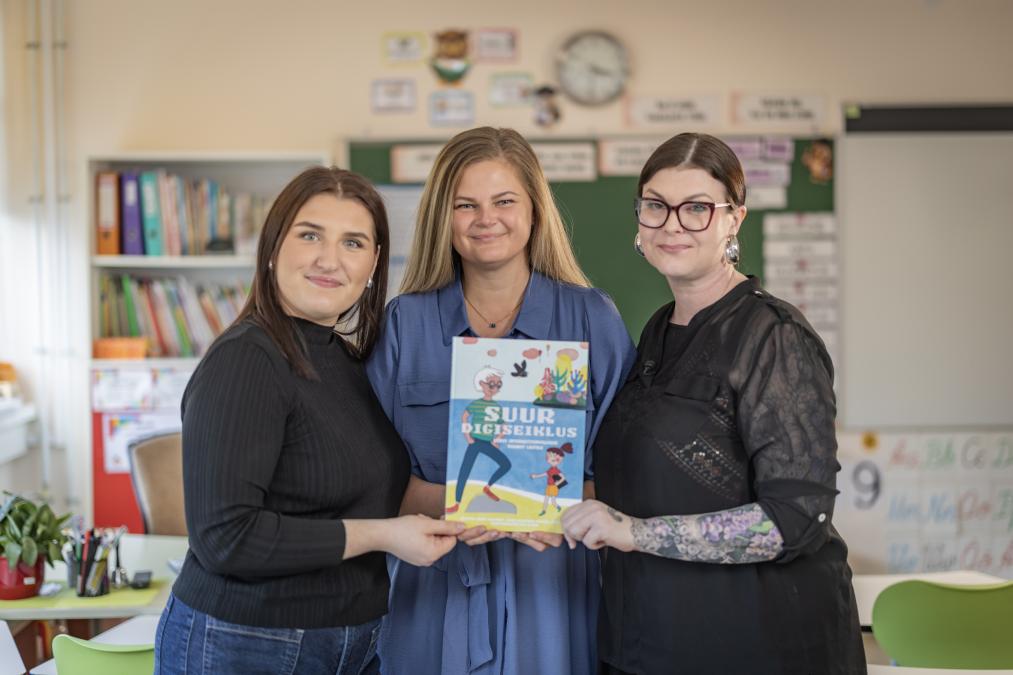
Children's exposure to the internet begins at an increasingly early age, which is why it is important to talk about digital safety already in kindergarten. For this very purpose, a screen-free learning kit supporting children's internet safety, "The Great Digital Adventure", was created.
The Police and Border Guard Board and media literacy experts from the University of Tartu, Inger Klesment, Maria Murumaa-Mengel and Killi Agur, joined forces to create a kit supporting children's internet safety, "The Great Digital Adventure". It includes a book and playful teaching materials that attract children with colorful characters, an engaging story and illustrations. The kit, which is unique in Estonia, makes teaching digital literacy easy and fun.
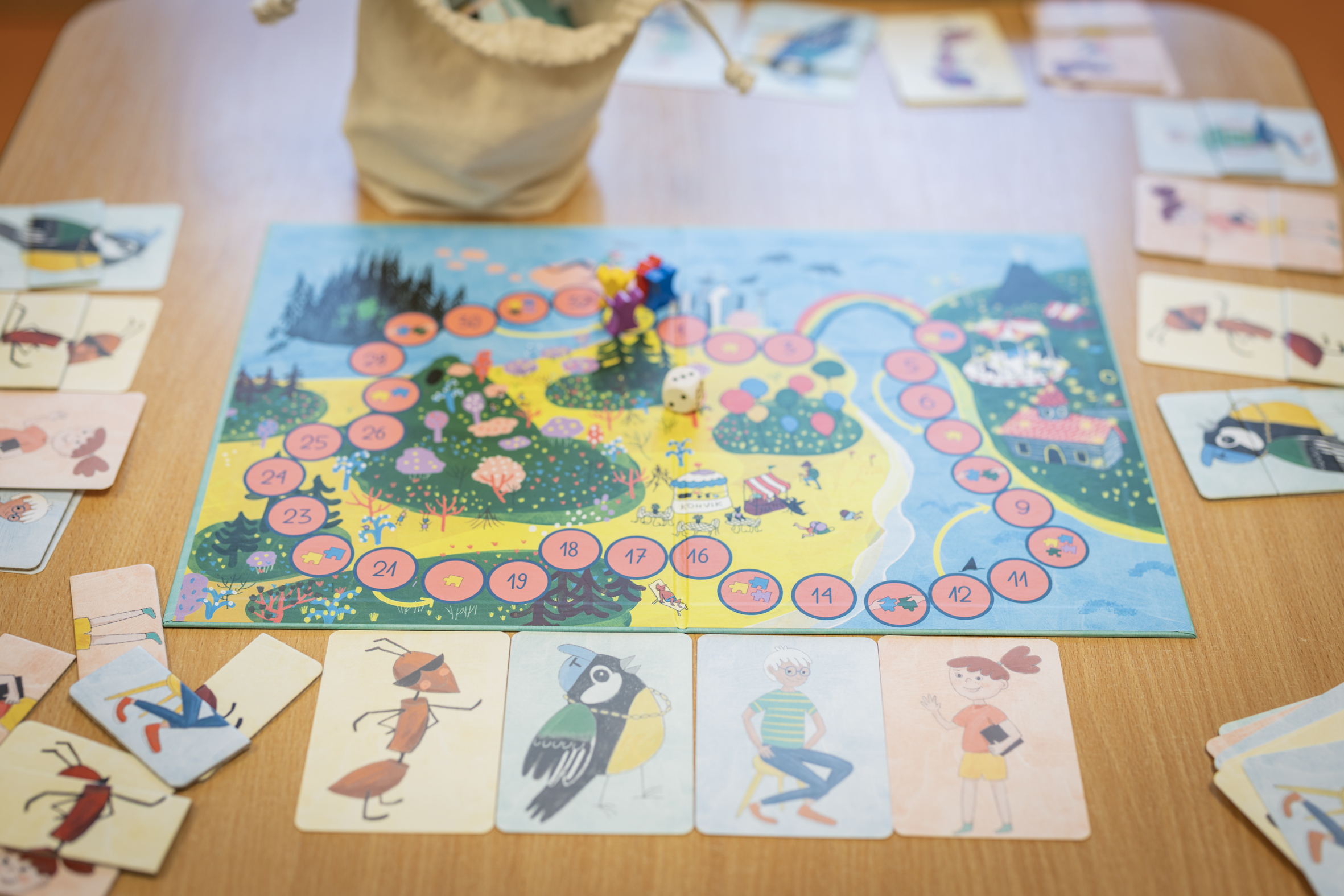
The main characters of the book, Jette and Little Uncle, embark on an adventurous journey in a game world where they encounter various internet threats. For example, they learn what a secure password is, why you should be careful when sharing personal information and how to recognize offers that are "too good to be true". It also discusses the risks of communicating with strangers and other important digital safety topics, which are reinforced by the included picture cards, worksheets, board game and conversation cards.
The book can be read and other materials downloaded completely free of charge at www.suurdigiseiklus.ee. In addition, the paper version of the book is available at Rahva Raamat, Apollo and Varraku bookshops.
Interview with the book's author, Inger Klesment
Why did you decide to write such a book?
A study commissioned by the Police and Border Guard Board revealed that by about the third grade, it is completely normal for children to be asked for (nude) pictures by strangers, and at the same time, it was found that parents of kindergarten-aged children believe that it is too early to talk about such topics. Consequently, kindergarten and primary school are exactly the right time to carry out age-appropriate prevention work, when dangerous situations are not yet normal for children.
Since protecting yourself and your data online starts with basic digital security, it was decided that the educational material should cover the basics of internet safety and that the topic of communicating with strangers can be included. For example, what can happen if you accidentally send a picture or video of yourself to a stranger, and instructions for parents on how to react when hearing a child's concerns.
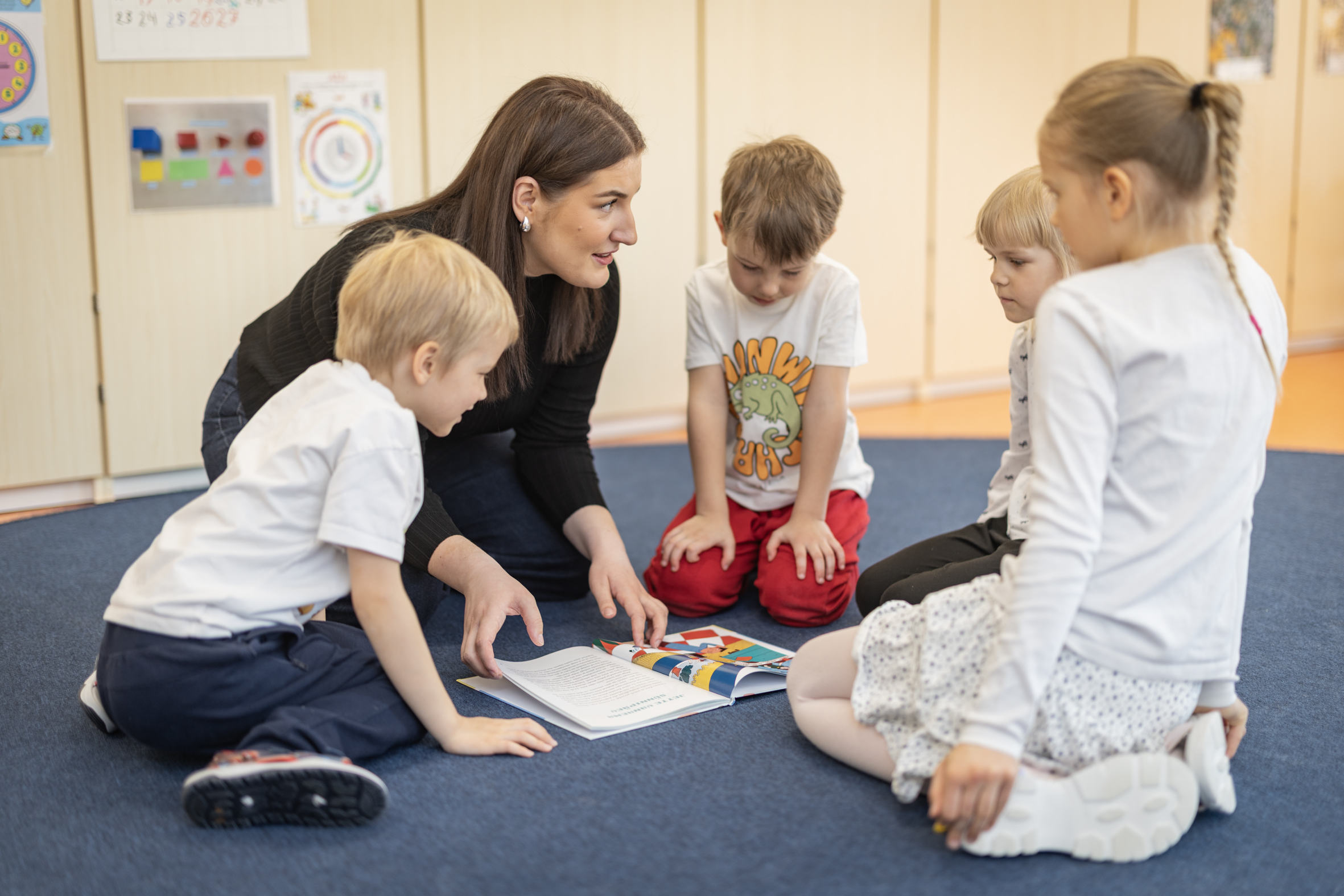
What do you think of children's digital literacy today?
My personal experience working with children shows that in some cases they are much more aware than, for example, seven years ago. Today's children can describe how to change their algorithm and recognize classic advertising, but they may not perceive content marketing in TV shows and computer games or paid videos on YouTube as advertising.
Children have also come into contact with artificial intelligence so much that when watching a cartoon or a film, they can ask whether a character or situation was created by artificial intelligence or is a real person. However, they do not recognize it without fail, and it is becoming increasingly difficult.
At the same time, there are topics and dangers that a child may not have the vocabulary or experience for in kindergarten, but which inevitably come with immersion in the online world and should be talked about. For example, it must be remembered that algorithms favor the spread of content that goes beyond borders, that causes horror, anger or horror.
Similarly, young children who are just discovering the internet may start making videos from a very young age, imitating others or out of a desire to get likes and comments, that will be embarrassing in a few years. Driven by the same desire to get attention, children also leave their accounts open to strangers and end up communicating with complete strangers, some of whom are children, but not all. Children are invited by adults to communicate on other platforms every day, such as Discord or Telegram, where there is no moderation in the same way as in the chat functions of children's games. There, children are often asked for pictures and other personal information.
You can't talk about all the dangers right away when a child starts playing online, but you should still keep an eye out. "The Great Digital Adventure" gives you the opportunity to talk about very tough topics in an age-appropriate and fun way, just as much as you need to.
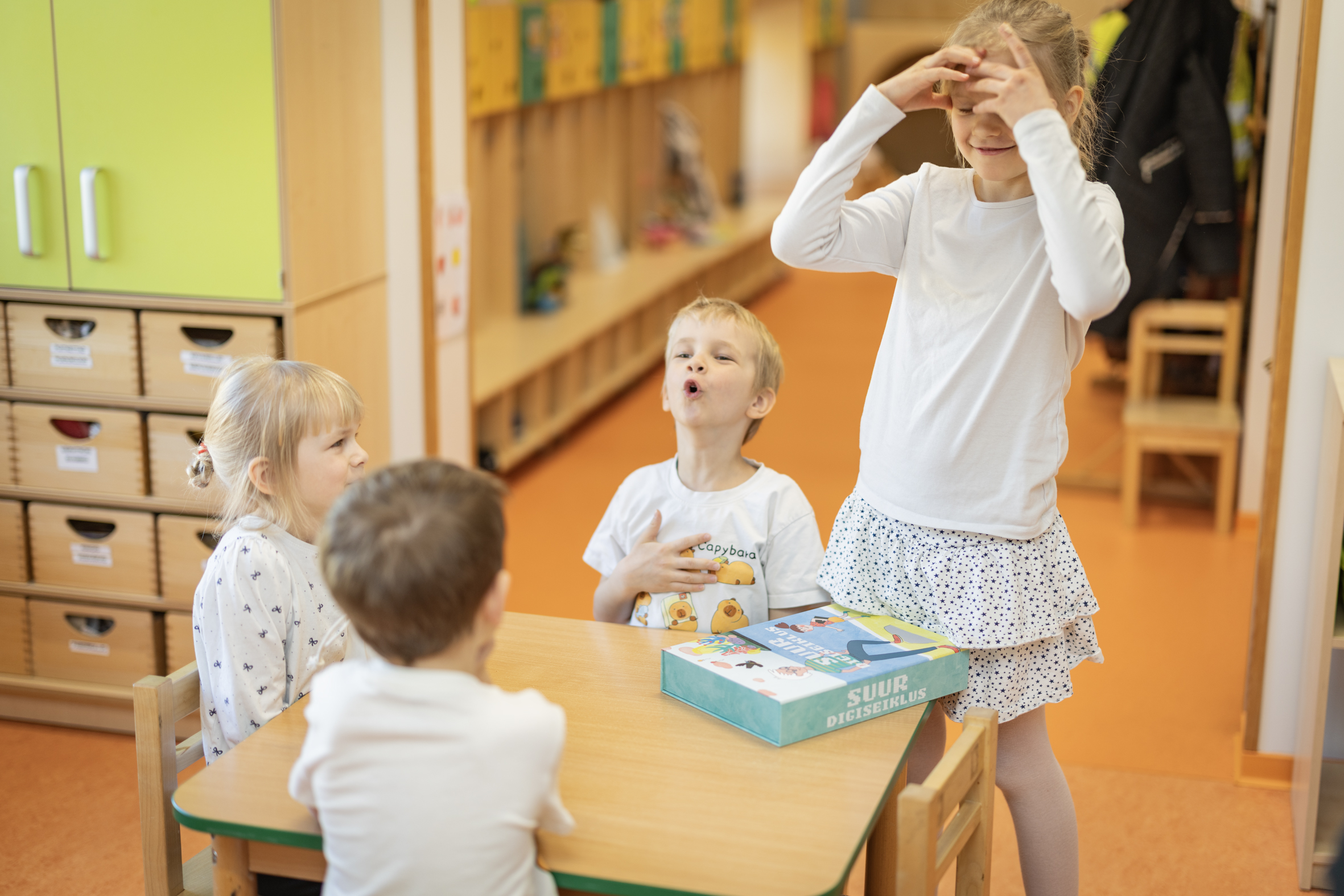
What can parents and children take away from the book?
The most important thing is that an adult should keep an eye on a child's internet use and, ideally, play internet games with the child. A child should not be left alone on the internet.
That is why the main characters in the book are a child and an adult, to model ideal internet use. By the way, the adult with whom a child discovers the internet must necessarily be a mother or father! In this book, for example, there is an uncle. Children often say that they turn to an uncle, aunt or older sibling when they have questions or concerns.
Psychologist Mirjam Lanno was also involved in the process of completing the book. The book has a very important page for adults, which describes what to do if a child is communicating with an unfamiliar adult online. What to do and how to react in this situation.
But what recommendations do you have for parents so that they can develop their children's digital skills?
The first recommendation is that parents should play computer games with their children. However, as a mother of three, I know that it is not always that easy, because you also have to have time for other activities! So you should create a sufficiently trusting relationship with your child so that if something happens, the child can turn to you without fear of punishment.
It is important to note that Youtube Kids is not a safer environment than regular Youtube. Similarly, Roblox is an environment for children, but it is full of pedophiles. You should not expect a game or social media platform that is ostensibly for children to protect them. The goal of games and social media platforms is to make money, no matter what the cost.
My recommendation is that children should be in environments that are very limited, such as Go3's children's corner, Telia's children's corner, ERR's evening story app, and Lasteekraan, for example. If your child goes online, it should be as large as possible so that you can at least see what is happening on the screen from the corner of your eye.
It's also worth telling children about artificial intelligence, as it allows them to change their voice, appearance, and even if it seems like someone sent a voice message and it's a child's voice, it may not actually be.
Recommendations for safe internet use
The author of the book, Maria Murumaa-Mengel, said that her main recommendation is always the same: talk to your child, try to talk less and listen more. You need to be interested in your child's media world and hold back judgment. Childhoods are different, and that's how it should be. What may seem like a child's plaything to a parent (passing a screen and not doing "real" things) is important to the child. It may also be possible that he or she is really practicing for the life that awaits him or her, developing the kind of knowledge and skills that he or she will need more in the future.
The author of the book, Killi Agur, said that children's digital journey starts at home and the most important thing is the parent's example. If you use technology consciously and in a balanced way, the child will learn to do the same. It is good to agree on clear rules for screen time and to maintain a balance between other life and digital activities. She added that you should also talk to your child about how to evaluate information on the Internet and why you can't believe everything. Security is equally important – protecting personal data, passwords and the issue of cyberbullying. Do digital things together, learn and create – this will create better understanding and trust. The most important thing is a supportive relationship, open communication and consistent guidance.
**
The materials were prepared within the framework of the Police and Border Guard Board project “Preventing Child Sexual Abuse Online”. The project is co-financed by the European Union and the Ministry of the Interior.