
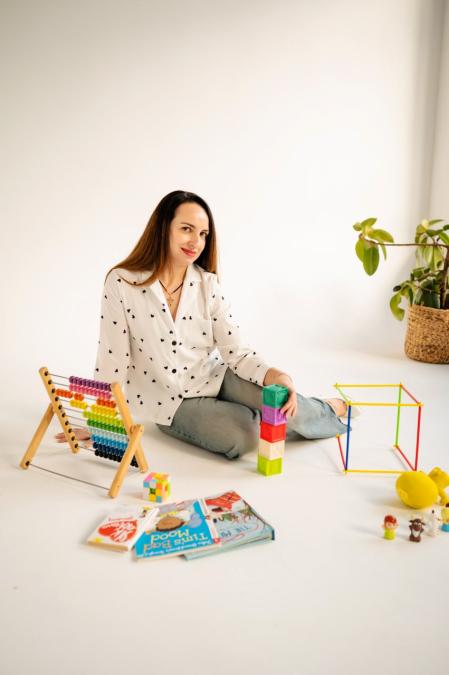
Our new heroine is Tetiana Shyshenko — an architect by education, a psychologist by calling, and today a mother of many children who builds not houses, but an environment for a happy childhood.
In 2019, Tetiana opened Peekaboo, an English-speaking kindergarten in Rivne — a space where children learn English through play, sing the national anthem every morning, create paintings about peace for international projects, and learn to talk about difficult topics without fear.
Here, military personnel come to children not only as heroes, but as people it is important to know and understand. Here, little girls try on the crown of an international beauty pageant winner, while teachers explain serious topics through fairy tales, cartoons, and care.
We sat down with the founder of Peekaboo to talk about children growing up during wartime, an English-speaking environment, modern parenting, emotional intelligence, competition in private education, and why it is important even for adults not to lose their inner child.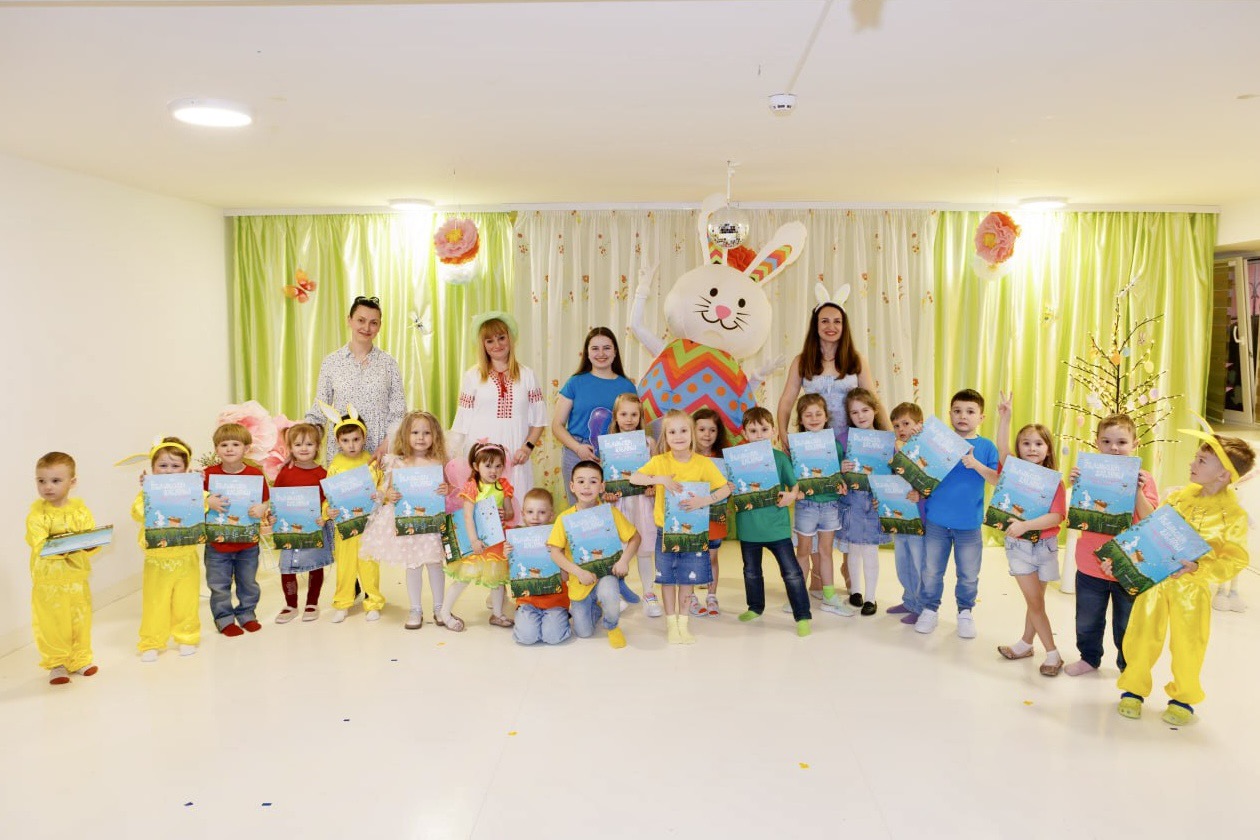 Tetiana, we have known each other for many years, since 2022. Let’s go back to the very beginning. What became the main inspiration behind opening Peekaboo, and when did it happen?
We opened the kindergarten in 2019. The main inspiration was, of course, the birth of my own children and the strong desire to provide them with high-quality preschool education and a solid foundation for development. After all, nearly 98% of a child’s brain develops during the preschool years, and I wanted to apply this understanding to my own children’s growth.
At the same time, having children often reveals hidden talents within ourselves. That happened to me too. Creativity had always been part of who I am, but after becoming a mother, I truly discovered how much I loved engaging in children’s development, observing how it influenced them and how excited they were to explore the world.
Eventually, I wanted to scale this experience and share it with other parents — to create a space where children could discover the world in a playful, engaging, and educational way.
Preschool education was not originally your professional field, right?
My first degree is in architecture, and my second is in psychology. Today, I jokingly call myself “an architect of children’s souls.” This profession combines everything I truly love: children, creativity, imagination, and foreign languages.
Our kindergarten has its own special feature — it is fully English-speaking. You could even call it a bilingual environment. Children discover English naturally through play, daily communication, and immersion in the environment.
That was also one of the key reasons why I opened the kindergarten. I wanted as many children as possible to start learning foreign languages from an early age. English is especially important for us today as Ukraine moves closer to Europe, and the language is gradually becoming an essential part of education.
English is present in our kindergarten every single day — for more than 50% of the time. And because children are immersed in the language environment, they absorb it incredibly quickly, almost like little sponges.
When you first opened, was there already demand for an English-speaking kindergarten?
Yes, absolutely. Parents were very interested, especially young progressive families — people working in IT, young entrepreneurs, modern parents who consciously wanted their children to grow up in an English-speaking environment from an early age.
Today, the private preschool education market is highly competitive. What do you do differently? What makes Peekaboo stand out?
First of all, our English-speaking environment. In Rivne, we are the only fully English-speaking kindergarten, and that definitely sets us apart.
Another important aspect is creativity. All our activities are designed to help children express themselves creatively, because creativity is how children communicate their emotions and their understanding of the world.
We also organize many unique meetings and experiences for children. Military personnel, writers, and various inspiring guests visit us. Recently, for example, we welcomed a Ukrainian beauty pageant winner from Mrs European Nations.
We also organize many excursions, even during wartime, while of course taking all safety precautions into account. We visit libraries, pizza restaurants where children make their own pizzas, alpaca farms, and horseback riding centers. We constantly try to diversify children’s experiences in our kindergarten.
You mentioned hosting a beauty pageant representative. Could you tell us more about that meeting?
Last year, we were visited by Mariana Sadovnyk — a businesswoman and mother of three children who represented Ukraine at the international beauty pageant Mrs European Nations. She became one of the winners and received the title Mrs European Nations Petite 2025. The competition serves as a European qualifying stage for the global Mrs. Globe competition, which will take place in the United States in June 2026.
It was truly a very emotional and unforgettable meeting. I think almost every little girl dreams of being a princess or a queen at some point in childhood. But this meeting was not only about beauty.
Mariana came to us with an important mission — to once again draw attention to the impact of war on children.
Our children created drawings about peace, dreams, and the end of the war. These drawings were later used as prints on the dress Mariana wore while representing Ukraine at the international competition.
After the contest, she returned to visit us wearing that same dress. It was an incredibly emotional moment for the children. The girls tried on the crown, took photos, and talked with her. It became a very warm and inspiring memory both for the children and for us adults.
I believe meetings like these are very important because they show children that creativity can also be a way to speak to the world about meaningful things.
We also regularly invite military personnel to visit the kindergarten. We have a flag signed by soldiers, and they often gift us military patches. We also organize charity collections to support the army.
At one point, we invited a soldier with an amputation and spoke with the children about people with disabilities and wheelchair users. Children already see such people in everyday life, and it is important for them to understand what happened and how to communicate respectfully and thoughtfully.
We are deeply grateful to the soldier who visited us. He spoke about his experience, showed the children his prosthetic limb, and even allowed them to touch it. Before the meeting, we showed the children a short психологічний cartoon to gently prepare them for the topic.
We always try to approach serious subjects carefully and in a child-friendly way — through conversations, cartoons, explanations, and real-life experiences.
What changes or decisions appeared in your kindergarten specifically because of the war?
One of them is definitely the moment of silence and the national anthem. Every morning begins with welcoming the children, and at 9 a.m. we all observe a minute of silence together, followed by the anthem. The children already know it by heart and place their hands over their hearts. These are very emotional moments.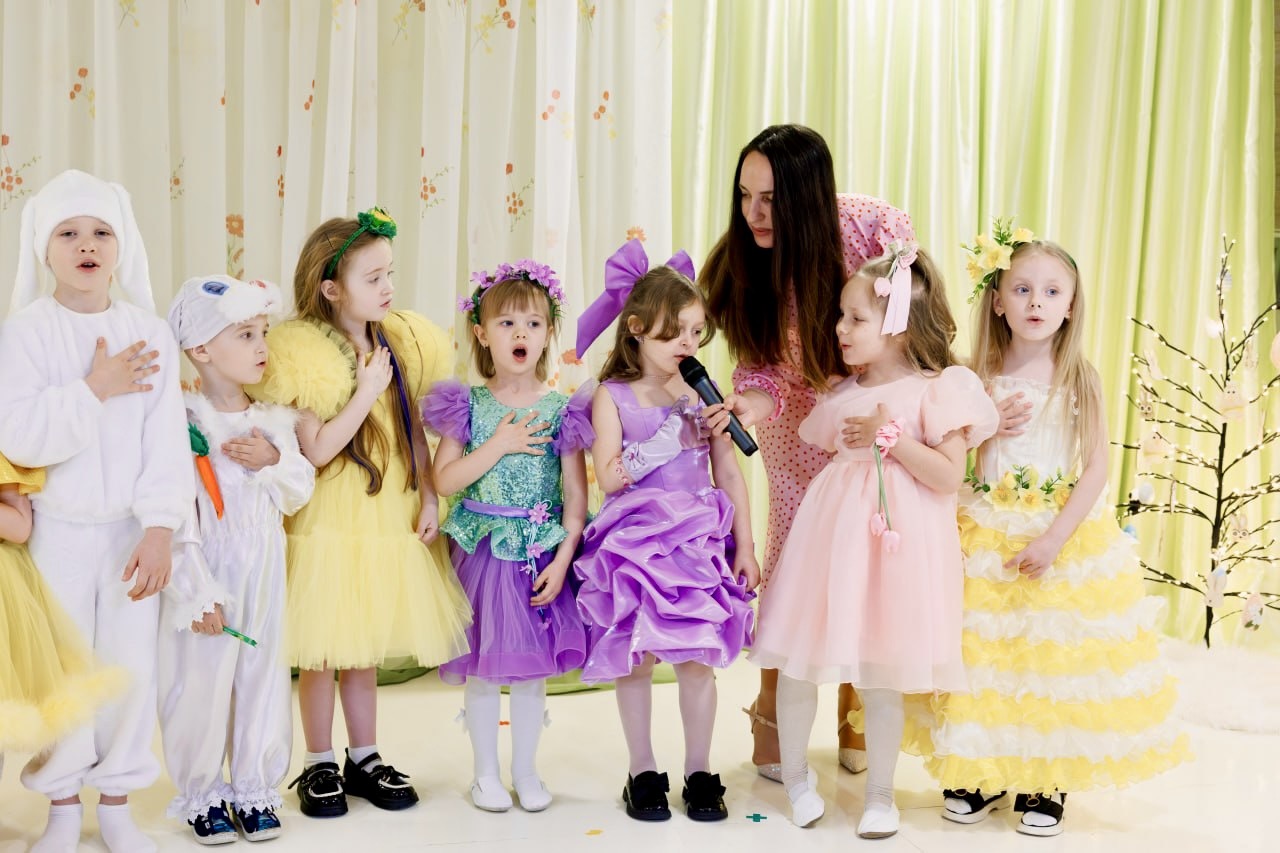
We have also introduced more patriotic activities and discussions. Even though our kindergarten is English-speaking and we use many international educational practices, maintaining a strong Ukrainian identity is extremely important to us.
Parents themselves asked us to include more of this component, because even in an English-speaking environment, children should still grow up understanding who they are and where they come from.
Do you feel that children today live under constant stress?
Of course. Even though our region is relatively far from the frontline, children still hear air raid alarms. Some of our children have parents serving in the military, so they understand very well what is happening.
Sirens, explosions, uncertainty — all of this affects children. Of course, the level of stress is different compared to children living in frontline or occupied territories, but the emotional impact is still very real.
In your opinion, what is more important today: teaching a child to read or teaching them how to cope with stress?
I believe that the ability to cope with stress is essential today — both for children and for adults. And not only in countries experiencing war. Emotional intelligence is no less important than academic knowledge.
At the same time, we should not forget about school preparation. And this is not only about reading or writing skills, but also about social skills, communication, and psychological readiness for school.
Modern life moves incredibly fast, and children are exposed to a huge amount of information every day. When a child enters a classroom with 30 students and one teacher, it becomes difficult without basic reading, writing, and counting skills.
That is why balance is so important: both emotional resilience and academic preparation matter. Parents also play a key role in supporting children in this process — even though sometimes parents themselves need support as well.
What does a typical day at Peekaboo look like for a child?
A day at our kindergarten begins with shared morning rituals — a moment of silence, the national anthem, and a weather calendar in English. Children also have their own small “responsible roles,” which helps them develop independence and leadership skills.
Throughout the day, children participate in integrated developmental activities: English-speaking exercises, creative projects, logic games, mathematics, pre-writing practice, and active play. After classes, they spend time outdoors, and after lunch they relax in their cozy wigwams while listening to fairy tales or calming music.
In the second half of the day, older children focus on school preparation, while younger children enjoy music activities and free playtime. And honestly, this is the part children love the most — because they can communicate with each other, invent role-playing games, and simply enjoy being children.
Tell us more about the English-speaking environment. What methods do you use?
We use a communicative teaching approach focused on spoken language. We work with flashcards, multimedia materials, English warm-up exercises, and short тематичних cartoons in English.
We also actively use the TPR method — Total Physical Response — where children repeat words and phrases through movement and physical actions. This works especially well during active games.
Our teachers are language specialists who speak both Ukrainian and English fluently. One of the most important things is that they know how to balance the bilingual environment properly.
For example, when a child is just adapting and is not yet familiar with English, we do everything possible to minimize stress. The child gradually becomes comfortable with the language through the environment, multimedia, and everyday interaction.
At the same time, all questions related to emotional support or safety are, of course, explained in Ukrainian.
What results do you see in children after several months in such an environment?
This is exactly why we conduct individual assessments for children every year. They last around 15–20 minutes and include spoken language, writing, and different developmental areas. We share the results with parents both in written form and through video reports. We also hold individual meetings with parents. We do not organize large general meetings because we do not see them as effective and we always respect pedagogical ethics.
Every parent wants to hear specifically about their own child. During these meetings, we discuss the child’s strengths, areas for improvement, and assessment results. All specialists working with the child participate in the conversation.
And the results are truly very strong. This is also a huge motivation for our teachers because they can clearly see the outcome of their work. One father once told us that when relatives or friends visit their home, they joke: “We speak worse English than your child.”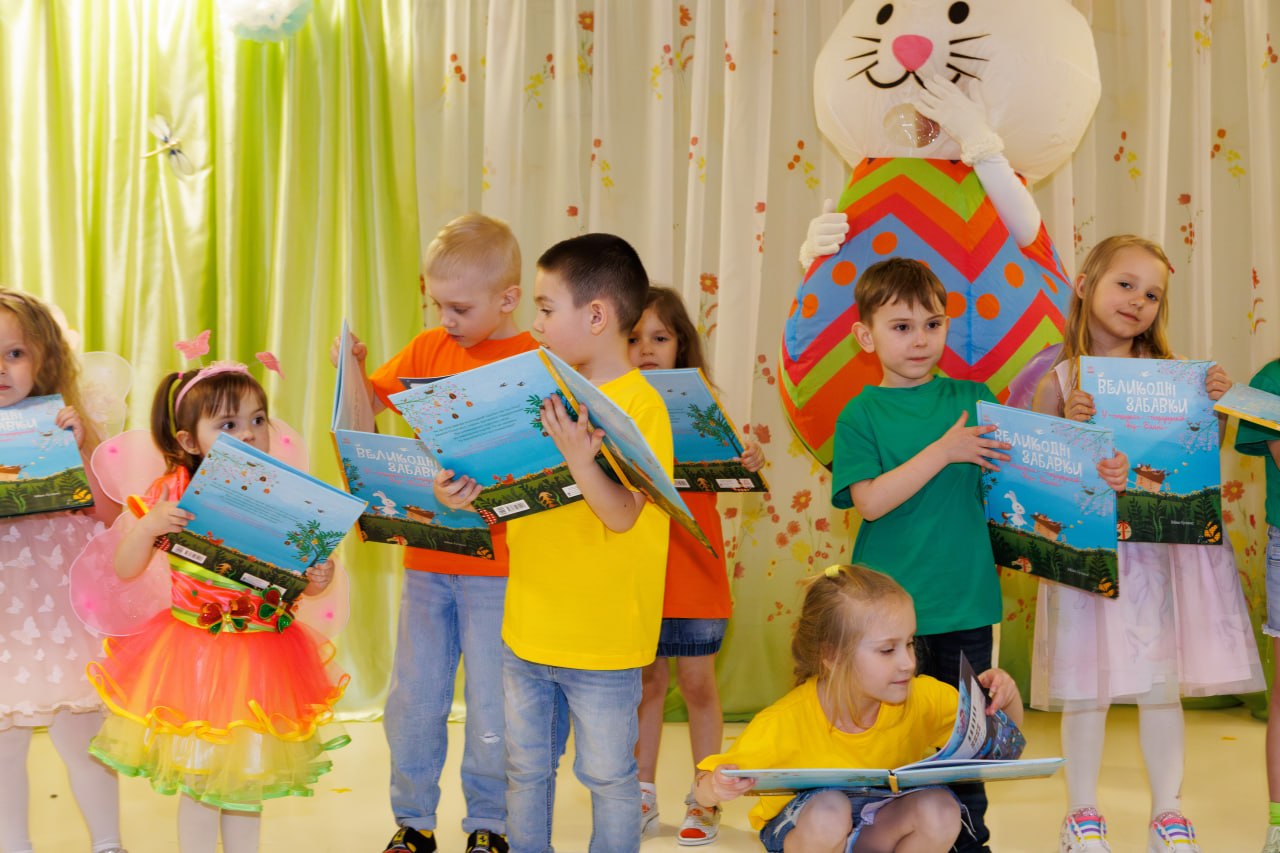
And for parents, this is incredibly valuable. When a child starts speaking their first English words at home, parents feel happy and understand what they are investing in, because our kindergarten is private.
Were there any decisions you introduced because you felt the need to “work differently”?
I believe every entrepreneur must constantly introduce new solutions. The world keeps changing, new challenges appear all the time, and businesses must continue evolving.
One of our decisions was implementing the ELIIS platform for kindergarten management. As a director, I was looking for a system where all kindergarten information could be conveniently organized: menus, photos, reports, and communication with parents. It was important for me that parents could clearly see what their children were doing every day, while teachers could quickly update the platform with information.
We also have our own educational program. We independently design thematic weeks, lesson structures, and developmental activities.
In the future, we would also love to create our own educational platform or custom learning materials for children. I would love every child to have their own yearly workbook they could use throughout the year and later take home as a reflection of their growth and development.
For me, that would be a completely new level — creating our own product fully tailored to our philosophy and educational approach.
How do you think gadgets and the modern digital world have influenced children and their development?
I definitely see that children today are different, and a large part of that is connected to the digital environment they grow up in.
If we compare it to our own childhoods, we did not have gadgets or computers. We spent much more time outdoors, playing active games and communicating face-to-face. Today, children have access to far more information and opportunities, and this naturally shapes a different type of development.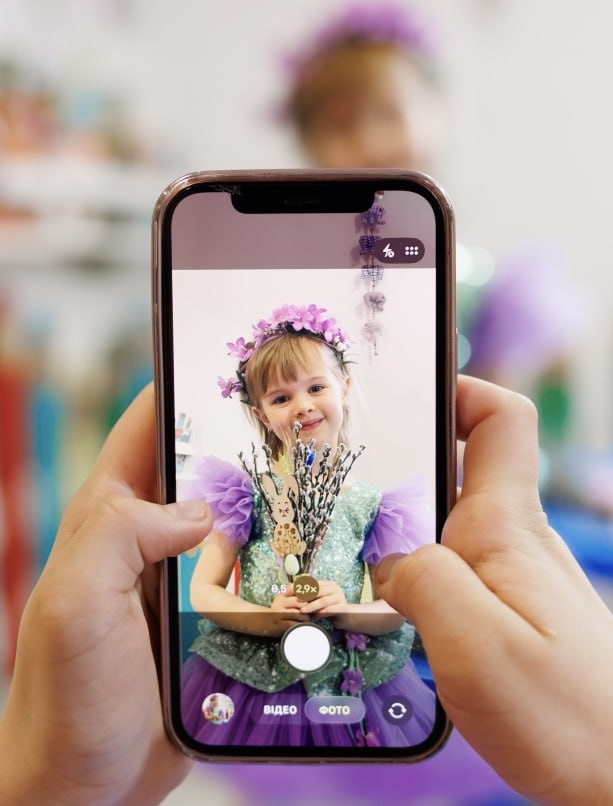
I do not see gadgets as something entirely negative. On the contrary, they can be useful tools for learning and development. But the key word here is balance. Everything should be moderated and controlled.
It is also very important that both parents and teachers work together to build a healthy culture around technology use — so that it remains conscious, useful, and does not overload children with information.
You actively implement new opportunities for the development of your kindergarten — both in the private sector and through government programs. Previously, you had already worked with grant support, and now you have also joined the “eYasla” program. Why do you think many kindergartens still hesitate to participate in it?
I think the main reason is that the “eYasla” program is still very new. It was launched only this year, so many kindergartens still do not fully understand how the system works and are simply cautious about a new format.
We decided to try it because we are always open to opportunities for growth — both for our business and for parents. And I can say that the application process was quite fast, while the system itself works well.
In general, I encourage entrepreneurs not to be afraid of government or grant programs. In my own life, grants have opened new opportunities more than once: while studying at university, I received a grant to study abroad, and later I also received a grant for business development. All the requirements were successfully fulfilled, and it became a valuable experience for growing my business.
To me, an entrepreneur is someone who is willing to try new things, take risks, and patiently work toward long-term results.
What convinced you to try this program?
For us, the main reason was that this program genuinely helps mothers return to work sooner while also providing children with a quality environment for development.
Most public kindergartens in Ukraine do not accept children under the age of two, while many mothers want to return to professional life once their child is around one and a half years old. The “eYasla” program creates this opportunity.
The state compensates a significant part of the cost of a private kindergarten or nanny services. For example, if kindergarten tuition costs 11,000 UAH and the compensation is 8,000 UAH, it significantly reduces the financial burden for families. At the same time, mothers can continue their professional growth and earn an income.
So, in my opinion, this is a very thoughtful and beneficial initiative for everyone involved: parents, children, kindergartens, and the state itself.
What challenges have you noticed with the program so far? Have you encountered any difficulties?
Of course, there are still certain challenges because the program is new. I have heard from some mothers about delays in receiving payments. At the same time, I can also share my own experience: I personally used the program as a mother and received the compensation quite quickly — within about two weeks.
Overall, I find the application process fairly simple and understandable. However, some families may face additional complications — for example, internally displaced families may encounter issues related to documentation or place-of-residence registration.
Despite this, parents are actively interested in the program, asking questions about it, and I can see that for many families it has become meaningful support and an additional opportunity.
Has this program helped increase the number of children attending your kindergarten?
We only recently opened our nursery group — just about a month ago — so it is still too early to talk about large-scale results. However, we already see strong demand from parents specifically for programs designed for very young children.
Not all families use the “eYasla” program, but even without it, many mothers are actively searching for this type of environment because they want to return to work earlier while ensuring their child receives quality care and development.
Our youngest child at the moment is only one year and three months old. Although we initially announced enrollment starting from one and a half years old, every child develops and adapts differently, so we approach this individually.
And we can already see that even such young children adapt very well to the kindergarten environment, while parents remain highly interested in this format.
What would you advise kindergarten owners who are still unsure whether to join the “eYasla” program?
I would encourage them not to be afraid of new opportunities and to stay open to change. Any new program is, first of all, a chance for growth and an additional перспективе for business development.
Even if not every family uses the program, there will always be parents for whom it becomes truly important support and an opportunity to enroll their child in a quality kindergarten earlier.
That is why I believe such initiatives are worth trying, analyzing, and using for the benefit of both families and educational institutions.
In your opinion, what is currently lacking in preschool education in Ukraine?
In my opinion, one of the biggest challenges in preschool education today is the shortage of specialists. This is connected to the war, migration abroad, and, of course, salary levels within the sector.
There is also a noticeable decrease in the number of children, since many families were forced to leave the country.
In addition, many preschool institutions lack stability and a sense of security — both organizational and financial. And I believe these are among the key challenges the sector is facing today.
Do you think the market today is ready to compete through quality rather than just price?
I truly believe that today the market can no longer compete based on price alone. When parents pay more for services, they expect a corresponding level of quality and want to clearly understand what they are paying for.
If the service is poor, it is impossible to stay competitive for long based only on pricing. For me, price and quality are always interconnected.
To put it simply: if something is on the level of a Ferrari, then the price will naturally reflect that. And if parents are looking for a cheaper option, they should also understand that the level of service will likely be different.
That is why I believe healthy competition in preschool education should be built around quality, service, and real results.
What does quality preschool education mean to you personally?
For me, quality preschool education is first and foremost a comprehensive approach to child development.
It includes high-quality educational activities presented in an engaging and playful way, where children explore the world through interaction, creativity, and hands-on experiences. It also means balanced nutrition, because at this age proper nutrition directly affects a child’s health and development.
Another crucial element is the teaching staff — professional, caring, and responsible educators who create a safe and comfortable environment for children.
For me, quality also means safety and care for children’s well-being: outdoor activities, a thoughtfully designed environment, medical supervision, sanitary standards, and disease prevention.
In other words, quality preschool education is an environment where a child can grow, develop harmoniously, and feel both happy and safe.
You have been working in this field since 2019. What is the biggest sign for you today that you are moving in the right direction?
For me, there are several important indicators that show we are moving in the right direction.
First of all, it is satisfied parents, happy and well-developed children, and a team that has stayed with me for years. This is a very important sign of stability and the quality of our work.
Another important thing is internal motivation — the feeling that the work you do still inspires you, gives you energy, and makes you want to continue growing.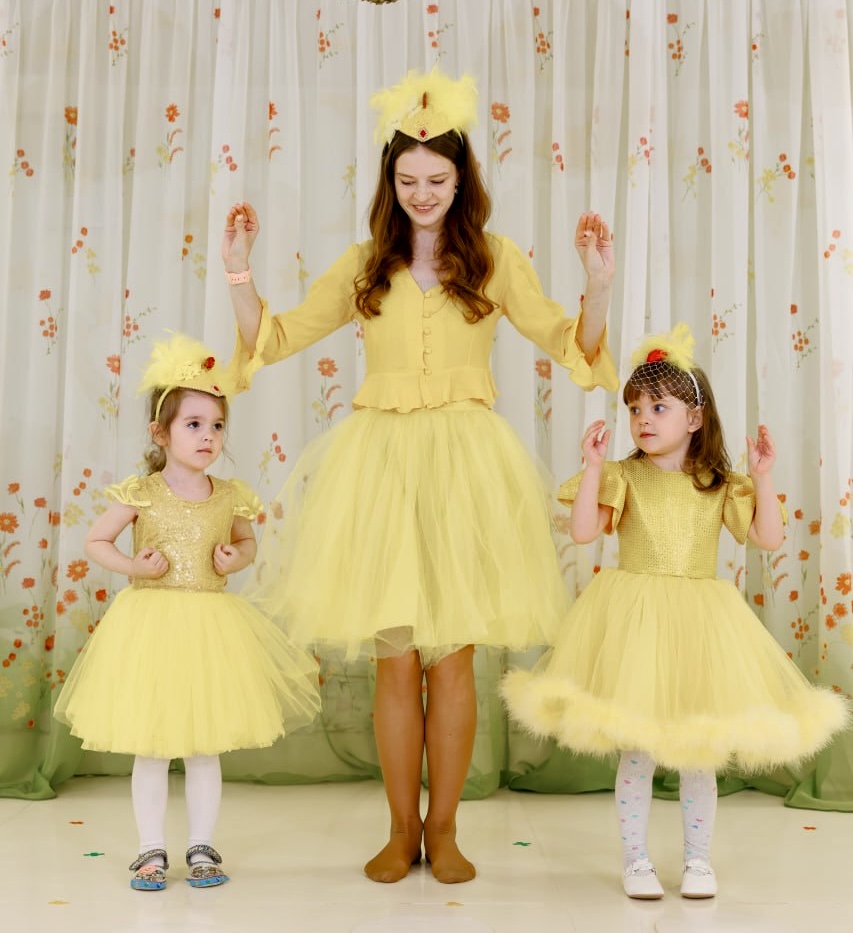
And probably the most genuine indicator is the daily connection with children. When they run to greet you, hug you, and sincerely show joy when they see you, you realize that all of this truly matters and that you can see the real results of your work.
🎭 Behind the Profession
At the end of each interview, we ask our guests a few personal questions that reveal a different side of them — beyond work, but still deeply connected to the soul of an educator.
What was your favorite children’s book and why?
As a child, my favorite book was a collection of fairy tales by Hans Christian Andersen. I received a beautifully illustrated edition as a gift, and I remember reading those stories with great fascination. They made a strong impression on me and stayed in my memory ever since.
Speaking more broadly about childhood favorites, I also loved The Little Mermaid.
I think I was drawn to the main character, Ariel — she was kind, sincere, beautiful, and very easy to connect with emotionally. Perhaps, even as a child, she represented a character I wanted to resemble in some way.
What advice would you give to your younger self?
Do not be afraid to dream. Because dreams really do come true.
What might surprise your readers about you?
Perhaps this is not the most obvious fact, but during my last years of school, I used to skip classes sometimes.
I do not say this as something people should imitate — rather, as a reminder to parents who worry too much about their teenagers. Very often we forget that we were children once too and behaved similarly at times.
It certainly does not mean that a child will grow up unsuccessful or undisciplined. On the contrary, it is often part of growing up and discovering yourself.
And maybe the most important conclusion for me today is that it is important to keep a sense of lightness within yourself. To occasionally allow yourself to be imperfect, playful, and not live in a constant state of seriousness.
Even as a kindergarten director, I truly believe that we should protect and nurture our inner child.