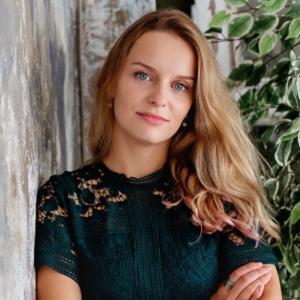
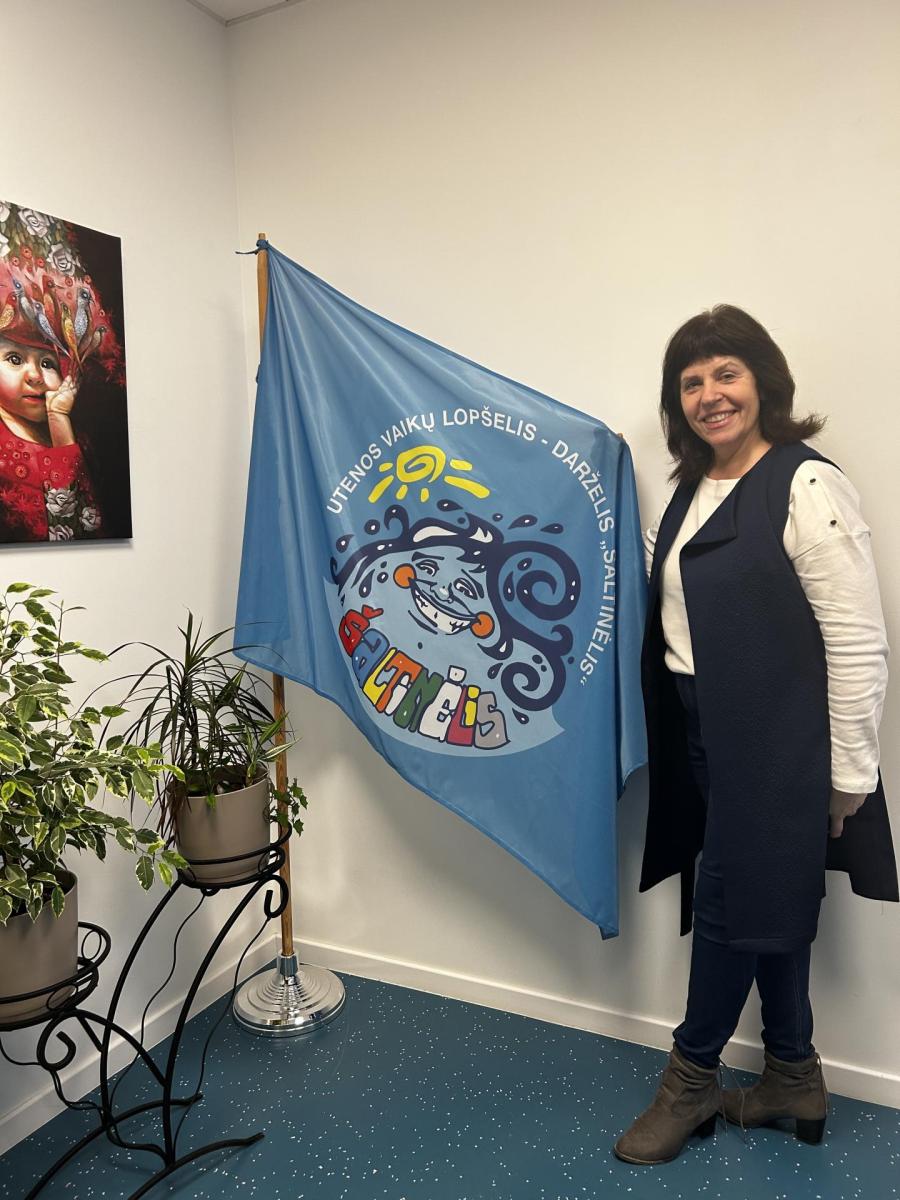
With over 34 years in education, Zita Kumpienė, head of Utena’s "Šaltinėlis" kindergarten, knows that leadership is all about staying human. Join us for a candid conversation about embracing innovation, working with today’s parents, and keeping a kindergarten community truly alive.
- Your professional journey to becoming the director of Utena’s "Šaltinėlis" kindergarten is quite fascinating. How did you end up here?
I’m a native of the Aukštaitija region, originally from the Utena district, and graduated from A. Šaltenis Secondary School. However, life took me away for a long time -27 years, to be exact - to Vilkaviškis, where I worked at the "Eglutė" kindergarten. When I eventually returned to Utena, I worked at the "Saulutė" kindergarten. There, I was noticed as an initiative-driven, proactive employee, and when the former director left, the Education Department appointed me as the new director. Due to the pandemic, the official competition dragged on for almost a year, but I won it and began my formal term in 2021. Right now, my first five-year term is coming to an end, and my total experience in teaching and leadership already exceeds 34–35 years.
You know, empathy and emotional intelligence are vital on this path. Emotional stability is a must for a leader - you can't let everyone see your emotions. Plus, I acted in the theater for ten years, which helped me build charisma. Above all, I know how important it is to remain a grounded, down-to-earth person.
- What are the biggest challenges you face in the education field today?
The biggest headache today is dealing with trade unions and legal regulations. The state makes nice agreements with the unions at the top, and the entire financial burden falls squarely on the director's shoulders at the bottom. For instance,when teachers were granted an extra 13 days of vacation on top of their existing 40 days, we had to figure out how to juggle the funds from the exact same student basket. Fortunately, the municipality understood the situation and bailed us out.
Another massive challenge was the renovation of our second building (2019–2021), when we had to temporarily relocate the children to other kindergartens and then smoothly bring them back. We also constantly feel the reality of inclusive education: the number of children with special needs is growing, particularly those on the autism spectrum, where emotions run very high. We have a wonderful team of specialists, yet there is a drastic shortage of psychologists in Utena.On top of all that, there is the demographic decline felt across Lithuania - kindergartens have to become competitive to attract every single child.
- And what brings you the most joy and keeps you moving forward?
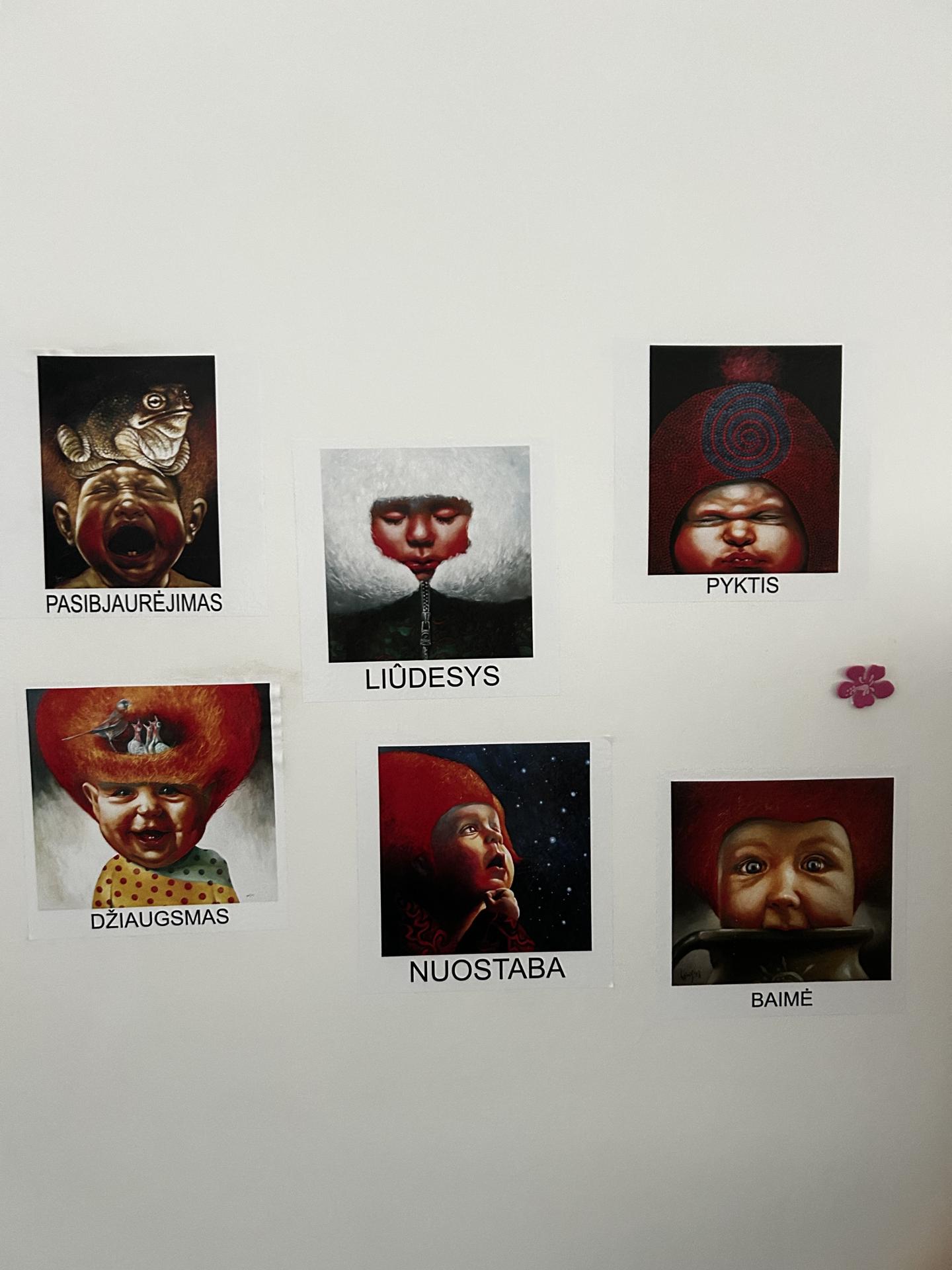
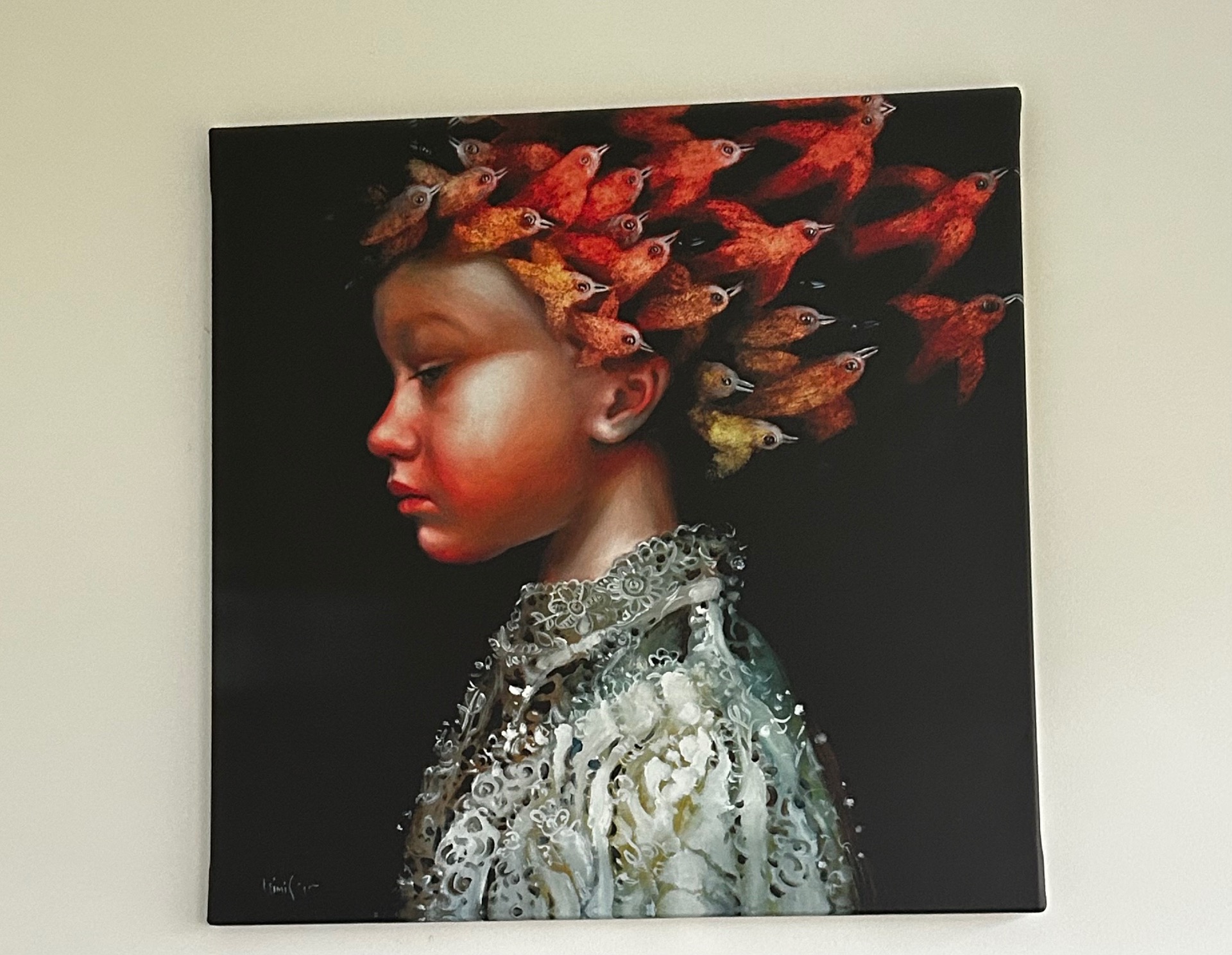
Change, implementing innovations, and the creative process! When we see that something needs to be done, I want it "now and fast." I am guided by the thought that everything we do is for the children and for the good name of our institution. And our team is amazing: more than half of our educators hold the qualification of senior teacher, and we have four methodologists. Among them is the well-known artist Laimonas Šmergelis. His artwork and creations vividly decorate the kindergarten's walls, hallways, and every single classroom, while Laimonas himself leads classes for the children and helps young talents blossom. That overall microclimate and mutual support are my biggest motivation.
- How are technologies and innovations utilized at your kindergarten?
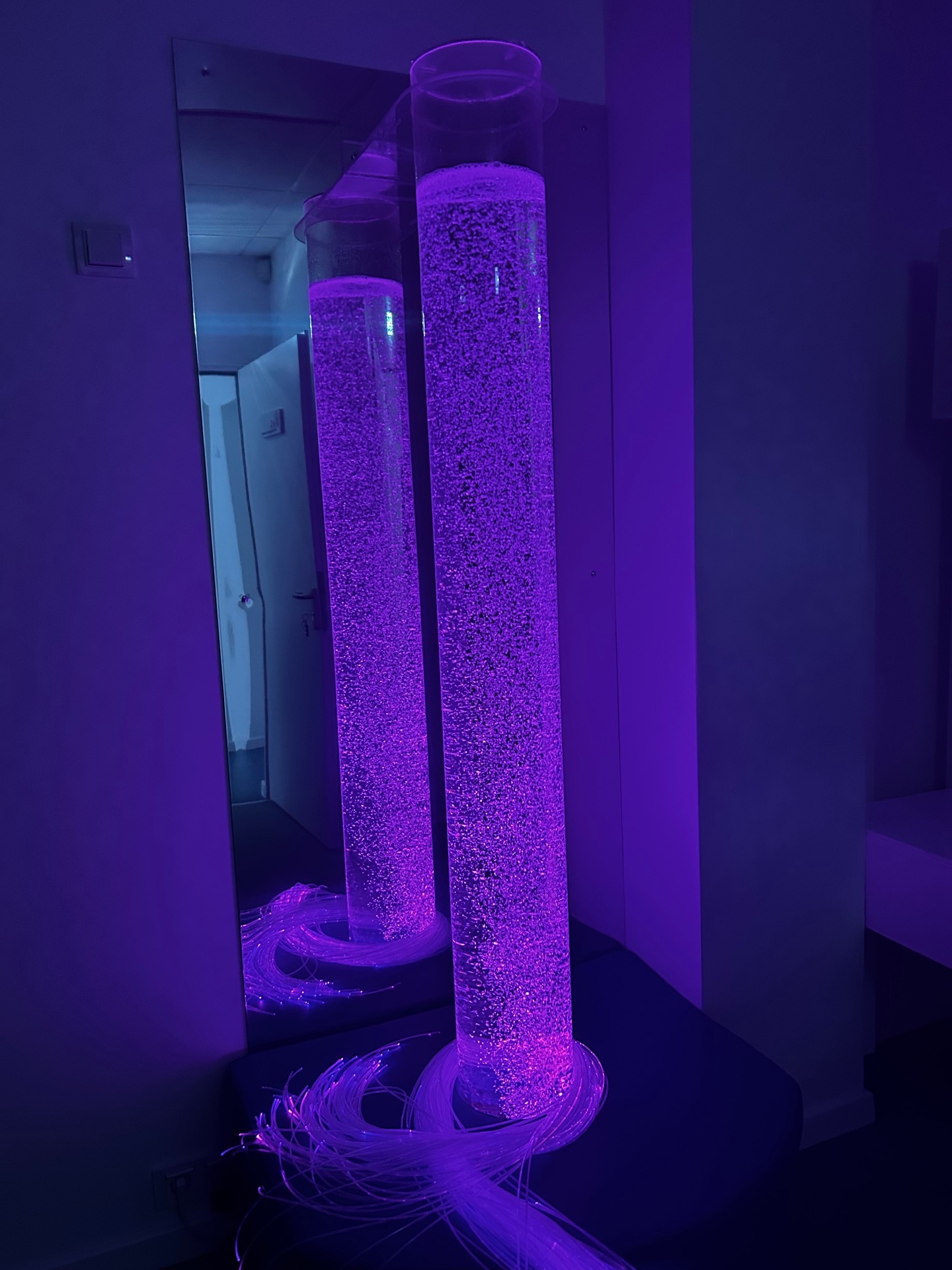
We certainly don't lag behind! We have a multisensory room featuring an interactive sand table, projection games on the floors and ceilings, and a music wall. We use interactive whiteboards, "Bee-Bot" robots, tablets with charging stations as part of the "Voratinklis" (Spiderweb) project, and STEAM room equipment for exploration. We track children's progress through the augama.lt system, look for educational apps, and in the future, we dream of acquiring the "Eliis" system as well.
- How has the community - parents and children - changed over the past few years?
Looking at things openly, there is a slight sense of alienation following the pandemic. Some parents have started viewing the kindergarten through the lens of a service provider - "I am a consumer, give me a service." In daily life,screens and phones often steal time away from direct interaction with the child. Sometimes, I really wish there were greater respect for the teacher, who spends the majority of the day with that child, as well as deeper family involvement.As for the kids... kids remain kids - wonderful, curious, and open, as long as the educator has charisma and knows how to spark their interest.
- How do you nurture and grow your staff from within?
We create every opportunity for them to learn and flexibly adapt their work schedules. We are one of those kindergartens that has grown quite a few specialists internally: our teaching assistants enrolled in colleges, graduated, and are now working as preschool teachers themselves! We also encouraged a Ukrainian language specialist who arrived from Ukraine to earn her qualification and become a preschool teacher here. Of course, we also practice staff rotation between groups so that stagnation never sets in within the team.
- Speaking of collaboration - kindergartens in Utena work closely together. What events unite you?
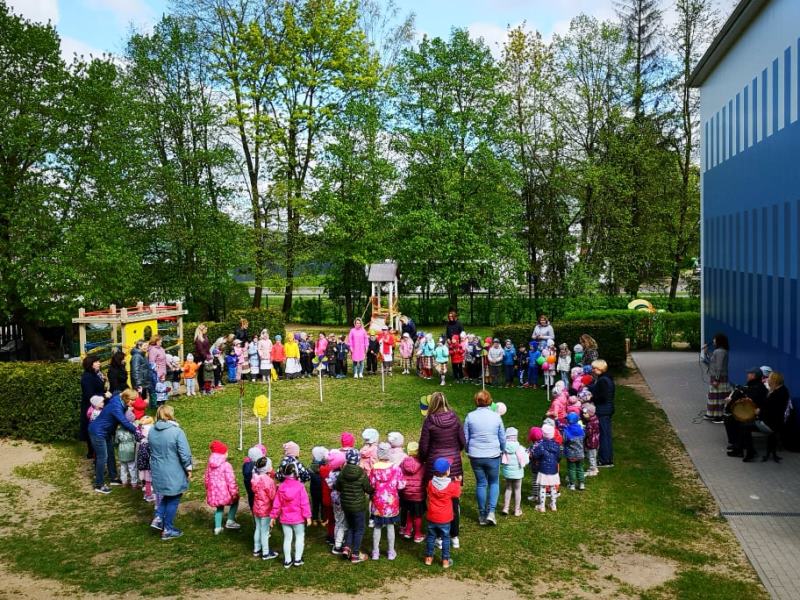
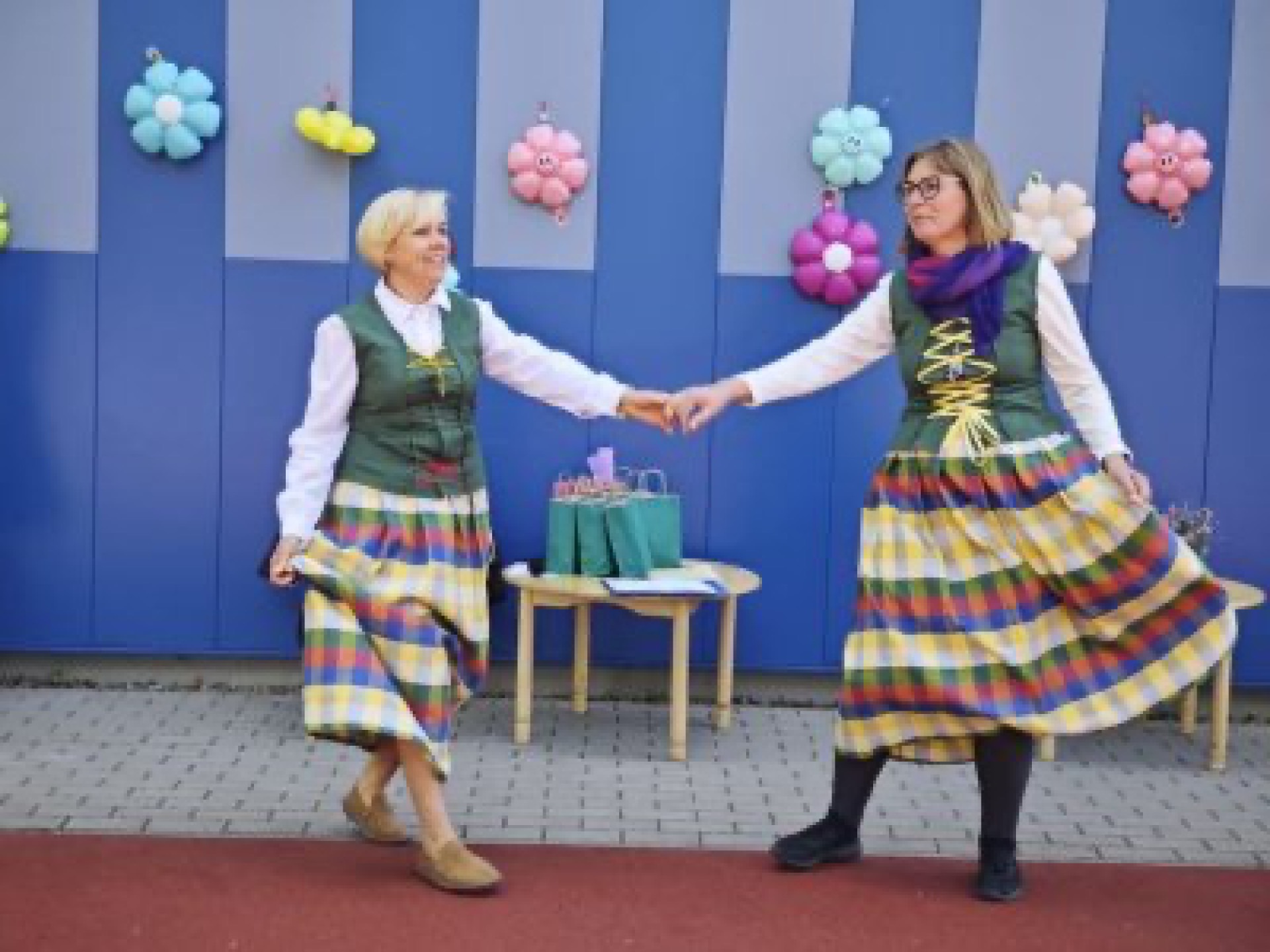
We organize many joint outdoor activities, and the children visit one another's kindergartens. Our signature calling card is the district folk song and dance festival-project "Polka tinka kiekvienam..." (Polka Suits Everyone...), which started back in 2003 and is still thriving today. We use special minibuses to bring in little friends not only from the city, but also from the surrounding district - the preschool groups of Vyturiai Progymnasium in Pakalniai, Antalgė, Užpaliai, and Vyžuonos. When the folk band starts playing in the kindergarten yard, we all spin in circles together, dance folk dances,and sing. And, of course, what kind of celebration would it be without traditional treats- we feast on pies and warm,steaming potatoes with butter! For the children, it's a huge adventure. In addition, we actively use the "Zippy" and "Kimochi" social-emotional programs, and take our staff on study visits to Latvia, Poland, or Klaipėda so that we can all grow together.
- What advice would you give to someone dreaming of becoming a kindergarten director?
Don't be afraid and just do it! You need practical experience, knowledge, courage, and eloquence. When a problem arises - never stop, always look for a solution. For example, already at a mature age, I completed a master's degree in management because it was necessary. That gave me tremendous self-confidence.
- And finally: if you were to return to work directly with the children in a classroom for one day, what would you do?
My focal point would be contextual learning through elements of the Reggio Emilia methodology. I would bring a multitude of different items into the classroom and, through a single, completely simple object - for instance, an ordinary cabbage - I would unfold an entire world of exploration, nutrition, artistic creation, and aesthetics, letting the children discover and create everything themselves!
This conversation with Zita Kumpienė serves as yet another reminder: no matter how rapidly technology or the challenges of the education system change, the strongest foundation of any kindergarten remains the human element - a curious child, an inspiring teacher, and a community built with an open heart.