
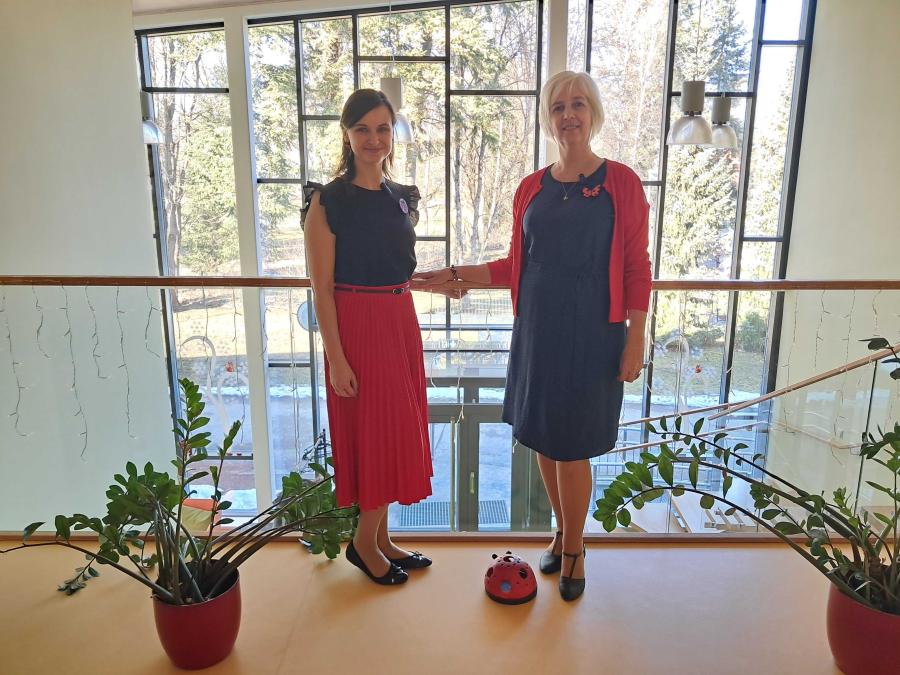
When you step into Ilmatsalu Kindergarten Lepatriinu, it becomes clear quite quickly that this is not just an ordinary kindergarten where the day moves from morning circle to nap time and outdoor play. This house has its own spirit, its own system, its own gentle yet very intentional rhythm. Even while walking through the corridors and rooms, you notice the children’s work, the thoughtfully designed learning environment, the values, the recognitions, the calming corners, the shared materials, the systems created by the teachers themselves, and that feeling that people are truly seen here.
Lepatriinu does not feel like a place where people simply “get the work done.” Rather, it feels like a place where people truly live their kindergarten life. This was also confirmed by director Inga Väikene and head of studies Liis-Marii Võik, with whom ELIIS CEO Rasmus Gross spent a long morning—first walking around the building, and later sitting down for a more in-depth conversation.
From that meeting came this interview, intended for all kindergarten teachers, leaders, and also parents who want to see how one kindergarten can be warm, flexible, systematic, and deeply meaningful all at once.
When I walked into this building, I immediately felt that there is a culture of its own here. If you had to describe Lepatriinu to someone who has never been here, what kind of place is it?
Inga Väikene:
I think the simplest and at the same time most accurate way to put it would be to say that this is a place where it feels good to be. That may sound a little simple, but in fact it is something very important to us. We want every child to feel, when they come here, that they are welcome. That they are not just coming to a place where they have to spend the day, but to an environment where they are noticed and where they feel safe.
Our motto is that every child grows up in Lepatriinu’s protective embrace. And for us, that means that no matter what kind of child comes to us, they are a value in themselves. It is not about making everyone fit into one system according to the same standard. Rather, we have to find the right approach for the child, the right environment, the right group, the right tools and methods to support them.
Liis-Marii Võik:
I have also thought of it this way myself: it is a kindergarten that children want to come to and where staff want to be. And that is actually one of the greatest recognitions you can receive. Parents sometimes say that when they offer their child a day off, the child replies that they do not want one—they want to come to kindergarten. That already says a lot.
Inga Väikene:
And I would add one more thing. It feels good to be here even without words. Sometimes you do not have to constantly say out loud that we care or understand. It can simply be felt. Children sense that very well.
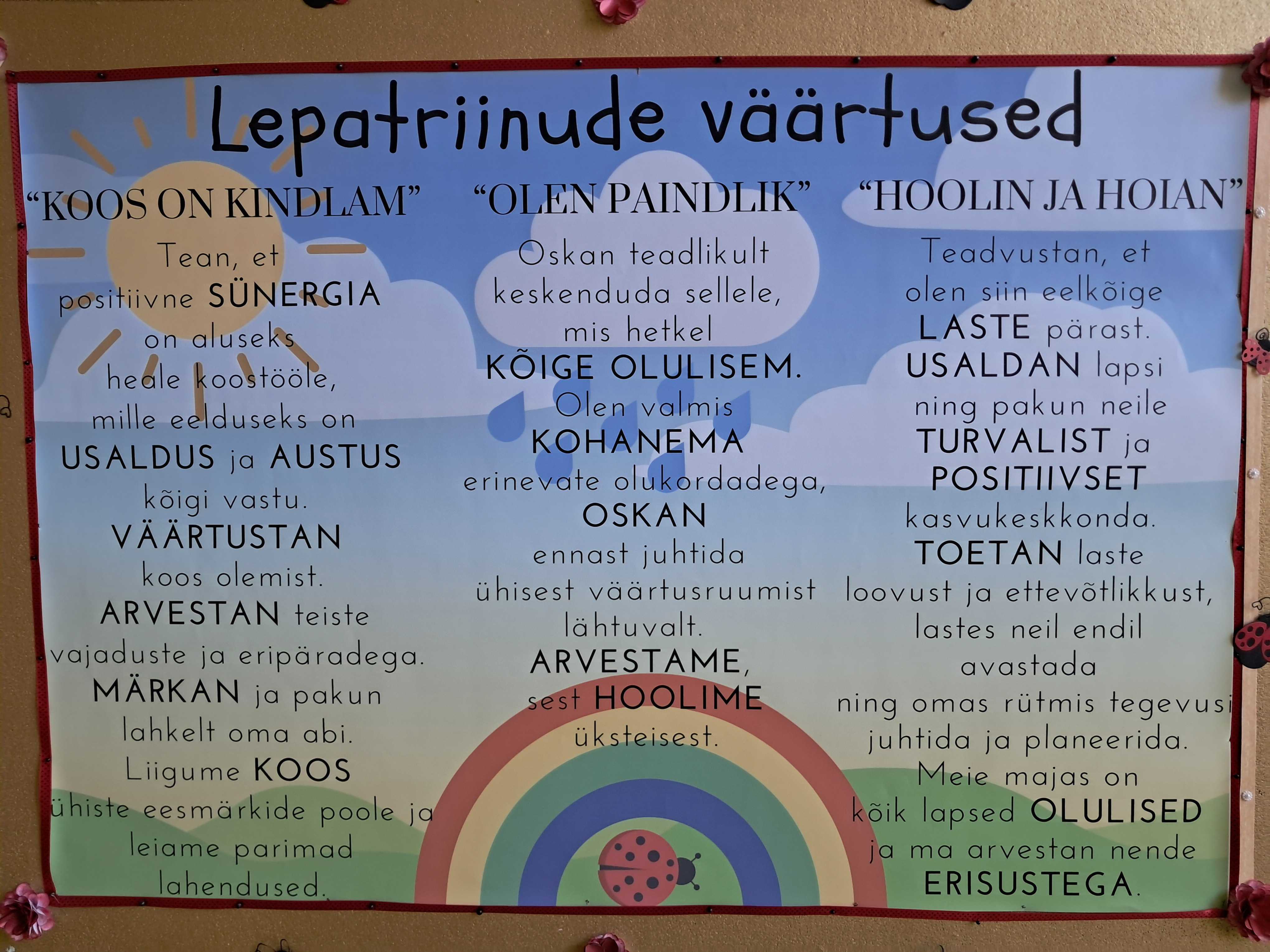
Do your values exist as something written on the wall, or as something that truly guides your everyday life?
Inga Väikene:
At Lepatriinu, values do not remain mere words on the wall. They live in everyday moments—in the way children are spoken to, the way they are listened to, and the way people respond in difficult situations. We have received recognitions from the University of Tartu Centre for Ethics such as Kindergarten Promoter, Kindergarten Expert, and Values-Based Kindergarten, but children do not read awards—they sense very well the attitudes around them. That is why care, flexibility, cooperation, and noticing others are part of everyday behaviour between both children and adults.
Liis-Marii Võik:
Our three core values—care, flexibility, and cooperation—are the foundation of our house. Without them, the whole house would collapse. That is why beautiful words on the walls are not enough—our values are reflected in every moment, starting from the very first phone call with a new parent. Inga and I see it as our job to find people who genuinely carry those same values within them. We have met people in job interviews who seem suitable on paper, but whose attitudes and way of thinking do not align with “our feeling.” That is why, for us, it is important not only what a person can do, but also what kind of person they are. In the end, every adult’s attitude and way of relating directly shapes the environment in which our children grow up.
I also noticed right away that people in this house share a lot. Materials, thoughts, ideas. Where does that come from?
Inga Väikene:
Sharing has naturally become part of being together in our kindergarten. And that does not only mean materials, but also ideas, thoughts, and experiences. Teachers do not keep good solutions to themselves, but gladly share them with others. If something is no longer being used in one group, it is brought into shared use. If someone has a good idea, a good game, or a good solution, it is shared with others. We do not have the attitude of “this is my thing, my material, I am not giving it to you.” That kind of trust creates a feeling that no one has to cope alone—there is always someone to ask or lean on.
And these are not just things. They are ideas too. For example, a teacher may create a good game or an outdoor learning tool with their group and tell the others, “Take it, use it.” Another teacher then feels that they do not have to invent everything from scratch at home on their own. That is an enormous help. And this sharing is a great value emotionally, physically, and professionally.
Liis-Marii Võik:
It all begins again with our values—care and cooperation. Just as families share good ideas and necessary things, we do the same in our work family. This kind of sharing is born out of trust—the knowledge that we are there for one another, not competitors. By sharing materials and ideas, we save time and can devote more of it to what matters most—being with children and supporting them.
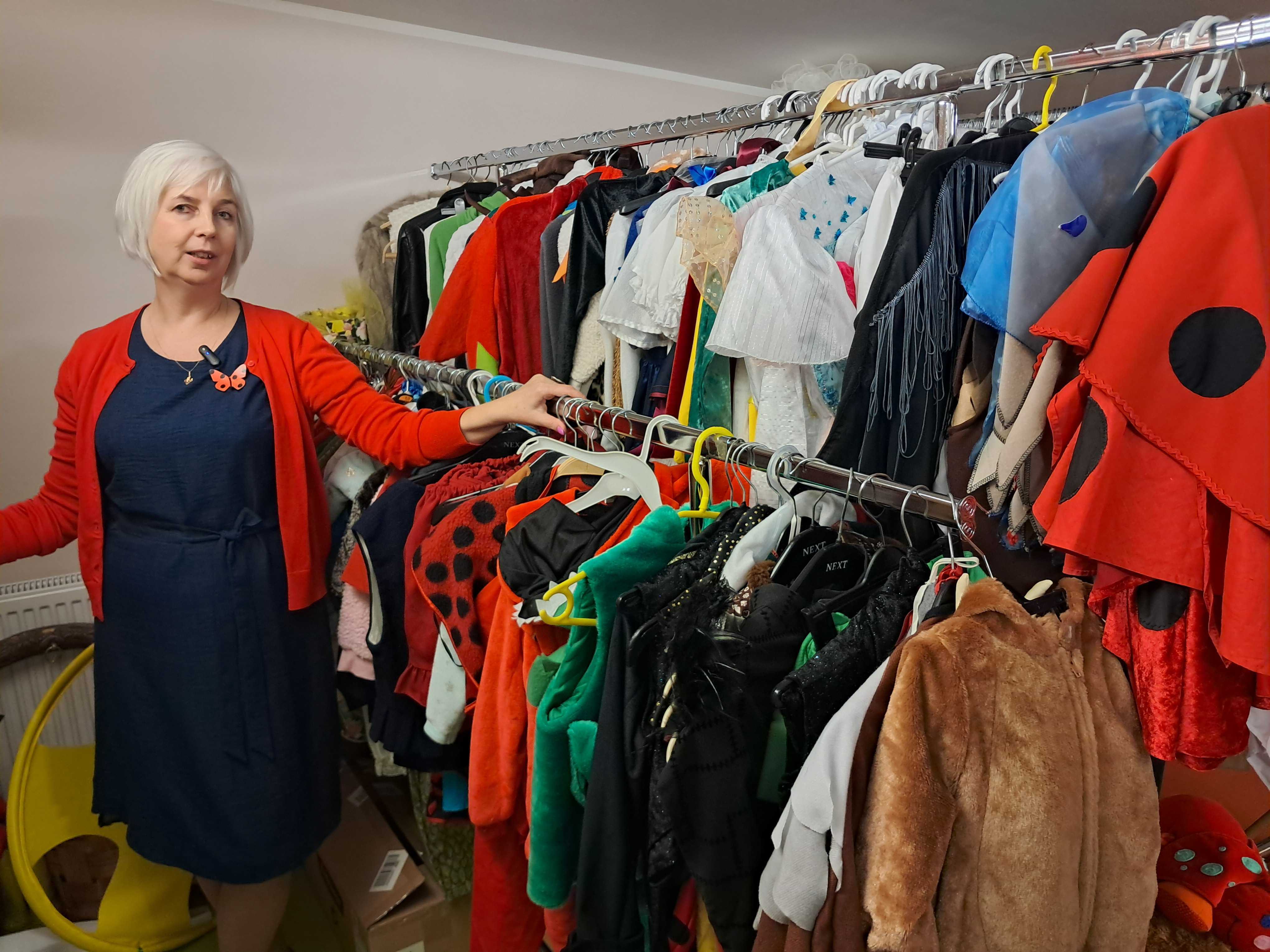
During the tour I also noticed how intentionally the different spaces in the house have been created. Not just the group rooms, but also the special education room, the speech therapist’s office, the music room, the gym, the art and media room. How important is that for you?
Inga Väikene:
It is very important, because every child is different and we want there to be different possibilities, not just one central model into which everyone must fit. One child expresses themselves through movement, another through art, a third through play or storytelling. In our kindergarten, we have created different spaces and opportunities in order to find the most suitable way to reach each child. We also take into account that calming down does not always mean silence—for some children, movement is exactly what helps them regain balance.
Liis-Marii Võik:
For us, this is very important because we have designed the whole building—both the rooms and the corridors—thoughtfully and purposefully. For example, we have a long corridor that we have turned into an enchanted forest. It is a cozy place, decorated with little lights, where it feels good to be even during dark and gloomy times. We carry the same principle into the other spaces as well—we use details that create a sense of coziness, such as salt lamps. But we do not think only about making a room beautiful; we also think about how it supports the child. Every room offers different possibilities: in the gym children can climb and move, in the art room they can create and experiment. At the same time, we consciously support children’s independence—the spaces are safe and give children the chance to act on their own as well. For example, we have a room where a teacher can allow a smaller group of children to play independently. The doors are open, and there is always an adult nearby who can notice and support them when needed.
You also have a special education teacher and a speech therapist in your building. In many places that is still a problem. How do you see it?
Inga Väikene:
The role of a special education teacher and a speech therapist is very important in a kindergarten, but even more important is the person who carries that role. A job title alone does not create change—it must be backed by a knowledgeable, aware, and dedicated professional.
Such a specialist notices a child’s needs early, knows how to understand them, and can choose the appropriate supportive methods. They do not work only with the child, but also build a bridge between parents, teachers, and, when necessary, other specialists or institutions. That cooperation is key in ensuring that the child’s development is consistent and holistic.
A good special education teacher or speech therapist does not simply give instructions, but supports, explains, and encourages. They help the teacher understand the child better in everyday work and give the parent reassurance that their child is seen and cared for. At the same time, they know how to communicate delicately and respectfully, because these topics often touch very sensitive areas for families.
When the role is filled by someone who is open, cooperative, and competent in their work, it creates a strong support network in the kindergarten. That means the child is not left alone with their difficulties, but is surrounded by aware adults working together for their development and well-being.
Liis-Marii Võik:
It is a great joy and a very important value for us that we have them. It gives both our staff and parents a sense of security that if there is a concern or a question, there is always someone to turn to. Our support specialists do not have fixed consultation hours—they are there whenever possible and respond quickly and with care.
Liis-Marii, your own path into early childhood education is also interesting. How did you get here?
Liis-Marii Võik:
I came into early childhood education in 2019. Before that, I worked in a school as a social pedagogue, and it was there that I realized very clearly that I wanted to work with prevention.
At school I saw situations where children came to first grade and the teacher would say, “Please help me—I cannot focus on teaching.” But why was that?
Children were becoming overwhelmed, they did not understand what was happening inside them, and they did not know how to cope with their feelings.
But there are no quick solutions in those situations. That was when I understood that these skills need to be addressed much earlier—already in kindergarten, consistently, consciously, and calmly. That was exactly what I wanted to do.
At that time, there was not a single social pedagogue in any kindergarten in Tartu. I decided to write to kindergartens myself and ask whether anyone would like to have a social pedagogue.
But then Inga called me and said that she would find a way to make it possible. And that is how my journey here began.
Inga Väikene:
At that moment, it really was a big and conscious step—not only a decision to change something, but also a clear choice in mindset. The role of a leader is to notice what is truly needed and, if necessary, create the structure and opportunities for it, even when the system has not initially provided for it. The question is not so much whether something is allowed or already there, but whether it is necessary. And if it is, then a way must be found to make it happen.
This is especially true when it comes to children’s emotional well-being. Coping with feelings is often one of the most difficult things both at home and in kindergarten—and the hardest of all for the child themselves. If we have the opportunity to offer them better understanding, supportive methods, and informed support, then it is our responsibility to create and maintain that path.
So would it be fair to say that this is how you arrived at the calming nests?
Liis-Marii Võik:
Exactly. When I started working as a social pedagogue, I began looking for new and informed ways to support children’s self-regulation skills. While searching online, I came across the idea of calming nests.
They had already been used in America for years—in homes, kindergartens, and schools. I tried to find Estonian-language materials, but there were none. Our teachers had not heard of them either.
I spoke about the idea with the teachers of one inclusion group and with the director—whether we might try it. The idea was received very openly.
So I began gathering materials and knowledge about calming nests, and in 2019 we created Estonia’s first calming nest, which received very positive feedback from teachers.
Inga Väikene:
It suited us perfectly, because we are solution-oriented. It is important to recognize the right opportunity and not say “no” immediately before even having tried things out.
Liis-Marii Võik:
We experimented, learned from every experience, and kept trying in increasingly more conscious and effective ways.
And when we saw that it truly worked and offered support to both children and teachers, we shared the experience with other groups and gave teachers the opportunity to create a calming nest in their own group.
Soon there was a calming nest in every group, and by now we have been using calming nests consistently in our kindergarten for seven years.
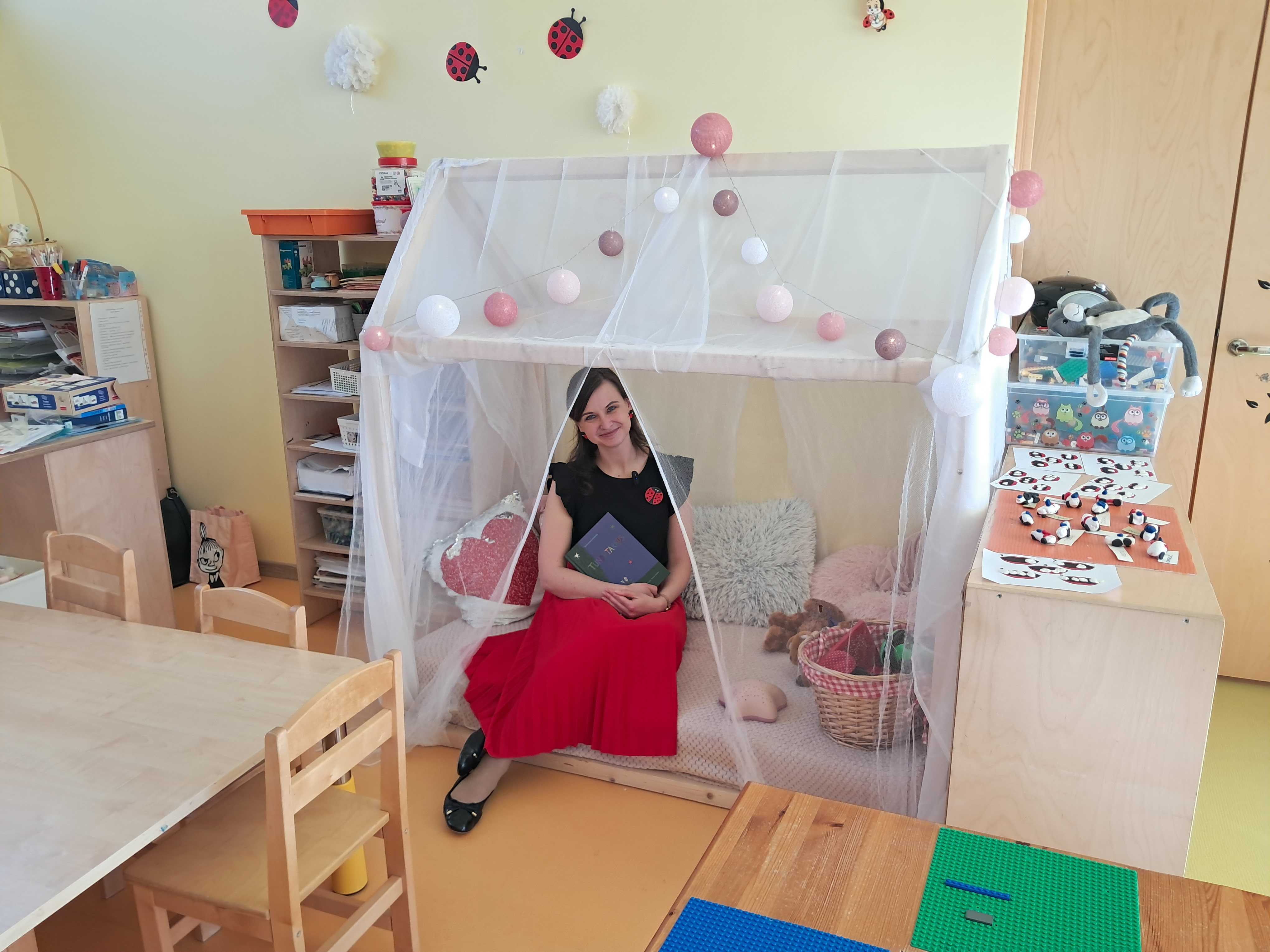
But what is a calming nest really for you? Many people have heard the term, but everyone seems to understand it differently.
Liis-Marii Võik:
A calming nest is a peaceful and safe place in the group that supports the child in understanding their feelings and developing self-regulation skills. It is a place the child can choose to go to—alone, with a friend, or with an adult—in order to be away from others for a moment and take time for themselves. There are various soothing tools there, such as a stress ball or noise-cancelling headphones.
It is important to make a distinction: a child is not sent to the calming nest; they are given the opportunity to go there. The calming nest is not a punishment place, nor is it somewhere a child is sent to calm down.
In the calming nest, with the support of an adult, the child learns to notice, name, and regulate their feelings, and over time uses these skills more and more independently.
And this is the most important point of all—the role of the adult. Simply creating a calming nest in a group is not enough for it to fulfill its purpose. A conscious adult is needed—someone who understands how to use it.
That is exactly why I also provide training—so that the content and real purpose of the calming nest do not get lost.
Inga Väikene:
The most important thing is not the place itself, but the adult who supports the child in that process. If expensive and impressive tools are bought, but the adult themselves is negative or dismissive, then it does not work. It just becomes a pretty corner and a waste of money.
A good kindergarten is itself like a calming nest—a safe and nurturing environment where a child can be accepted with their feelings.
That is a very profound idea—that a calming nest begins with the person, not with the furnishings.
Inga Väikene:
Yes, I believe that very strongly. The possibility of using a calming nest begins much earlier than the moment the child goes there. It begins with the way the teacher greets the child in the morning. Do they say, “Hello, we were waiting for you,” or do their posture and tone convey, “Oh, you again”? That is much more important than any pillow or bubble lamp, because children sense an adult’s attitude.
Does a calming nest mean only being quiet and calm? Or can it sometimes also mean movement, jumping, physical activity?
Liis-Marii Võik:
It can definitely also mean movement. Sometimes a child needs silence and solitude, but at other times what they need is movement. What matters is the child’s need, not the idea that we should have one solution for everyone. A calming nest is one option. If we see that in a difficult moment the child actually needs movement, then we might go with them for a walk in the corridor or to the gym to jump and climb.
Calming nests have become a more widely known topic because of your kindergarten. People visit you, ask for your experience, come to your training sessions. Does that surprise you?
Liis-Marii Võik:
It brings great joy that calming nests resonate with people—it shows how great the real need for them is. People from all over Estonia invite us to visit and want to know how a calming nest truly works. I often hear that they have tried and struggled on their own, but what was missing was a conscious approach—so that the calming nest would not simply become a play area. When awareness is lacking, even good ideas can be used in the wrong way.
You mentioned earlier that you cannot talk about feelings in kindergarten if basic needs are unmet. That is a very important topic. Let us talk about it in more depth.
Inga Väikene:
That is one of our very important starting points. We cannot expect a child to be able to cope with their feelings or learn something new if their most basic needs are not met. First of all, the child needs to have a full stomach and feel safe—only then can they truly be present, learn, grow, and also understand their feelings.
Nowadays, eating in kindergarten is a challenge in itself. There are children who cannot eat certain foods, those who do not want to, and those who have had previous unpleasant experiences or aversions. For us, the solution is not, “If they do not eat, then they do not eat.” We always try to find a way to make sure the child still gets fed—sometimes that means flexibility, a different approach, or simply more time.
Liis-Marii Võik:
For example, for some children who are more sensitive to sound, eating together with everyone else in the dining hall may be difficult, so we find a way for them to eat in the group room, or for instance go to the dining hall with noise-cancelling headphones.
Inga Väikene:
If a child needs more time to eat, then they have that time—the assistant teacher stays with them, supports them, and is there for them. The daily schedule is important, but it must not come at the expense of the child’s well-being. For us, it matters that the child can eat peacefully and feel cared for, because that is where everything else begins.
Earlier, you said one very interesting sentence: you cannot be late for kindergarten.
Inga Väikene:
We strongly believe that kindergarten is not a place for rushing. We do not hurry the child or create pressure. Although the day ends at a fixed time, the morning does not need to begin under time pressure. A child is not late for kindergarten—they arrive exactly when they are ready to come.
For us, it is important that the day begins calmly and safely. If a child can arrive feeling good, without rushing or anxiety, that creates the basis for the whole day—for learning, for play, and for well-being.
That is why we also ask families to come to kindergarten calmly, not in a rush. If needed, we accommodate—we save their meal, we adapt the day. Our wish is for kindergarten to be a place people come to calmly, where there is time to arrive, to be, to think, to play, and to develop at their own pace.
Liis-Marii Võik:
A two-year-old boy recently came up to me and said very seriously, “You know, I was late to kindergarten today.” I crouched down beside him and said, “In our kindergarten, you are never late. Everyone arrives in the way that suits them.” That is actually a very important message for a child—that they do not have to feel first thing in the morning as though they have already done something wrong.
Another example from one morning: a child was not ready to join the group right away when arriving at kindergarten, but headed instead to the calming nest in the corridor. The assistant teacher noticed this, went over to the child, and sat beside them. She consciously took the time to be there for the child and support their feelings.
You also spoke about how you remember absent children and talk about them. How does that work?
Inga Väikene:
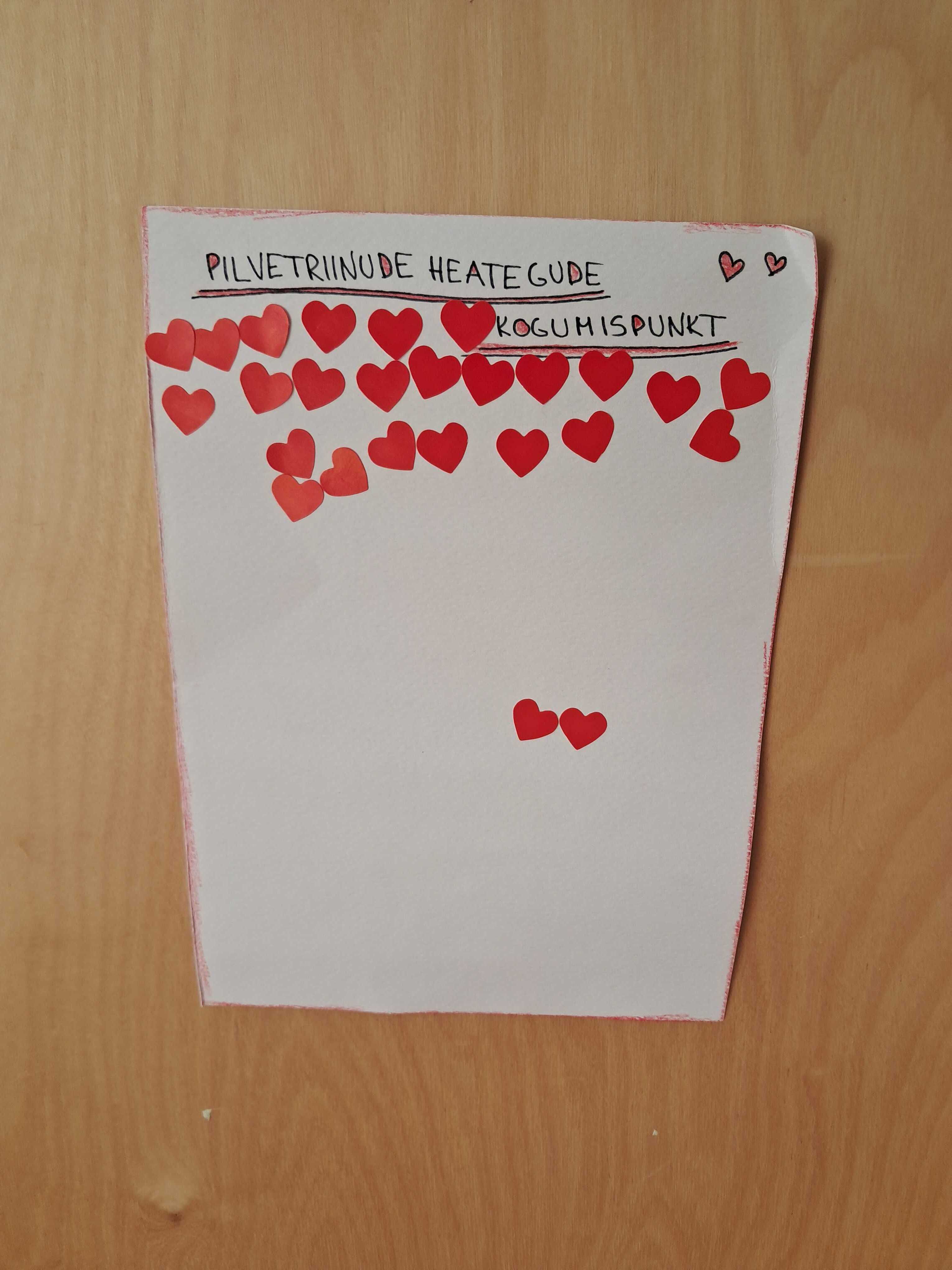
How does a child know that they are cared for? One simple but very profound way is how absentees are noticed during the morning circle—they are sent a hug, a wave, or a pat. This teaches children to notice not only those who are present, but also those who cannot be at kindergarten today. When a child has experienced this repeatedly and has practiced it themselves, they come to understand that care is not limited only to those who are present—even while staying at home, they can feel that others are thinking of them and sending greetings.
That creates a strong feeling for the child that they belong here even when they are not present. They do not disappear; they are valued even when absent. It is exactly this constant attention and care that helps a child feel safe, held, and part of the community.
Liis-Marii Võik:
Teachers also write this into the ELIIS daily description. That makes the experience visible for the parent as well.
You also have a children’s council in the building and a broader way of thinking that children can speak for themselves. Not just answer adults’ questions, but truly speak. How does that work?
Inga Väikene:
Children give presentations about their projects, sharing with others their experiences, their interests, and what they have learned and experienced. This kind of activity develops self-expression and communication skills, and also teaches them to listen to their peers. It also supports self-confidence and the feeling that their opinion matters.
Our children’s council, The Happy Ladybirds, is not just a formality. If a child says they want to do something, that can never be considered wrong. It does not mean that every wish is fulfilled literally, but the child’s idea is important and is taken into account. All these activities give children the feeling that their work and ideas matter, and help them understand how to share their thoughts and knowledge with others.
Liis-Marii Võik:
For example, in the children’s council the children got to suggest what activities they would like for the kindergarten’s birthday celebration, and in several presentations one idea came up that we adults would never have thought of—a darkness and horror room. And guess what turned out to be the most popular activity on the birthday morning?
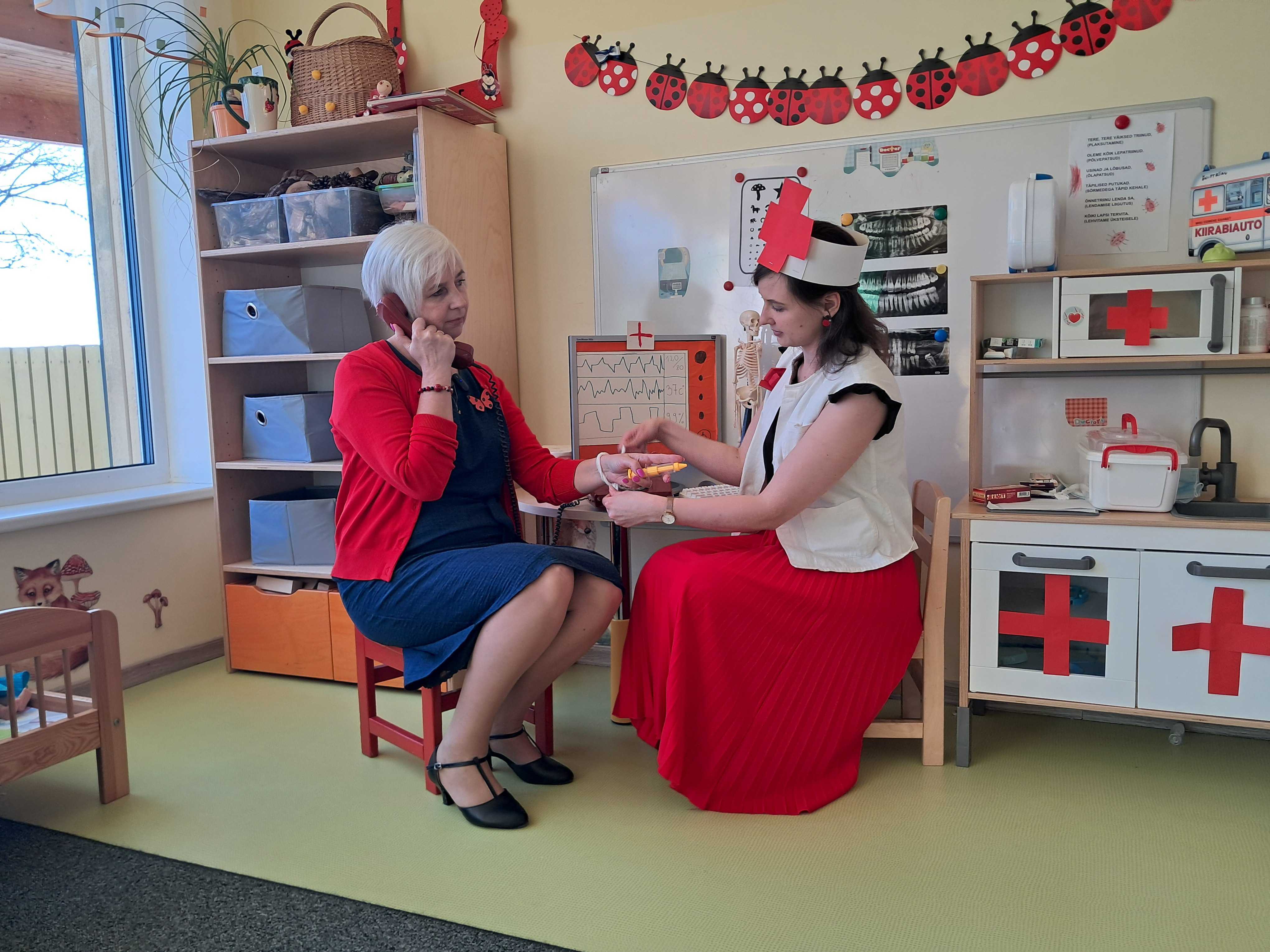
Let us talk about projects. In your house there is a strong sense that projects do not arise simply for the sake of having a theme, but genuinely from children’s interests. Do you yourselves call it project-based learning?
Inga Väikene:
We call it interest-led learning. Projects grow out of children’s interests and unfold at their own pace. They are not rushed or forced into frameworks. Some themes last longer, some less, but what matters is the process itself—experiencing, discovering, and learning through action. It also teaches patience and deep engagement. In our kindergarten, teachers are not rushed either. We remove from them the pressure that a new project must begin immediately. Teachers are already doing so much important work every day, so not every activity has to carry the big label of “project.” What matters is that children and teachers can be calmly present in the process and give activities time to develop at their own pace.
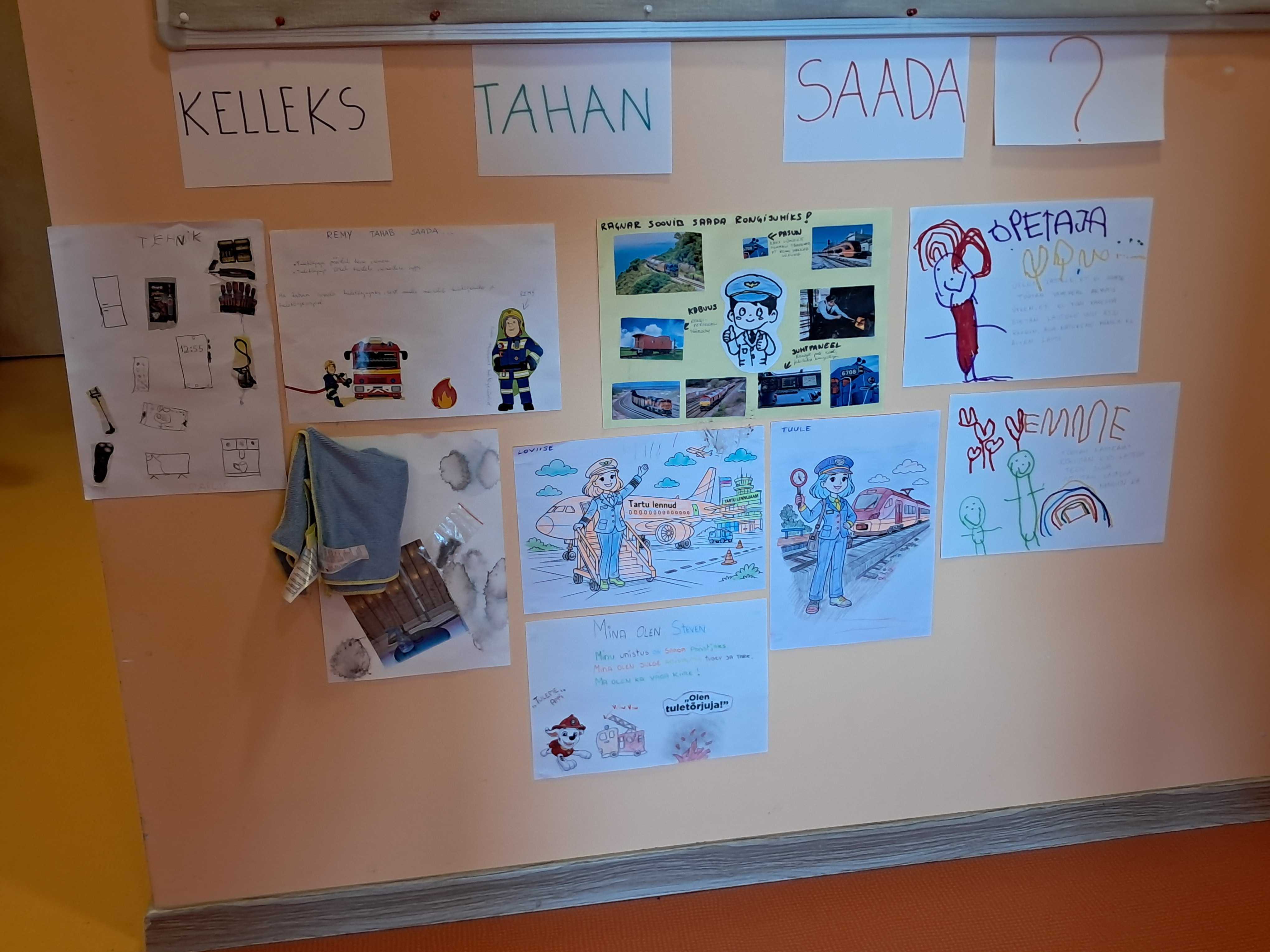
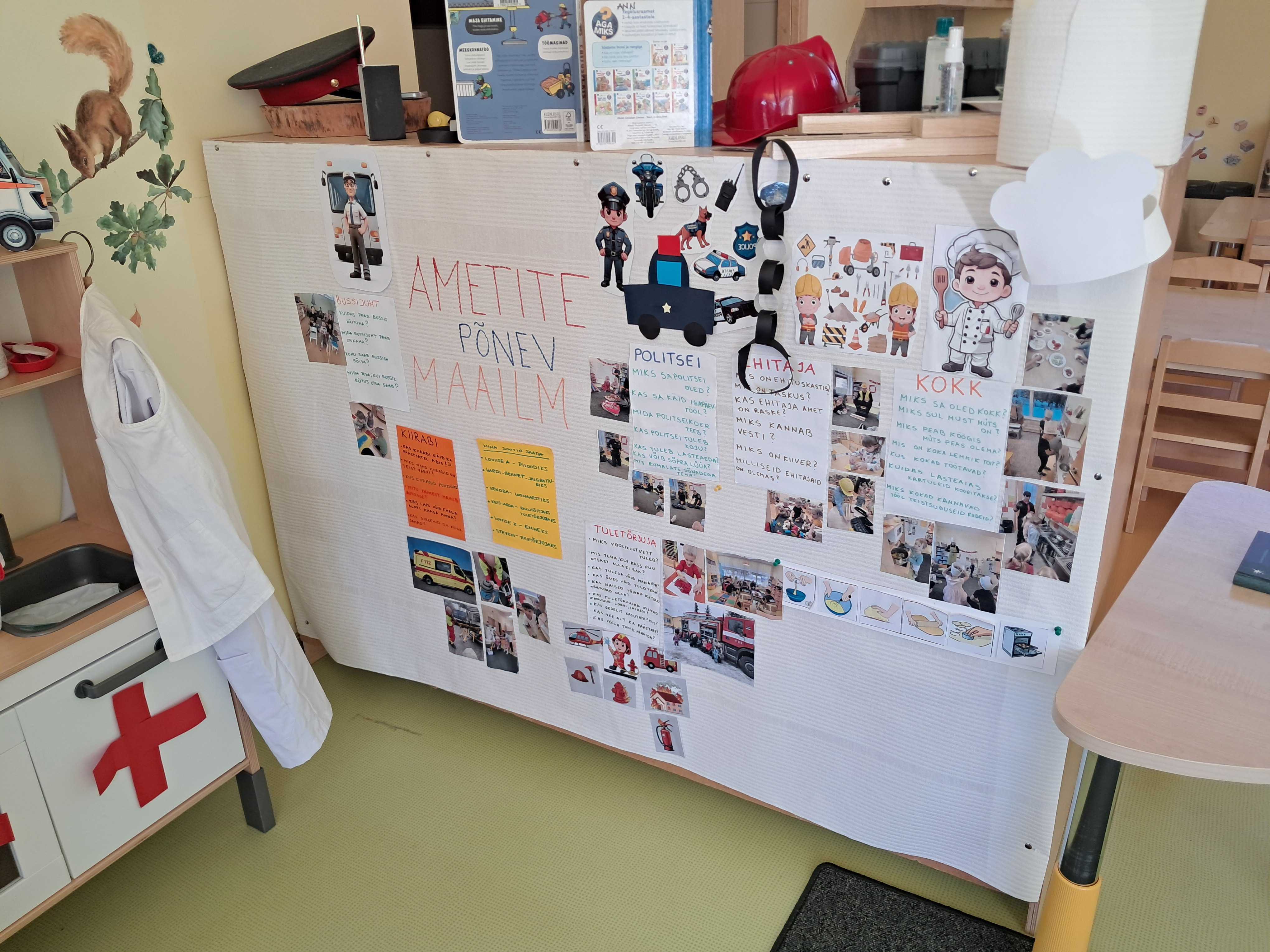
Can you give a specific example that really shows how a project actually grows in your kindergarten?
Inga Väikene:
One project that immediately comes to mind is Mr. and Mrs. Potato. It was not just a case of “today we talk about potatoes and tomorrow it is over.” The children grew potatoes, and along the way had to learn patience and understand that results do not come immediately. In the end, the whole process led to a full potato celebration: the children decorated the table, made name cards for the guests, and invented games. They made potato pancakes and potato salad themselves. That is exactly what I like most—the theme does not remain merely on the level of knowledge, but moves through many processes and reaches lived experience.
Liis-Marii:
One memorable project was about water. The children studied different fish species, gave presentations, and shared their knowledge with their peers. They visited museums and took part in several educational outings to better understand the life and environment of fish. Since there is a lake near the kindergarten, they also went fishing themselves—and actually caught three fish! At the kindergarten they examined the fish, and afterwards cooked and ate them.
Rasmus Gross:
Nowadays, in the world of children—and in fact adults too—there is often this feeling that if something does not work immediately, then you quit and move on to the next thing. But here you are teaching that it is okay to wait a little, to make an effort, to think ahead.
Inga Väikene:
We had a similar experience with Father’s Day. In the spring, it was decided that in autumn the fathers should receive a meaningful gift—not something taken from a shelf, but something truly made by hand. In spring, cowslips were planted, the children watered and weeded them, gathered and dried the flowers, and made little pouches. In autumn, the fathers received tea as a gift—and behind it was a long process.
Projects like this teach planning ahead and thinking in advance—a little like old folk wisdom: if you want to have food in winter, you have to work in spring. For a child, that process and understanding are invaluable experiences.
Rasmus Gross:
And honestly, it also makes the gift much more valuable. An idea and effort that have grown over half a year are something completely different from a store-bought item.
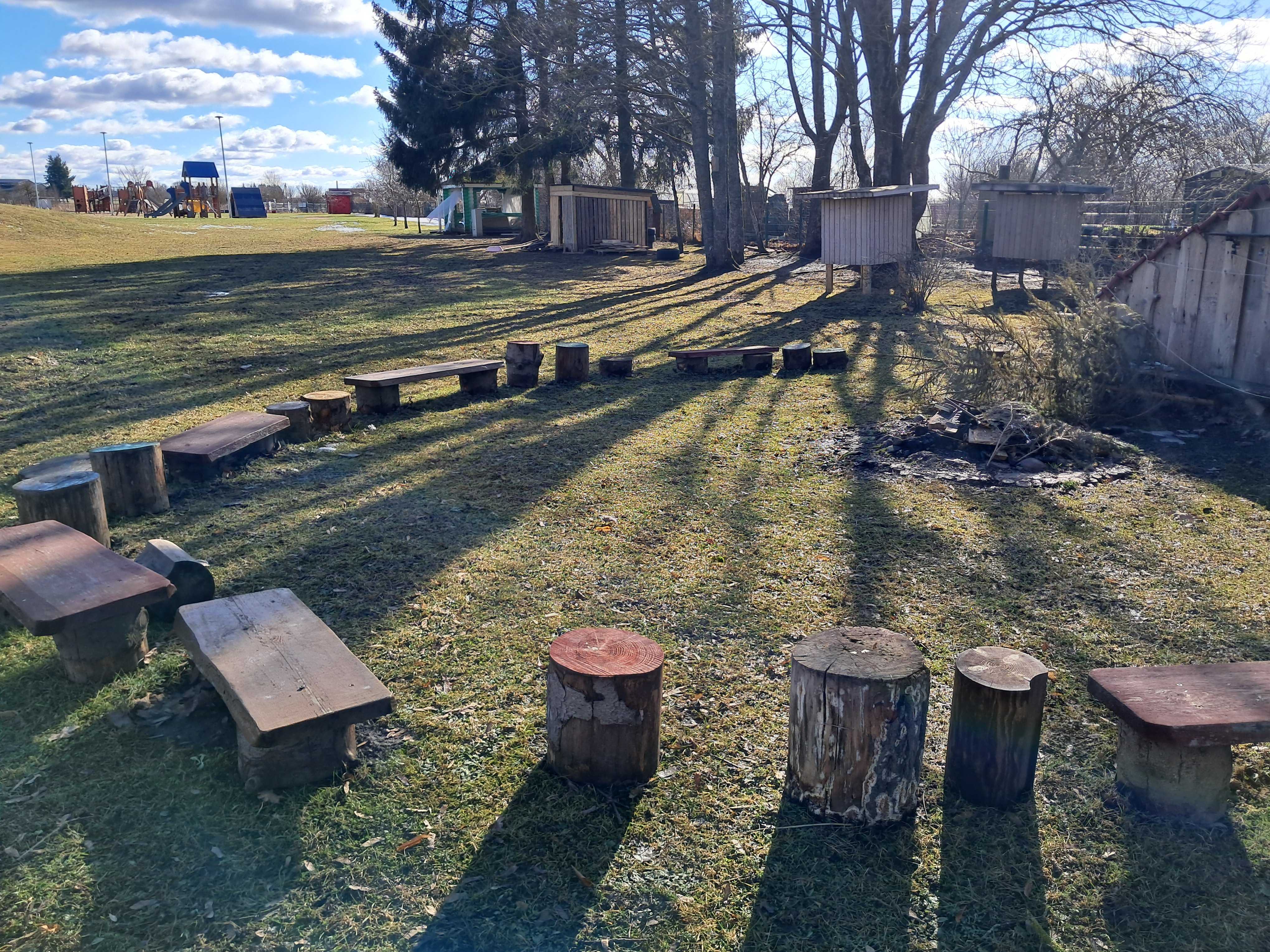
The topic of being a rural kindergarten came up several times in our conversation. For you, what is the greatest strength of a rural kindergarten?
Inga Väikene:
Ilmatsalu Kindergarten Lepatriinu is a City of Tartu kindergarten located in a rural environment, and its greatest value is its closeness to nature and its strong sense of community. Children can experience real life here—observe how things grow, how people act, and how nature works. This creates a deep connection with the surrounding world and teaches them to notice and care.
The environment does not just mean more grass or more space—nature is a living part of the kindergarten here. There is a lake, swans, groves of trees, outdoor areas, community garden beds, opportunities to move, climb, and learn outdoors. All of this is a natural part of children’s daily lives, not just an added extra.
For example, the community garden, where local people grow their own plots, gives children the opportunity to walk there, ask questions, and help. A strong feeling emerges that all children are a little bit like our own. People say hello on the street here, and that sense of community is truly tangible in the kindergarten.
You also talked about huts, and about how even a broken hut can become a lesson?
Inga Väikene:
Yes, for example the children build ice forts and huts in the groves, and sometimes it happens that someone has broken them or thrown rubbish there. Of course, that is a sad experience for the children, but at the same time it offers an excellent opportunity for learning.
We can talk about it: how does it feel when you have put in a lot of effort and someone ruins it? How do we respect the efforts of others? Situations like these help children develop empathy. Children experience such feelings constantly in kindergarten, and our task is to help reflect, analyse, and name them, so that the child can learn from the experience.
How do you yourselves perceive the role of the community in the kindergarten?
Inga Väikene:
The sense of community in Lepatriinu Kindergarten is truly strong. I myself attended this kindergarten, my children attended it, and so did my grandchild. I have worked in this house as a music teacher, served as head of studies, and by now I have led Ilmatsalu Kindergarten Lepatriinu for ten years—so for me it truly is a community kindergarten. Today, children attend whose parents once came to my music lessons. That continuity is special and gives the kindergarten a deep sense of “us”—it is not an anonymous institution, but a place where generations meet and where everyone belongs to the community.
Let us also talk about ELIIS. In your case, I got the feeling that it is not just a system you have to use, but a real tool. Why?
Inga Väikene:
ELIIS helps create a clear and shared information space both within the kindergarten and with parents. We use ELIIS consciously and actively so that important information is accessible and understandable for everyone. Teachers give each child individual feedback at least once a week. Support specialists also provide parents with feedback on activities. This is very important for us because it makes communication transparent, consistent, and meaningful.
Does ELIIS also change the way parents learn about their child’s day?
Inga Väikene:
For example, the events calendar gives parents an early overview of what is coming up. For us, it is important that parents do not have to make decisions in the dark—that a child does not miss out simply because important information did not reach the family in time. All information moves through ELIIS. This creates a sense of confidence for both parents and teachers and significantly simplifies everyday organisation. At the same time, it helps parents better understand their child’s day and be more involved in it, which also enriches conversations at home.
Liis-Marii Võik:
Yes, it helps go much further than the superficial answer of “it went well.” We have an agreement that teachers write detailed daily descriptions by learning area by lunchtime, so that parents have the chance to read them before picking up their child. A child’s eyes light up when they sense that the parent already knows something about their day. Then a real conversation begins. And it also helps consolidate learning. When the child talks once again in the evening about what they did, it is not just storytelling, but also a continuation of learning.
Let us now talk about your work, Liis-Marii. For many people, the role of head of studies seems a bit mysterious. What does a head of studies actually do?
Liis-Marii Võik:
I like to say that a head of studies is a bit like a jack-of-all-trades—I am involved a little bit everywhere. But above all, my work is to make people’s eyes shine. My role is to support, to notice, and to create opportunities—so that teachers can feel good doing their work and children can feel good being and growing here. That includes many different things: developing the house, projects, training, looking for new ideas, and sometimes simply being there at the right moment. A large part of this work is actually invisible, but that is exactly what creates the feeling that everything functions.
How do you take care of your teachers at Lepatriinu?
Inga Väikene:
I believe that a calm and caring atmosphere begins with the adults. When an employee feels seen and cared for, inner motivation is also born. We do not have a formal motivation system—our motivation is a sense of belonging and the knowledge that everyone’s contribution matters. The leader’s role is not only to decide, but also to support, notice, and acknowledge. Teachers are seen as whole people—not only in their professional role, but as individuals with their own strengths and interests. That creates a sense of unity and a supportive work environment. The greatest challenge is maintaining balance between change and stability. The women in our house know that the child is always at the centre of decisions—their well-being, development, and safety—and that every change is directed toward making sure quality does not suffer. It is precisely in such difficult moments that an organisation’s true values culture and the trustworthiness of its leader take shape.
Liis-Marii Võik:
We also take care of teachers by noticing their strengths, valuing them, and creating opportunities for them to share those strengths with others. That is how things like our “learning bites” come about—lunchtime sessions for exchanging experiences. For example, we have had workshops on card-making, sushi-making, and Canva. In that way, every person can contribute in their own way, not only within the limits of their job description.
Inga Väikene:
And that creates a very strong feeling that we are together. Not only professionally, but as people too.
Is that also part of your values—that employees here should feel cared for as people?
Inga Väikene:
Absolutely, that is part of our values. If we want a child to feel good and safe in kindergarten, then the employee must also feel good. These things are very closely connected—a cared-for and valued adult is also better able to notice and support the child.
I believe that the foundation of a good kindergarten is exactly this: that people want to be here. When an employee feels appreciated as a person, not only through their role, it creates an environment where both children and adults can grow well.
Walking around your building, I get the feeling that there is a lot of life here. So many spaces, systems, meanings. But for you yourselves, what is the one most important thing you want to preserve at all costs?
Inga Väikene:
The most important thing is to preserve the feeling that it is good to be here. That care, flexibility, and noticing others remain—the invisible yet most valuable things.
Liis-Marii Võik:
That we would be able to preserve our sense of “us,” and at the same time continue looking for ways to nurture and grow it even more consciously.
If you had to say in one or two sentences what makes Lepatriinu special, what would you answer?
Inga Väikene:
It is a place where every child can grow up feeling cared for and valued. Children’s joy and sense of safety create an environment where adults also feel good. It is a kindergarten people come to with joy—and that is the greatest value of all.
Liis-Marii Võik:
It is actually difficult to describe in words—it is that feeling of “us” and that atmosphere where you can truly feel care and consideration for every child. And to really understand it, you have to experience it yourself—you have to come and visit us.
Final words
The story of Ilmatsalu Kindergarten Lepatriinu is not only a story about one building, calming nests, or a beautiful outdoor area. It is a story about how kindergarten culture is born in everyday moments: in the way a child is welcomed in the morning, in the way the team shares with one another, in the way children’s needs are noticed, in the way the leadership keeps the whole together, in the way ideas are given time to mature, and in the way every child is seen.
Perhaps the one sentence that best sums up this house is the one that kept echoing throughout the interview: the whole building should be a calming nest, not just one corner.
A call to all kindergartens: Liis-Marii can be invited to visit any kindergarten. Liis-Marii (or Liisu, as her colleagues call her) provides training and speaks in more detail about how calming nests can be created and what their deeper purpose is.