
Early Childhood Pedagogy as a System of Relationships, Reflection, and Professional Responsibility: An In-Depth Interview with Nursery Teacher Kristina
Introduction
Early childhood is a period that has a fundamental impact on a person’s emotional, social, and cognitive development. In contemporary educational paradigms, it is increasingly emphasized that the first years of life are not merely preparation for “real learning,” but rather an independent and highly significant stage of personality formation.
In this context, the role of the educator gains particular importance – they become the first representative of an institutional environment with whom the child forms a long-term relationship.
Pedagogical practice in early childhood requires not only methodological knowledge but also emotional maturity, the ability to reflect, to consistently apply boundaries, to maintain a relationship with the family, and to create a safe, structured yet flexible environment. This in-depth interview explores the professional choices of a nursery teacher, her value-based principles, models of daily practice, challenges, and her vision for the future of early childhood education.

Interview
– Kristina, your professional journey began as a teacher’s assistant, and today you work as a nursery teacher. How did this professional growth unfold, and what lessons did it bring you?
My professional journey has been gradual and very meaningful. Starting as a teacher’s assistant gave me the opportunity to observe experienced educators, analyze their working methods, and understand group dynamics up close. It was a stage that allowed me to enter the profession safely and begin forming my own pedagogical perspective.
Becoming a teacher brought greater responsibility – not only for the educational process, but also for the emotional climate of the group, the trust of parents, and each child’s individual progress. This transition taught me to plan strategically, think long-term, and continuously reflect on my practice.
Pedagogical Identity and Value Foundations
– In today’s education system, early childhood education is increasingly presented as a strategic investment in society’s future. How do you understand your professional mission in this context?
My professional mission is to help a child build a secure relationship with the world. Early childhood is the time when basic trust is formed: whether the world is safe, whether an adult is reliable, and whether my emotions are accepted.
If a child experiences stability, consistency, and respect at this stage, it becomes the foundation for their further development. Therefore, I see my role not only as organizing the educational process, but also as creating an emotional culture within the group.
– What personal and professional beliefs have the greatest influence on your pedagogical practice?
My core belief is that every child is unique and cannot be evaluated through the lens of uniform standards. Even children of the same age can develop very differently, so comparison is often inaccurate and even harmful.
I also believe that early childhood education should be based on relationships rather than control. Control may create obedience, but relationships build trust.
Organization of the Educational Process and Methodology
– How do you structure the daily routine in a nursery group to maintain a balance between structure and flexibility?
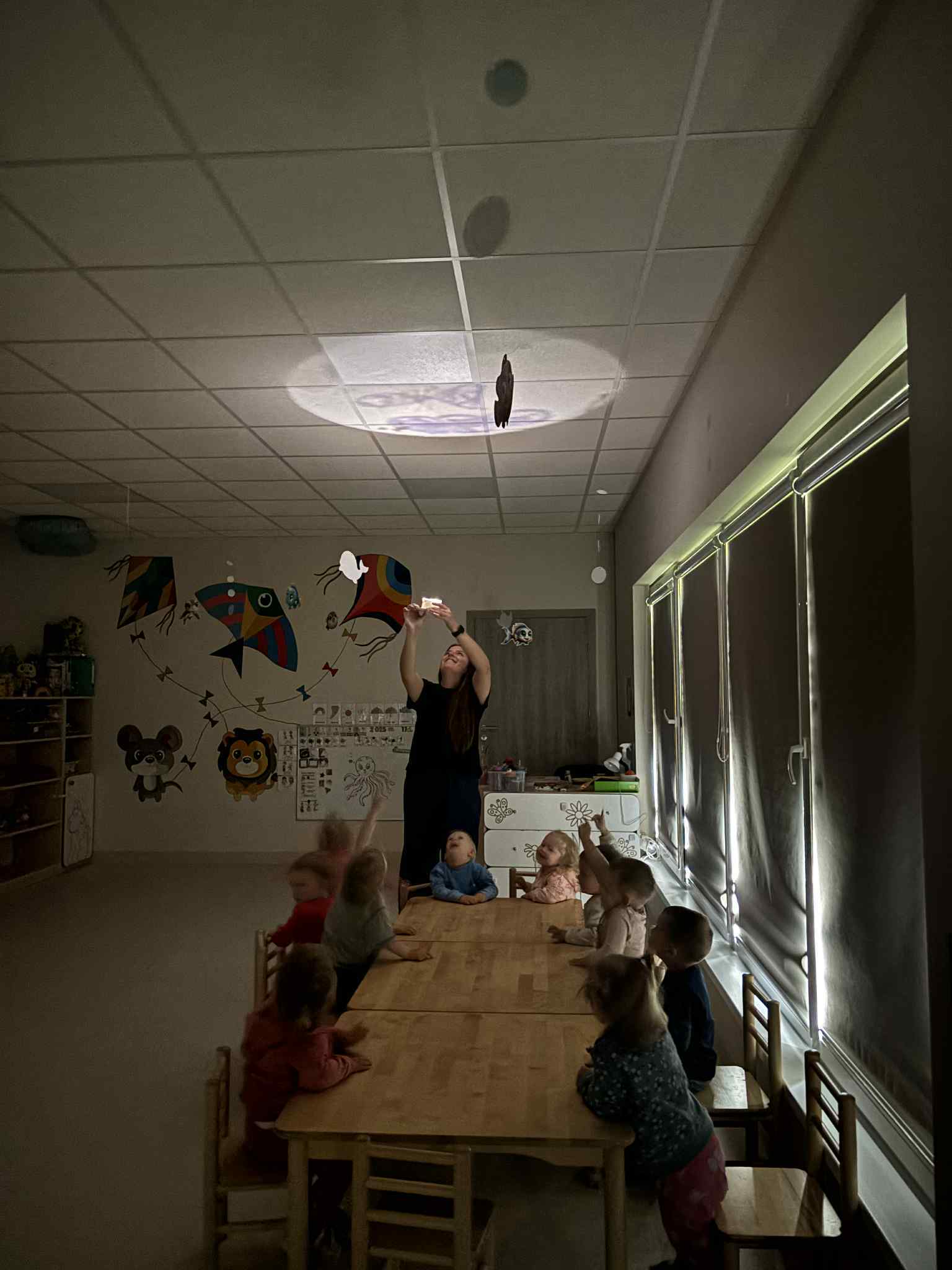
The daily rhythm is extremely important for young children, as it provides a sense of routine and responsibility. We have clear parts of the day: morning welcome, free play, structured activities, outdoor time, and rest.
However, this structure is not rigid. If I notice that children’s emotional state shows signs of fatigue or overstimulation, I adjust the activities. Flexibility helps to avoid unnecessary stress.
– How do you evaluate the balance between structured activities and free play in early childhood?
I believe that free play should take a dominant role. Structured activities are important for introducing children to new experiences, but too many of them can limit spontaneity.
Through free play, children learn self-regulation, creativity, and problem-solving. Therefore, my goal is to create an environment where the child can make their own choices.
Emotional Environment and Development of Social Competencies
– How do you create emotional safety in the group?
Emotional safety starts with the stability of the adult. If a teacher responds consistently, calmly, and clearly, children feel secure.
It is also important to name emotions. Even with very young children, I say things like: “I see that you are angry,” or “It seems like you are sad.” Naming emotions helps children recognize and eventually regulate them.
– How do you help children learn to resolve conflicts?
Conflicts are inevitable and even necessary for social development. My goal is not to solve the situation for the children, but to help them understand it.
I often use modeling—showing how to say “please,” “give it to me when you’re done,” or “I don’t like that.” Over time, children begin to use these phrases independently.
Adaptation and Cooperation with Families
– What principles do you apply when organizing the adaptation process?
Adaptation should be gradual and respectful. It is important that the child experiences short but positive moments of separation.
Cooperation with the family is essential—we discuss the child’s sleep, eating, and calming habits. Parents’ trust in the teacher directly affects the child’s well-being, and this is very noticeable.
– How do you handle situations when parents’ expectations do not match the child’s actual developmental abilities?
In such situations, constructive dialogue is key. I rely on observations, provide concrete examples, and explain developmental aspects.
It is important to respect parents’ opinions while also presenting a professional assessment in a reasoned way. I believe that communication, cooperation, and respect for the process are essential—from both my side and the parents’ side.
Professional Reflection and Challenges
– What are the biggest challenges you face in your work?
One of the challenges is emotional load. In a group of young children, emotions are intense and change quickly.
Another challenge is societal expectations, which sometimes focus too quickly on academic achievements, forgetting the importance of emotional foundations.
– How do you maintain professional resilience?
Reflection and support from colleagues are essential. Sharing experiences helps prevent burnout.
Maintaining a balance between work and personal life is also very important.
Vision for the Future of Early Childhood Education
– How do you see the direction of early childhood education in the coming years?
I believe there will be increasing focus on emotional intelligence, inclusion, and individualization.
It is also likely that interdisciplinary collaboration will grow stronger—teams of educators, psychologists, and other specialists working together.
– Kristina, how can a young person become an authority figure?
I think the most important thing is not to try to “appear” as an authority, but to be genuine. Children quickly sense authenticity, so it is important to be yourself and not pretend.
Authority develops through consistency—keeping your word and responding calmly and clearly. Respect for the child is also crucial: not through fear, but through connection.
And one more thing—don’t be afraid to make mistakes. When you are genuine, patient, and build a connection with children, authority comes naturally.
– A few tips for a young person who is hesitant to start working in education:
First, don’t be afraid to start, even if you feel like you don’t “know everything” yet. In this field, you learn every day, and that is completely normal.
Second, allow yourself to make mistakes. Mistakes are not failures—they are part of growth. The most important thing is to learn from them, not to criticize yourself.
Third, be yourself. Children don’t need a perfect teacher—they need a real person they feel good with.
Fourth, ask for help. The team in education is usually a strong support system, so you don’t have to carry everything alone.
And most importantly—remember why you chose this path. Even on difficult days, it helps you keep your sense of purpose.
– What would you wish for future Kristina?
First of all, I would wish future Kristina not to lose the authenticity with which she started this journey. Over time, you gain more experience and confidence, but there is also a risk that things become routine. That’s why it’s important to maintain a genuine relationship with children—to see each of them as unique, not just as another part of the day.
I would also wish you to preserve patience and sensitivity. Even on difficult days, when you feel tired or discouraged, it is important to remember why you chose this profession. Those small moments—a child’s smile, a hug, trust—are the true meaning of this work.
I would really like you not to forget to take care of yourself. This job requires a lot of emotional resources, so it is important to find a balance between work and rest, between caring for others and caring for yourself. Allowing yourself to pause, breathe, and recover is not weakness—it is a necessity.
I also wish you to stay curious and open to new ideas. Education is constantly evolving, with new methods, approaches, and perspectives emerging. Don’t be afraid to learn, to ask questions, and to खोज what works best for you and your children.
And finally—believe in yourself. Even when doubts arise, even when things don’t go as planned, remember how far you’ve come and how much you give to others. Confidence does not come from everything being perfect, but from continuing forward despite challenges.
Lastly, I wish you not to lose your joy. Joy in small things, in everyday moments, in growing together with children—because that is what makes this work truly special.
Summary
This in-depth interview reveals that early childhood pedagogy is a multi-layered system encompassing emotional sensitivity, methodological flexibility, value-based consistency, and professional responsibility.
The work of a nursery teacher is not merely about organizing activities—it is about building relationships, ensuring emotional safety, and creating conditions for each child’s individual development. Early education grounded in respect, dialogue, and reflection becomes a long-term investment in nurturing a mature, socially responsible, and emotionally resilient individual.