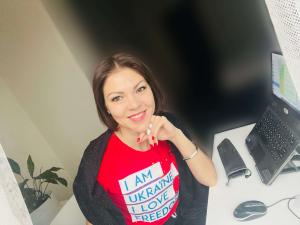

26 years in education — a journey that began in a classroom and led to the creation of an international learning ecosystem. Oksana Rybaieva is the founder of BabyLand kindergartens in Ukraine and Poland, an innovative gymnasium in Kharkiv, and international children’s camps in Bulgaria, Montenegro, and Greece.
Her life has long extended beyond one country. Today she works across Ukraine, Poland, and Canada — and this international experience shapes her unique vision of education, leadership, and management. She leads teams of educators remotely, develops her own educational standards, and integrates artificial intelligence into both learning and operational processes — while also being a mother for whom education always begins not with programs, but with the child.
In this interview, we talked openly how to build a strong team without a physical office, why a teacher should be a mentor rather than a “knowledge carrier,” how technology can empower rather than replace people — and why true educational quality is born where there is trust, freedom, and shared values.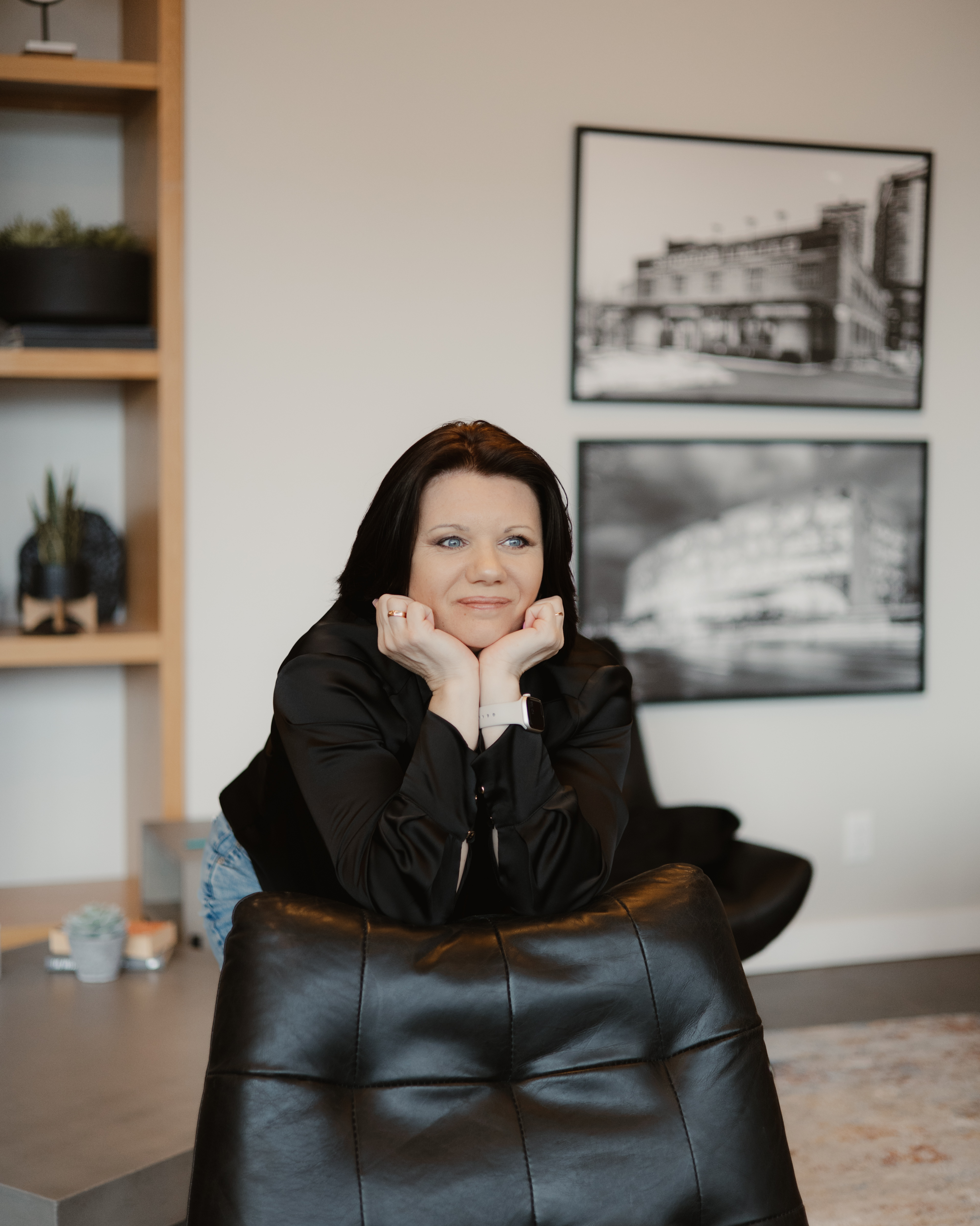
Ms. Oksana, you have 26 years of experience in education — from early childhood teacher to founder of an educational network. At what point did you realize: “I can and I want to build my own system”?
It wasn’t a moment when I sat down one day and decided, “Now I’m going to create a system.” It happened differently — through challenges that required responses.
We began to notice that within the same processes, people were working side by side but in very different states: some were motivated, others were not. I wanted to understand how to make the system more humane and sustainable, how to make it fair, and how to support those who were truly committed.
Step by step, task by task, decision by decision, document by document. And about six months later, I looked back and realized: this was no longer just a set of actions. It had become a system. More than that — an ecosystem.
An ecosystem built on healthy relationships, honesty, and long-term thinking. From there, it began to grow naturally, like a tree — branch by branch. Today, new challenges don’t destroy it; they simply attach themselves to the existing structure.
So was the full-scale invasion the key trigger?
No, the initial impulse appeared even before that. But the war became an enormous challenge because the organization had to be managed remotely. Clients and teachers found themselves in different cities and countries. We had to learn how to lead in a way that would keep people connected to the system and feeling supported.
Were you already in Canada at that time?
No. It’s a very dramatic story. I was in Kyiv with my youngest daughter after surgery — we had just been discharged from the hospital. On the morning of February 24, we were evacuated. A partner picked me up with my daughter, my husband took the other children, and we first went near Vinnytsia, then to Western Ukraine.
After that, we moved to Montenegro, where we lived for about six months. Then Poland — for roughly a year and a half. And only after that — Canada. This was a forced journey. But it was also connected to the future of our youngest daughter, who has Down syndrome. We understood that in Ukraine we could give her kindergarten and school. But university and adult life were still a big question with no clear answers. In Canada, adults with disabilities truly live — and live full lives. That became the decisive argument.
What is more difficult for you today: remaining a teacher at heart or managing a large educational structure?
The hardest part is not betraying any of my roles. Every decision I make, I look at from several perspectives at once: as a teacher, a leader, an employee, a mother, and even as a child. That’s what makes decisions balanced.
But maintaining that balance is not easy. Leadership often means making unpopular decisions. Sometimes they are painful, but necessary for growth. At the same time, I don’t want to lose the teacher within me — the person who understands what lies behind behavior, emotions, and needs.
When I started building the system, I consciously chose to look at employees as clients: what hurts them, and how the organization can reduce that pain. This approach changed a lot — our interactions, our communication culture. Still, balancing the “warmth of a teacher” with the “cold logic of a leader” is daily inner work.
In your opinion, how is the role of a leader in education changing today? What kind of leader earns trust rather than obedience?
A leader is someone who inspires. Someone who doesn’t just assign tasks but shows direction through personal example. It’s like an actor stepping onto a stage or a teacher entering a classroom — the space changes immediately. Your energy, your rhythm, your inner integrity matter. If your words don’t match your actions, people feel it instantly.
A leader must live the values they declare. Not just speak about them — but embody them.
Where do you find the inner strength to remain a leader?
In children. In their smiles, their achievements, in watching them grow. When it gets hard, I open old photos, remember camps, classes, meetings with parents. It gives me an incredible boost.
And also — my life now is such that wherever I go, in almost every city in the world I meet someone who was once my student or client. That gives me strength too. Because you realize: your work matters.
Which management decision in your career was the most difficult — and why did it become a point of growth?
Probably 2014. We started the business in 2012 — young, inspired, full of faith. And then came the war in Eastern Ukraine, economic instability, declining family incomes. Clients began to cancel services not because they were disappointed, but simply because they could no longer afford them.
We sat down and calculated: at this pace, we would survive one month, maybe two or three. And then we had to make a very painful decision — out of four employees, to keep only one. My heart hurt, but my mind understood: if we didn’t do this, we would close completely.
And then something remarkable happened — within a few months, we recovered and began expanding the team again. This experience taught me two things. First: sometimes you have to make very unpopular decisions for the sake of the future. Second: trust your intuition.
I wasn’t a businesswoman — I was a primary school teacher. But intuition often guided me: where to go, which courses to take, who to talk to. And now, whenever I face a difficult choice, I remember 2014. And I learn, again and again, to trust myself.
The educational business in Ukraine has gone through extremely difficult years. What helped you not to stop and to keep moving forward?
First of all, responsibility. I clearly understand that I carry a deep responsibility toward children, parents, and my team. As a mother who wants to embrace the whole world and hold it close — that’s probably very much about me. Second, flexibility. Flexibility and a constant search for different options.
I think part of this also comes from childhood experience. Childhood shapes us more than we realize. Recently, I’ve been reflecting on what helped me become who I am today, and I caught myself thinking: when I find myself in a situation where it feels like my back is against the wall, I don’t fall into chaos or panic. On the contrary — my mind becomes very clear. I start looking for solutions, options, ways out. And only afterward, when everything is done, comes the emotional drop — an empty head, complete exhaustion. But it’s this inner focus during crisis that allows me to keep moving forward.
You mentioned that some of these qualities come from childhood. What were you like as a child?
Sometimes I ask my mom, “How did you survive me?” (laughs) I was a real tomboy. But from a very young age, I knew I wanted to be a teacher. I gathered children in our apartment building, “taught” them, gave them grades — of course, how could I not?
I read a lot. Once my mom gave me a book, and I didn’t need anything else. I literally lived with it. She used to say, “You even eat and sleep with that book.” And now I think: it would be better if children lived with books rather than with phones.
I mostly befriended boys. Bicycles, games, adventures — that was my world. I have brothers who used to come for the summer, and we were always together — moving, exploring, full of energy. But one thing was clear even then: I knew I wanted to work with children.
What was the most unexpected challenge when scaling education abroad?
Probably competition… with the state. When we opened a kindergarten in Poland, we created it for Ukrainian children, to preserve their language identity. But it turned out that many parents wanted the opposite — fast integration. They would say, “We’re in another country now, so the child should immediately start speaking Polish.”
But for young children, this is very difficult. Especially for those who are just beginning to speak. After six months, some of them can shut down completely and even stop speaking — simply because they don’t understand what’s happening. We had to endure that period until parents began to understand this.
The second challenge was the financial model. In Poland, the state compensates a large part of kindergarten fees. For example, if a kindergarten costs 2,200 zloty, the state covers 1,500, and parents pay the rest. In Ukraine, there is no such support.
But there was a catch: to get a license, 80% of education had to be in Polish. And we wanted to preserve Ukrainian. So for two years, we were literally “pulling” the kindergarten forward until a program for home-based kindergartens appeared, with easier requirements. That allowed us to remain Ukrainian and receive state support for parents.
Another difference was organizational processes — for example, premises. In Ukraine, landlords often do renovations themselves. In Poland, you renovate everything yourself, and when you leave, you can take the renovation with you. Literally — walls, ceilings, floors are dismantled.
So the challenge wasn’t only financial — it was mental. You have to live in a new country long enough to understand how it truly works.
BabyLand, the “Prostir” Gymnasium, international camps, technical labs — what unites all these projects into one philosophy?
The child. We always tell parents: we work for children, about children, and for the sake of children.
At school, we don’t hold ceremonies “just to check a box.” We create celebrations for children. Because this is their life. And how we fill it will become their lifelong memories.
Is there one project that is especially close to your heart?
You know, my mom once said something very beautiful about me and my older sister. When asked, “Mom, who do you love more?” she always answered: “Look at your fingers. If you cut one or the other — it hurts the same.”
It’s the same with my projects. Each one is born from love. Each has soul, time, effort, emotions invested in it. So I can’t say that one is more “special” than another. I worry about each of them. It’s just that at different stages, different projects require more attention or care.
But imagining that any of them could disappear is very painful for me. That’s why I keep looking for ways to preserve all of them — kindergartens, camps, and new directions. Because when there is love for what you do, flexibility, responsibility, and new opportunities always appear.
What does your ideal educational space for a child look like?
For me, an ideal space is one where warm memories are created. Our memory works like a collection of small photographs — we remember bright moments tied to emotions. Childhood should be exactly that: filled with joy, adventures, and discoveries.
In kindergarten, it’s fairy tales and play. Children imagine, create, explore — and the entire educational process can be built around that. Every day something interesting should happen: today we bake gingerbread, tomorrow we dance, then we create gifts for parents, go on “journeys” through different countries, celebrate together with families. That’s how a full life for a child is formed in kindergarten.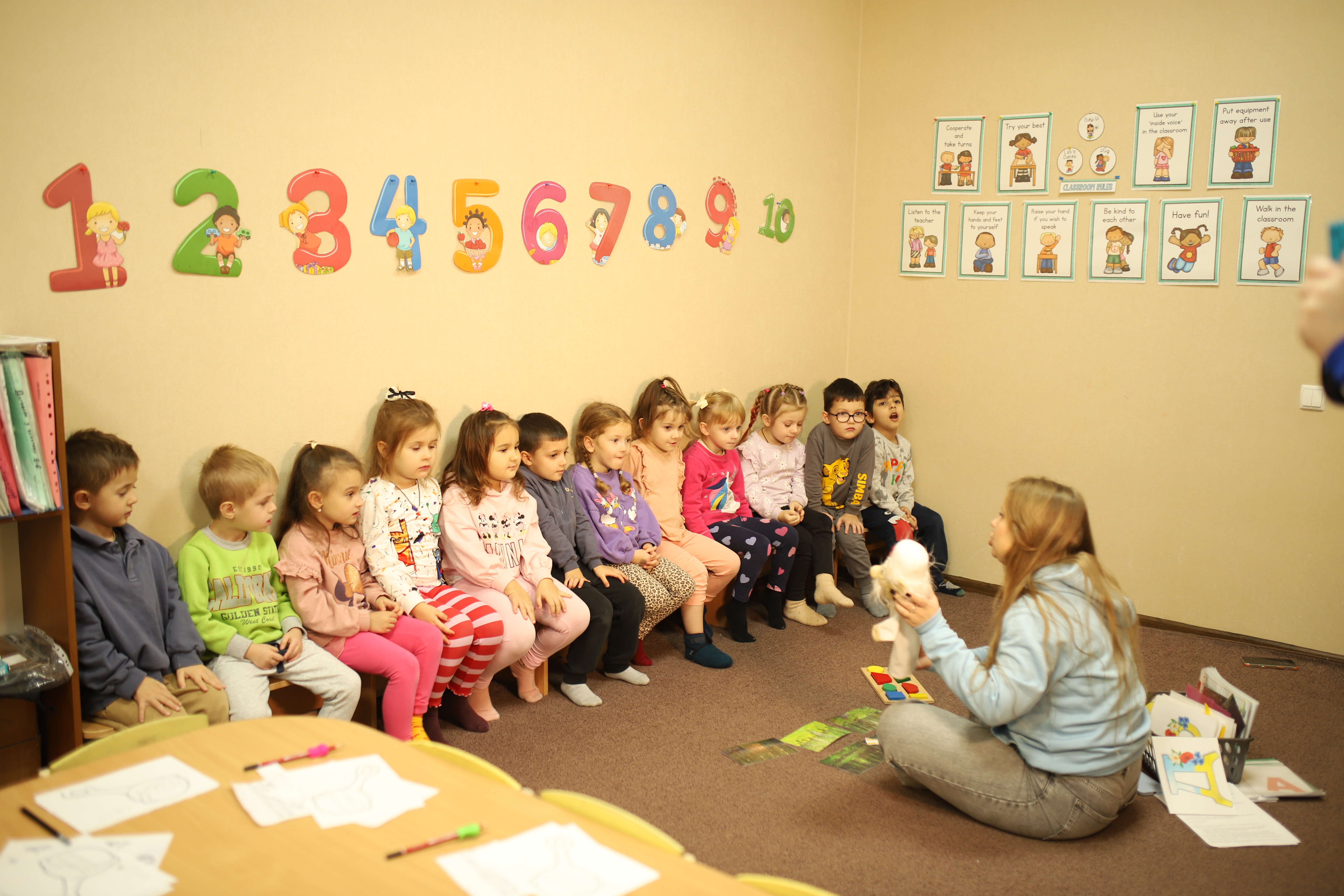
School is a different level, but the essence is the same. A child has friends, a favorite teacher, adults they can approach without fear. The space should allow them to open up — through clubs, creativity, activities, even first steps toward financial literacy. The key is that a child understands why they are learning and how to apply it in real life.
My core principle is simple: teach a child to live independently in this world. To analyze, make decisions, see risks, and take care of themselves.
Camp is another important part. There, children gain friends and emotions, learn to live without phones, and see the world more broadly. Quests, team games, shared experiences — these are not just entertainment, but tools for development.
Because the most important thing is to show children that life doesn’t happen “later.” It happens here and now.
How do BabyLand and the “Prostir” Gymnasium differ from traditional private institutions?
We took a classical school model and raised it to a new level of system thinking. Traditional schools focus on grades — they define a child’s status. For us, grades are subjective; what matters more are skills a child can actually apply.
We build a child’s trajectory from the age of one to six, and then continue at school from first to ninth grade. We know what happens with a child each year and how it all connects within one system.
We also integrate the modern world into education. A course on emotional intelligence started only in first grade, and now it spans all grades up to ninth. Career guidance has become essential — by ninth grade, a child already knows where they want to go next, and upper grades help turn that dream into reality.
We also developed a financial literacy course so children understand how to manage resources. Everything grows gradually, like a snowball — from small steps to a systemic result.
Today you live in Canada, while your educational projects operate in Ukraine and Poland. Being between different educational cultures, what from this international experience do you consciously integrate into your projects — and why?
I integrate not only the experience of the countries where I currently live. In general, I am constantly researching different educational systems — especially when a new challenge appears in front of us.
For example, after the full-scale invasion began, we faced a situation where some teachers were working online and felt comfortable there, while returning to offline teaching was difficult for them. At the same time, for parents, any change of teacher is always stressful. So I started looking for a solution: how to turn this “pain point” into a natural process.
That’s when I noticed an interesting practice — particularly in Italy and partly in Canada. There, teachers work with a specific age group. For instance, there may be a primary school teacher who has been taking first-grade classes for many years. They deeply understand this age, feel confident with it, and work comfortably. Another teacher may feel more connected to fourth grade and stays with that age group.
This approach removes many problems. First, children are not labeled. A new teacher sees the class without prejudice. Second, children gradually get used to the idea that different teachers may work with them at different stages — which becomes excellent preparation for middle school, where there are many subject teachers.
I analyzed the advantages, thought through how to present this to the team and parents, and we decided to implement this system. The response was very positive.
The same applies to other processes. For example, we completely changed the format of parent meetings. Instead of traditional group meetings, we now hold short individual consultations where the teacher discusses three key points:
1️⃣ the child’s current strengths,
2️⃣ existing challenges,
3️⃣ how the school and parents together can help overcome them.
And we transformed “parent meetings” into four events per year — open days. The first one is called “My Path to Success.” During this event, the administration explains educational processes, teachers talk about how they work with learning outcomes, and the children themselves show what they have achieved.
This format is largely inspired by Canada. There, the school is a space for the child, not for the parents. And during open house days, it is the child who becomes the guide for mom and dad. This is extremely valuable.
So my approach is simple: first I research, analyze, and adapt — and only then integrate. Because simply copying a system without considering our context is impossible.
In such a large organization, you are obviously not alone. Let’s talk about your team. What does “team” mean to you?
For me, a team is first and foremost about people — not just employees or colleagues. They are partners with whom we build relationships based on shared values, direction, and responsibility. It is essential to know how to delegate and clearly understand where my area of responsibility ends and where yours begins. That’s how true partnership is born.
In our system, we are simultaneously clients and contractors for each other. I can be a client for my teachers, and they can be clients for me. It is fundamental for me that the team is not just executors, but creators — people who take initiative, propose ideas, and bring them to life.
For me, a team is a space where people can be themselves, grow creatively, and develop — always within shared values, responsibility, and a common mission that we implement together.
You created an internal LMS platform to train your team. Why do you invest so much in the development of your people?
If you want quality standards to work across all institutions, you need to teach and clearly demonstrate processes. Many teachers are not familiar with the New Ukrainian School methodology, so I developed seminars, trainings, and courses that help them work systematically.
The LMS platform allows the team to learn at a convenient time, revisit materials, apply them in practice, and adapt new tools. This is especially important when scaling: as we expand into a gymnasium, new processes must be explained to all teachers, and online learning allows us to reach everyone without overload.
In practice, we see that this works. The team gains knowledge, applies it, and maintains a high standard of quality across all institutions.
The LMS platform is my way of communicating with the team. I cannot be with them all day, but through these courses, I can be present at the moment that is convenient for them.
What kind of educators do you look for in your team — in terms of values, mindset, and approach? What principle is the most important for you?
For me, the key principle is a person’s willingness to learn and grow. I understand very well that teachers with many years of experience in the system often find it difficult to change their approach, and only a small percentage are truly open to transformation. At the same time, young teachers entering the profession also need additional learning — because modern education requires different tools and ways of thinking.
That’s why I believe in people until the very end. For me, it is crucial that a person is ready to learn. Any skill can be acquired.
Another core principle is communication and interaction with children. Our selection process begins with a first meeting, which I never prepare with predefined questions. It’s a live conversation. From the way a person answers, I already understand whether they are a fit. The next stage is spending a full day with us on-site. We observe how the person interacts with children. If there is connection, communication, and the ability to truly see the child — even if there are gaps in methodology — I am ready to teach this person. We can track whether they learn and grow.
If I see candidates who are “stars,” who know everything and can do everything perfectly, but lack real interaction with children — that’s not for us.
Are you currently looking for new team members?
Yes, we are currently looking for people to join our team. Half-jokingly, we even thought about filming a video saying: “Dreaming of having a baby? Then come work with us.”
At the moment, we have six women on our team — primary school teachers and a kindergarten educator — all working at one location. They are pregnant; one has already become a mother, and five others are currently living through this special period.
I often tell them that this probably speaks about the environment we’ve created. When a person feels calm, safe, and supported, they grow — both internally and in life. Many of them had wanted to become mothers for a long time, and here — suddenly six such warm stories at once. For me, this is one of the most valuable indicators that we are building the right environment.
We are currently looking for primary school teachers, assistants, and teachers of mathematics, physics, and English. Our flexibility allows us to adapt to different situations. For example, our math teacher is currently working online. Last year, computer science was also online. We don’t hire just anyone. We are ready to change formats, look for alternatives, and explain this to parents — but we choose only those who truly know how to teach children.
If a teacher works online, there is always another teacher present in the classroom to assist when needed. Each child has an individual laptop and headphones, so they work one-on-one with the teacher while staying in their classroom. This is how we build processes that function effectively within the realities we have today.
What does a new employee receive in your company besides a job?
Hugs, emotions, and the feeling of a real team. This is extremely important to me, because education is largely driven by women, and our team reflects that. I have always worked to create an environment without intrigue or behind-the-scenes competition. No one undermines anyone else here.
Honesty and openness matter to us. If something doesn’t resonate — you can come, talk, be heard, and together we find a solution.
Just like with children: if a conflict arises between team members, we step in to help resolve it, to reconnect, to rebuild trust. It’s a friendly atmosphere, support, learning — and support not only in work processes, but beyond them as well.
We communicate after work, spend time together, play board games, listen to each other, support one another through personal situations. It’s not just a team — it’s a community where you truly feel that you belong.
You actively integrate artificial intelligence and digital tools into educational and management processes. Which routine tasks have they genuinely simplified for you and your team?
I once joked that I dreamed of cloning myself — there were simply too many processes to keep in focus at the same time. Of course, that’s physically impossible. But thanks to ChatGPT and customized GPT assistants, I’ve essentially created “digital methodologists” — my working clones.
It’s very important to me that all educational programs, lessons, and presentations meet unified quality standards. I see the system as a whole, from a strategic perspective: I understand where we are going and how processes should be built. Teachers, however, often see only their own level of tasks.
That’s why we created GPT assistants where a teacher can simply enter the topic, grade level, lesson format, and focus — for example, soft skills, career guidance, mentoring, TRIZ integration, and so on. The assistant helps structure the lesson according to our standards and even generates a short promotional description. The teacher then transfers it into a presentation — and within five minutes has a high-quality, well-structured lesson.
An important point: this is not about uniformity or making everything the same. It’s about quality standards. The content, ideas, and teaching style always remain the teacher’s own.
Another example: recently we organized a series of Open Days — around 150 parents, multiple locations, different themes. It was important for me to show that the system works holistically, not in isolated cases, and that all teachers are part of it. Once again, AI assistants helped teachers structure their presentations without taking away their individuality.
We also use AI in operational and management processes — data analysis, meeting recordings and transcriptions, preparation of materials. Personally, AI has become a tool that helps me capture and structure my work. Often, my strategic decisions don’t show immediate results — they appear six months or even a year later. Now I can dictate ideas while on the road, analyze them, gather them into one document — and by the end of the month receive a real, tangible report. Once, AI calculated that I had completed 47 strategic tasks in a single month — something that became possible precisely thanks to automation.
We even have an “architecture of GPT chats” for specific areas — camps, events, quests. It’s essentially a way to transfer expertise to the team. Teaching all of this manually would take years. Instead, the team can use my accumulated knowledge here and now.
At the same time, we teach AI literacy to children. We have a studio called “AI Projects,” where children from first grade learn how artificial intelligence works and how to use it ethically and creatively.
For me, AI is not a replacement for humans — it’s an amplifier. And honestly, today it’s my working partner.
You also run AI workshops for educators. What fears about technology do you hear most often, and how do you help teachers overcome them?
I always build processes from a practitioner’s perspective. I share only what I have personally experienced, tested, and analyzed. Only after that do I teach others.
Working with teachers aged 50+, I noticed that fear of new technologies often comes not from complexity, but from poor teaching. That’s why I always explain everything in simple language — translating new terms into “human” language, without barriers or the feeling that someone doesn’t know enough.
Transparency and practice are crucial for me. First comes clear, understandable theory. Then — concrete actions, where even without prior knowledge a person can achieve a result. When someone sees that it works, fear disappears and confidence appears.
The most effective learning happens through simple examples. When we once created a rap song for a math rule using technology, teachers saw that it was modern, engaging, and not complicated at all. That’s how the complex becomes simple — through practice.
How do you see Ukrainian education in ten years, and what role do you personally want to play in this transformation?
I see the future as technological. Already today, tools are emerging that allow learning through voice and visual interaction, without traditional lecturing. Education will become interactive, almost like in science fiction films: information will be instantly accessible, and the teacher’s role will transform. A teacher will no longer simply transmit knowledge — they will become a facilitator and mentor who supports, guides, and helps students focus. Children will independently find information, and we will teach them how to use it effectively.
My role in this transformation is to connect education with the modern world and build values from within. Change always starts with yourself — and then spreads outward. I see how trends reshape environments: ecosystems, new approaches in schools and gymnasiums. We don’t copy others; we create our own system, test it, and refine it. When others begin to follow our example, it confirms that we are setting new standards.
Our focus is educational quality. It should be ensured not through criticism, but through support and continuous learning within the team. Trust in teachers is key. Our goal is for Ukrainian education to reach a high level of standards and new values.
Do you plan any new projects within your business?
Yes, absolutely. We have several directions we are already actively working on.
First, it’s a long-standing dream of mine — to create a space for children from birth to three years old. Currently, we are participating in a grant program in Ukraine that supports the opening of such childcare centers. I personally cannot participate as an applicant because I live in Canada, but the team is already undergoing the required training. This is very important to me because many of our mothers want to return to work after six months but lack a supportive environment. We want to create exactly such a place — where a child feels safe and a mother can work calmly.
Second, we have developed a new camp concept: “From Kharkiv to the World. From Anxiety to Freedom.” These are journeys across Ukraine and beyond, helping children experience different cultures, broaden their worldview, and at the same time rediscover their own country — its identity, beauty, and strength. I felt this especially after moving abroad. At some point, we realized: why, having the Carpathians, Synevyr, and so much beauty at home, did we travel so little within Ukraine? Because we were stuck in the “work–home” tunnel. Travel is growth, experience, encounters, and new meanings. It motivates us to move forward.
The third direction is already a Canadian story. We have submitted documents to open a nonprofit organization for children. Education support here is very well developed, with many opportunities for social projects — kindergartens, camps, courses. I want this to be not a business, but a social mission. So that Ukrainian teachers can go through certification (it’s challenging, but achievable) and continue working with children in their profession. And so that our children have a space “among their own” — warm, supportive, and Ukrainian.
What would you say to educators and managers who dream of building a strong educational business but are afraid to take the first step?
Try. I always tell both children and teachers: if you try, there are only two outcomes — it works, or it doesn’t. Either way, you gain experience, and next time you’ll be closer to the result.
But if you don’t try, there’s only one outcome: it will never work. Fear is what keeps us in place. That’s why it’s important to find something that truly lives inside you. If it’s yours, it burns. And then, sooner or later, it will work out.
Considering your many years of experience, large-scale projects, and your journey as a leader, educator, and mother — with what wishes do you enter the New Year for yourself, your team, and the entire educational community?
I wish for peace. First and foremost — peace for all of us. And also emotional and psychological resilience. The ability to understand yourself, hear yourself, feel yourself. Because that’s what moves us forward.
The most important thing is not to betray yourself — your values, your dreams. And to dream. Dream a lot. Because dreams can take us exactly where we are meant to be.
I remember when we opened our first kindergarten and it had been operating for a year, I had a dream of opening one in Poland. We thought about it, worked toward it, and then at some point put the idea aside. Later, when the kindergarten in Poland was already operating, I suddenly realized: that was my dream — and it came true. I also dreamed that our company would become international. And today, it is.
Dreams do come true. But you have to take steps toward them — try, act, move. As they say, the road is mastered by the one who walks it. So keep going forward. Life will bring you to the place where you’ll feel: yes, this is mine.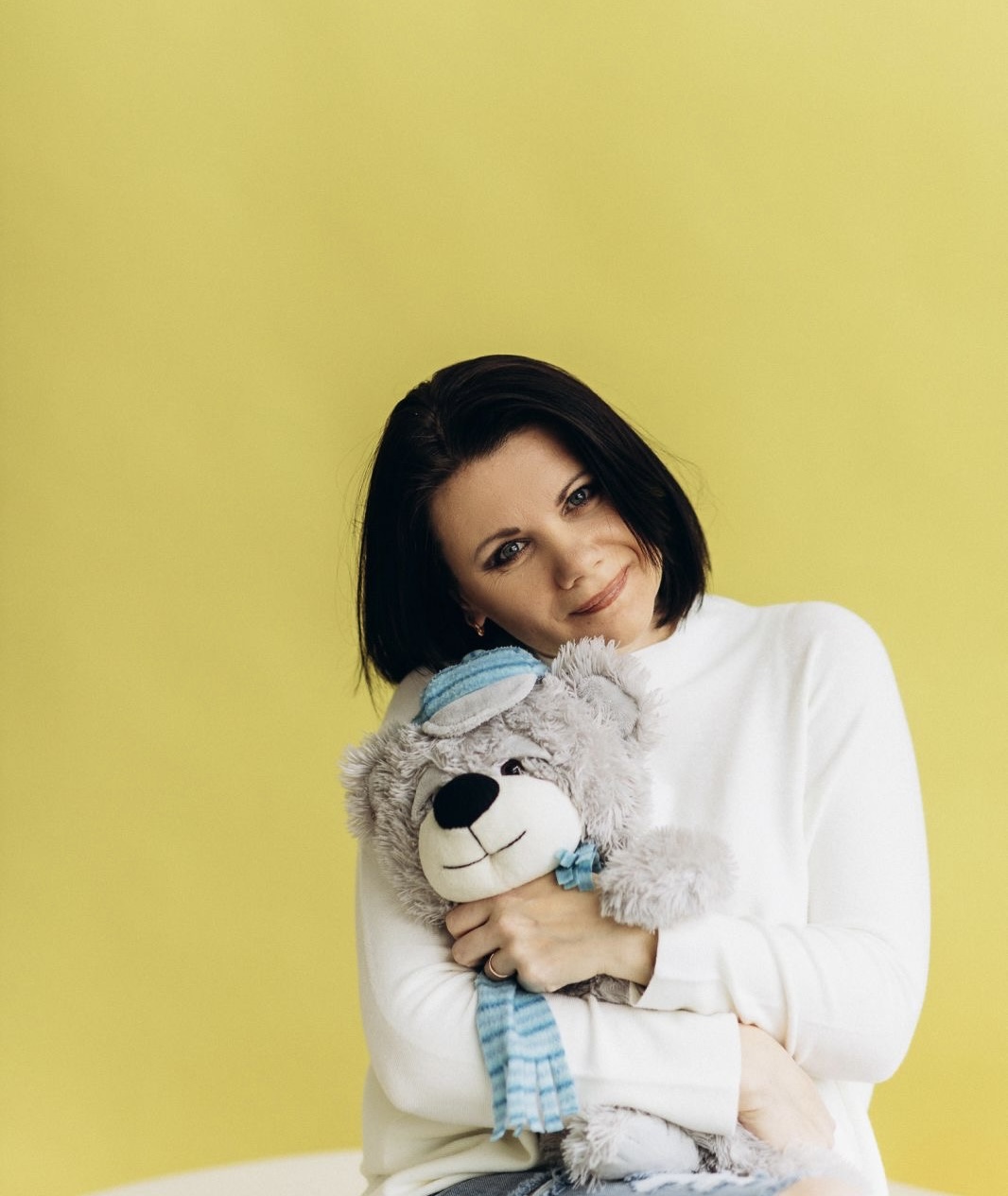
Life is one. It must be lived here and now. And one day, looking back, to say: “Wow, how much there was in my life. And how beautiful it was.”
🎭 Behind the Scenes of the Profession
At the end of each interview, we ask our heroes a few personal questions that reveal them in a new light — beyond their profession, yet still with the heart of an educator.
What is your favorite children’s book and why?
Honestly, I don’t have just one favorite book. I’m a true consumer of books, films, and music. I love a wide range — from modern stories to classics. I adore animated films and watch a lot of movies — except horror, because there’s already enough anxiety around us.
I read both children’s books and adult literature — fantasy, novels, detective stories. In every story, I find something for myself: emotions, experience, a new perspective. Sometimes this transforms into personal insights that I later apply in life or work.
For me, a book is a kind of mirror of a person. The more we read, watch, and listen, the deeper we become inside. That’s probably why I can’t name just one favorite book or even a single genre. I like everything that helps me see the world differently.
What advice would you give your younger self?
Move forward. And make sure to preserve your experience — record it, write it down, film it, photograph it. Time can’t be returned, but experience is an immense value.
I often wondered whether I would change anything in my life. The path was not easy. Very difficult. But I understand now — no, I wouldn’t change it. Because this exact path brought me to where I am today.
And one more thing: it’s very important not to betray yourself — even in relationships with those closest to you. As parents, we often tolerate a lot. But sometimes it’s important to set boundaries. Even with children. Because that, too, is self-love.
So my main advice is: be strong, believe in yourself, and know that there is light ahead — even if it’s hard right now.
What might surprise our readers about you?
Probably the fact that I can be… a child (smiles). I’m not afraid to be silly, playful, spontaneous. I can slide down playground slides with children, joke around, have fun — and a minute later be a completely serious adult woman in a business meeting.
There’s an actress, a teacher, a businesswoman, and a bit of a tomboy in me — and all of this blends together very organically.
And perhaps also my energy. People often say they feel it even through a screen. Maybe that could surprise someone too.