
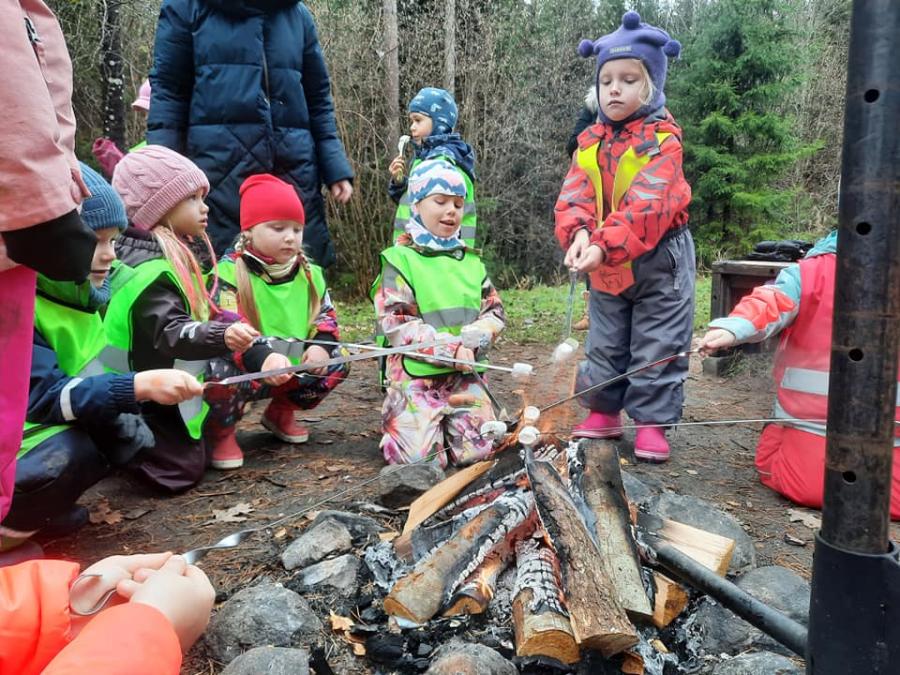
BLUNK brings children back to where learning is most natural – outdoors. Screens, a fast-paced everyday life and the “car to room, room to car” rhythm have changed how much children truly experience nature. At the same time, nature is where there is peace, routine, the joy of discovery and that simple “I noticed” feeling that no worksheet can replace.
In this ELIIS blog interview, Margus Kägu, the leader of BLUNK and the creator of BLUNK nature circles, talks about why he thinks it is important for boys and girls to do more together, why outdoor learning is not just “going outside in nice weather”, and how a nature circle can be launched both in the center of Tallinn and in smaller places across Estonia. We also talk about safety, the choice of instructors, cooperation between childcare institutions and what a 45-minute BLUNK interest circle really looks like from start to finish.
If you are a kindergarten director, a school principal or a teacher looking for a practical way to strengthen outdoor learning and environmental awareness in your home, or a parent who wants their child to have a greater connection with nature, this conversation will give you a very concrete picture: what BLUNK does, why it works and how to get started with it.
How was BLUNK born? What was the original “pain point” or motivation?
Margus Kägu:
The prequel to BLUNK actually started with a fairly simple life situation. Two young mothers were at home with their children and, as usual when they were at home, they started discussing ideas. That's how the idea of making practical products for small children came about: for example, stroller covers and other things that really help in everyday life.
I was close to one of these families and thought a lot about it and helped. That's how the name came about: the idea was that it would be something that was intended for both boys and girls. In English, “blue” and “pink” and that's how BLUNK came about.
Later, when our own children grew up and I started to observe more what was happening in kindergarten and school, it became increasingly obvious to me how boys and girls often operate in separate worlds. Boys in football, girls in dance and there are few activities together. Then I started to think about what would be a common thing that would really unite. That's how we came to outdoor education and nature. It's a topic for everyone, not just "boys" or "girls".
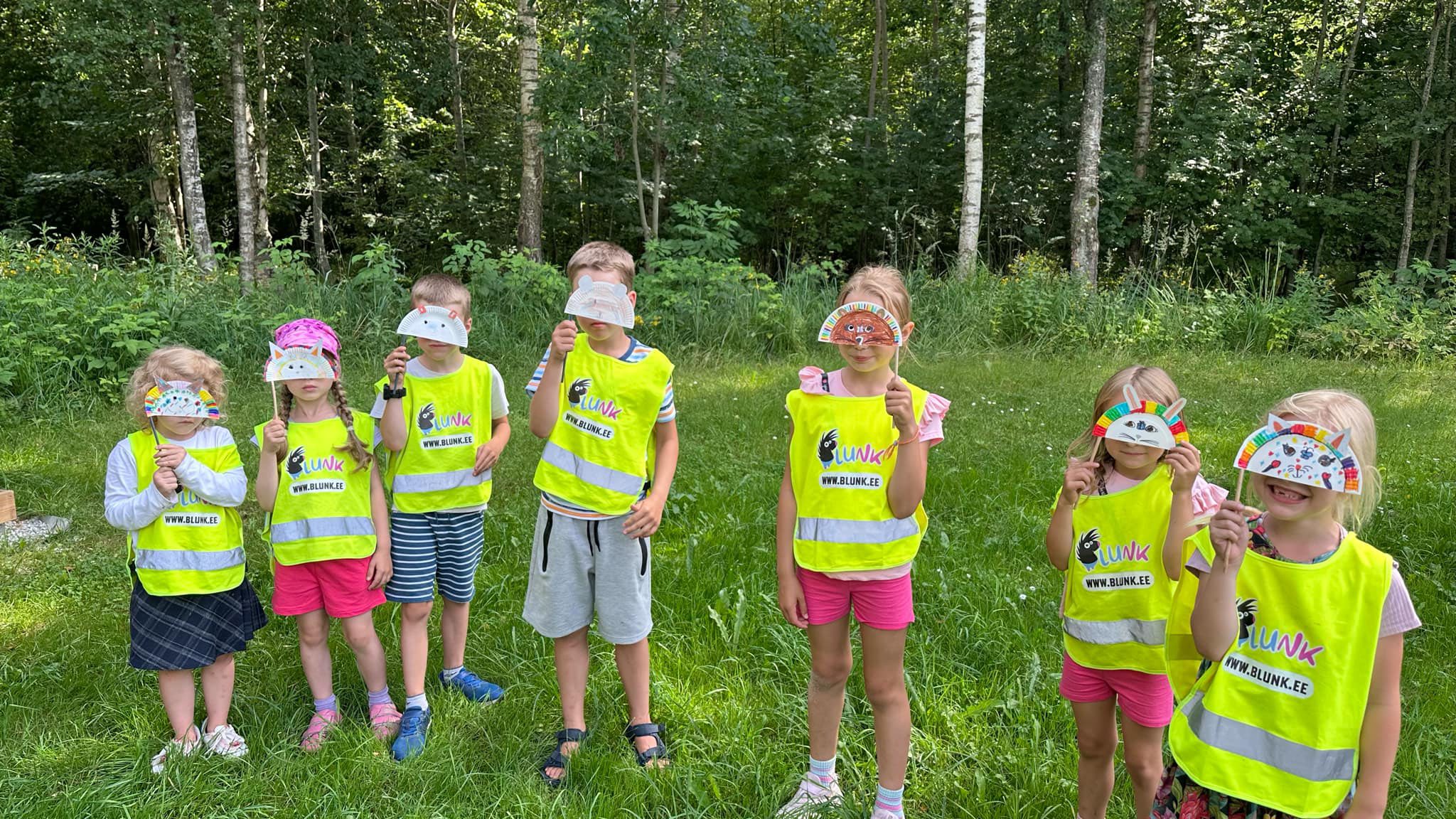
From there, the character of "Hedgehog BLUNK" grew: I collaborated with an artist and that's how a hedgehog was born, around whom this idea began to live even better. The idea of BLUNK is simple: to create activities and content that unites children so that gender-based separation does not deepen early on.
You are also a teacher. Do you think children arrive at school already "polarized"?
Margus Kägu:
This is a broad topic and I think there are several reasons for this. On the one hand, it is natural to some extent that children with similar interests draw together. At a certain age, it seems that “I have nothing in common with him”.
But on the other hand, this gap is also made bigger by the way adults, often completely unnoticed, talk and organize. Both at home and in childcare institutions, there is a constant distinction between “boys and girls”. Not maliciously, but out of habit: boys’ games here, girls’ games there; “boys now over there”, “girls now over there”. This contributes to the division.
I have also seen quite clearly that this can lead to quite strong opposition: a girl “hates boys” or a boy “hates girls”, and not because they are bad, but because the experience is that “we don’t play together” and “we are always separated”. Some children even develop a feeling of injustice, for example why someone has an advantage or “why does it happen to them”.
In addition, in childcare institutions, the background is inevitably that women mostly work with young children. This is not a complaint, but a reality, and it can affect how some boys relate and how they perceive themselves. This in turn relates to the broader question: what will become of Estonian education and the development of boys more generally.
Do you think participating in BLUNK activities could reduce this gap when a child reaches school?
Margus Kägu:
My idea and goal is that if a child gets the early experience that acting together is normal, then there won't be such a strong feeling of "us" and "them". Outdoor education and nature provide a very good framework for this - these activities invite children to really cooperate, not act separately.
Do you think it would help if more men worked in kindergartens and schools?
Margus Kägu:
I think it would help. Currently, a rather artificial situation has arisen: a child goes to kindergarten or primary school every day and hardly sees any men there. And if he also grows up in a home where there are no adult men nearby, then this shapes his experience of what the "adult world" is like.
I myself have been a male teacher and worked with young children as a supervisor, and I see that children get used to it very naturally. It has often been easier for me to “break the ice” with certain groups of boys, especially where there is initially reluctance to act together. But in general: children are happy to play and act together when we remove these artificial barriers and labels.
Your hedgehog is a very strong and memorable character. Why a hedgehog – why not, for example, a squirrel or a fox?
Margus Kägu:
We have chosen the hedgehog very consciously and thoroughly. One important reason is that the hedgehog is a gender-neutral character. People often do not understand whether he is “female” or “male”. This is good because he is equally suitable for boys and girls and does not automatically create the feeling that “this character is more for girls” or “more for boys”.
Another reason: the hedgehog is a very special and at the same time familiar animal in our nature. He is not like a wolf, which a person can walk in the forest his whole life and never see. You can find a hedgehog in your yard or in a kindergarten garden – it seems to be “almost a domestic animal”, but in fact it is a wild animal. It is close by, and therefore is perfect for introducing nature.
In Estonian folklore, the hedgehog is also a mystical and clever character. It is a cool character who is both wise and unique. In addition, the hedgehog is a bit like an indicator of nature: if hedgehogs are doing badly (for example, they cannot hibernate or their habitats are disappearing), it shows that something is wrong in nature. If you have a hedgehog in your yard, it generally means that the environment is in pretty good shape.
Our longer-term dream is that the hedgehog will start to operate in the nature of Estonia and the Nordic countries, introduce children to the local environment and help them notice what is really happening in nature.
You have emphasized that BLUNK is not a hobby school, but a hobby activity provider. What is the difference for you in essence and is this distinction important?
Margus Kägu:
This distinction is actually quite important. A hobby school already means a fairly specific system: curricula, councils, training permits, regulations, bureaucracy and often also certificates and formal learning outcomes.
For us, the most important thing is not what factual knowledge or specific skills the child “exactly learns”. Our goal is for the child to develop and maintain a warm relationship with nature and the environment, so that he or she has an interest in exploring, asking, discovering and preserving. People actually have this curiosity by nature and hobby activities support it very well.
The hobby activity format also suits us because it is more flexible and less bureaucratic. It is in many ways an agreement between us and the parent: if the parent sees that it is suitable, then we will do something together. This does not mean that the quality is lower. We have our own niche, competent instructors and the content level is in place.
There is pressure towards standardization (so that everything is “like a hobby school”), but fortunately for now it is possible to operate as we do. In a sense, the disadvantage is that parents do not always receive tax benefits in the hobby school format (e.g. when declaring training costs), but this is more a matter of “form”.
Your nature circles take place year-round and mostly outdoors. But what happens when the weather is really bad. It is raining, sleeting, there is a strong wind? Where do you draw the “line”?
Margus Kägu:
That is a very good question. The classic statement is that there is no bad weather – there is poor equipment. In principle, it is possible to cope with very different weather conditions if the child is dressed correctly and the instructor knows how to adapt the activity.
However, we have one clear health limit: we do not do a nature walk outdoors when the perceived air temperature (including the wind effect) is below -10°C. In this case, it is no longer reasonable or healthy.
Everything else, such as rain, wind, snow and sleet, is generally manageable. Many childcare facilities have solved their outdoor areas very cleverly: there are outdoor classrooms, shelters, wind and rain umbrellas where activities can be carried out. And in fact, dressing itself is also an important learning place: a child learns how to be outdoors in a way that is warm and comfortable.
It seems to me that sometimes children take over the comfort of adults, saying "oh, the weather is bad, it would be better indoors". But for a child, it is a very valuable experience that you can be outdoors even when it is wet, windy or muddy: to run, play, discover. After all, schoolchildren go to school in any weather, move and do their work. It is more a question of clothing and habits.
How much does the quality of outdoor learning depend on the instructor? How do you ensure that the instructor can really “learn outdoors” with young children?
Margus Kägu:
This is actually one of the most important things. When we hire instructors, we make sure that they have the skills and experience to work with young children. This is not “nuclear physics”, but without experience, outdoor learning can remain either too theoretical or, on the contrary, simply “being outdoors”, without content.
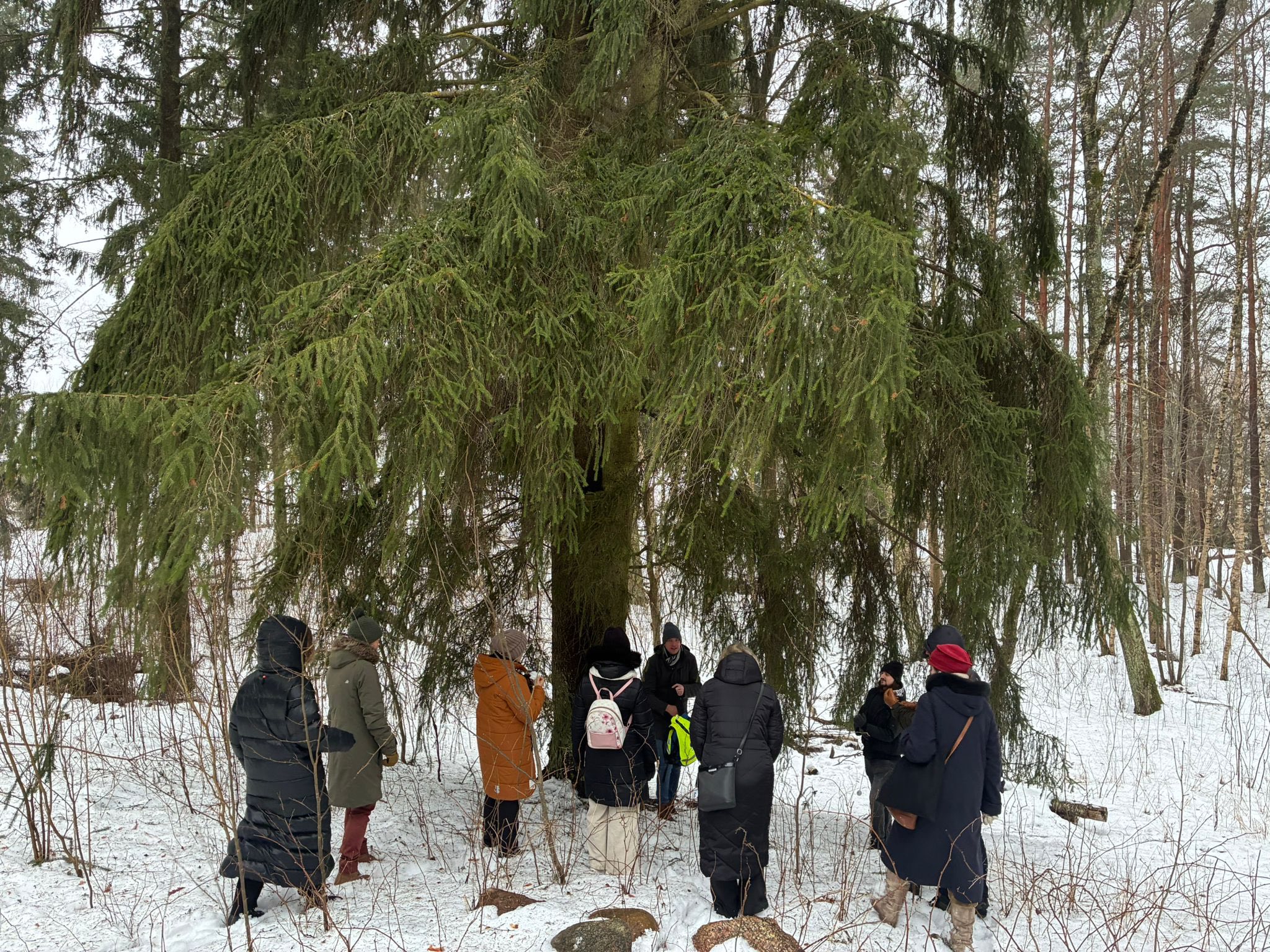
Our approach is rather that we do not start cramming theory, but create a learning situation where the child can experience it for themselves. For example: there is a spruce and another tree in the kindergarten yard, then that is enough. We try, look, compare, talk:
why one tree has thorns and another has leaves,
where the leaves disappear in winter and when they return,
how the seasons change and what affects it.
This feeling of the “rhythm of nature” and noticing sequences is what is important. The child begins to perceive that changes do not happen “suddenly”, but for a reason. It seems elementary to an adult, but for a child it is completely new knowledge that requires experience.
And this experience is best created outdoors: noticing, smells, sounds, touching. For example, I can tell when spring is coming just by the smell, that “something is in the air”. However, today's children tend to be “from the car to the room, from the room to the car”. Outdoor education helps to break this pattern: that the child really sees, feels, notices and tries.
Your activities support noticing nature and the seasons, which is also included in the early childhood education curriculum. Have you ever had to “prove” to a kindergarten or a parent that it provides added value and does not duplicate their work?
Margus Kägu:
Yes, it is quite an exciting topic and depends a lot on how a particular childcare institution organizes its affairs. I myself believe and our community believes that there can never be too much good knowledge and good feelings about nature and the environment.
But sometimes it really is the case that the childcare institution says: “We already have a lot of things, we deal with nature, we don’t need a separate nature circle.” Sometimes it is decided, as if for the children and parents, that “we have enough here”.
Then I usually explain that in addition to the topic being nature, it is also value education and a social dimension: mixed groups, new groups, different ages or groups together. The point of a hobby is that the child can further develop their interest.
We never say that the childcare institution is doing something wrong. Rather, the question is why prevent an additional opportunity when it supports the child in a natural way. There is magic in diversity, both in nature and in the child’s education.
Do you have any examples of how the BLUNK nature circle has really triggered or deepened a child’s interest?
Margus Kägu:
Yes, I get a very warm feeling when a parent says: “This suits my child,” and the child talks at home that he wants to become a nature explorer, for example.
I have also seen that children start going outside more and looking for things in the yard: “I heard about it in the nature circle and now I want to find it myself.” This initiative is one of the greatest values.
And some of the children we started with over six years ago have already gone from kindergarten to school. The feedback has been that they often have an easier time with nature studies at school because they have a preconceived idea that nature is cool. If there is interest, then “cramming” text and assignments is no longer so repulsive.
Parents may think: making a fire, insects, tools, lots of movement… How do you ensure safety? Do you have rules and processes (e.g. allergies, special needs, risky activities)?
Margus Kägu:
We have taken over many standard practices from kindergarten and school. The most important thing is that the adult who is with the children is competent and suitable, because we do not let someone who is not suitable work with the children. If the instructor is suitable, he or she also knows how to behave in the event of an accident or emergency.
If the club takes place near a childcare institution or on their territory, we act according to the childcare institution's procedures. We have contacts (teacher/head teacher/responsible person) to contact if necessary. If necessary, of course, 112 and then the usual actions.
Regarding allergies and other important information: we collect this information before the child participates in the club. The parent can inform the child of what is important when registering. We cannot and do not want to demand “everything”, but it works on the principle of mutual trust: the parent is responsible for ensuring that critical information is communicated, and we ensure safe, reasonable organization.
Our instructors also have basic first aid supplies: plasters, bandages and other things to do the first things. And there is one important point to consider in nature: paradoxically, artificial sharp corners and objects are often more dangerous, not nature itself. Nature is our natural environment and if a child sometimes falls and gets a small scratch, this is also part of the experience, to which we respond calmly and professionally.
What feedback have you received so far? Has anything made you change your activities?
Margus Kägu:
The most gratifying feedback is when a child is really excited and wants to explore further at home, talks about nature and you get the feeling that this interest will stay with them longer.
There has also been criticism and this is normal, because work is ongoing. The most common critical point is not even the content, but the fit between the people. Sometimes a situation arises where a supervisor and a member of the childcare institution's team simply don't "fit". Misunderstandings arise, someone feels that the supervisor is moving in the wrong direction, mixing up the agenda or not perceiving each other's roles correctly.
In such cases, sometimes the supervisor has to be changed. Not because he or she is doing something wrong in essence, but because cooperation and trust are key issues when working with people. There have also been such "far-sighted views" that "they are just playing on the playground", but this has often come from those who do not really see the content from the sidelines. In general, I must say that kindergartens and schools are mostly very educated and reasonable people, and there are rather few problems.
On what scale does BLUNK operate today? In how many childcare institutions, how many supervisors, what are the plans for expansion in Estonia?
Margus Kägu:
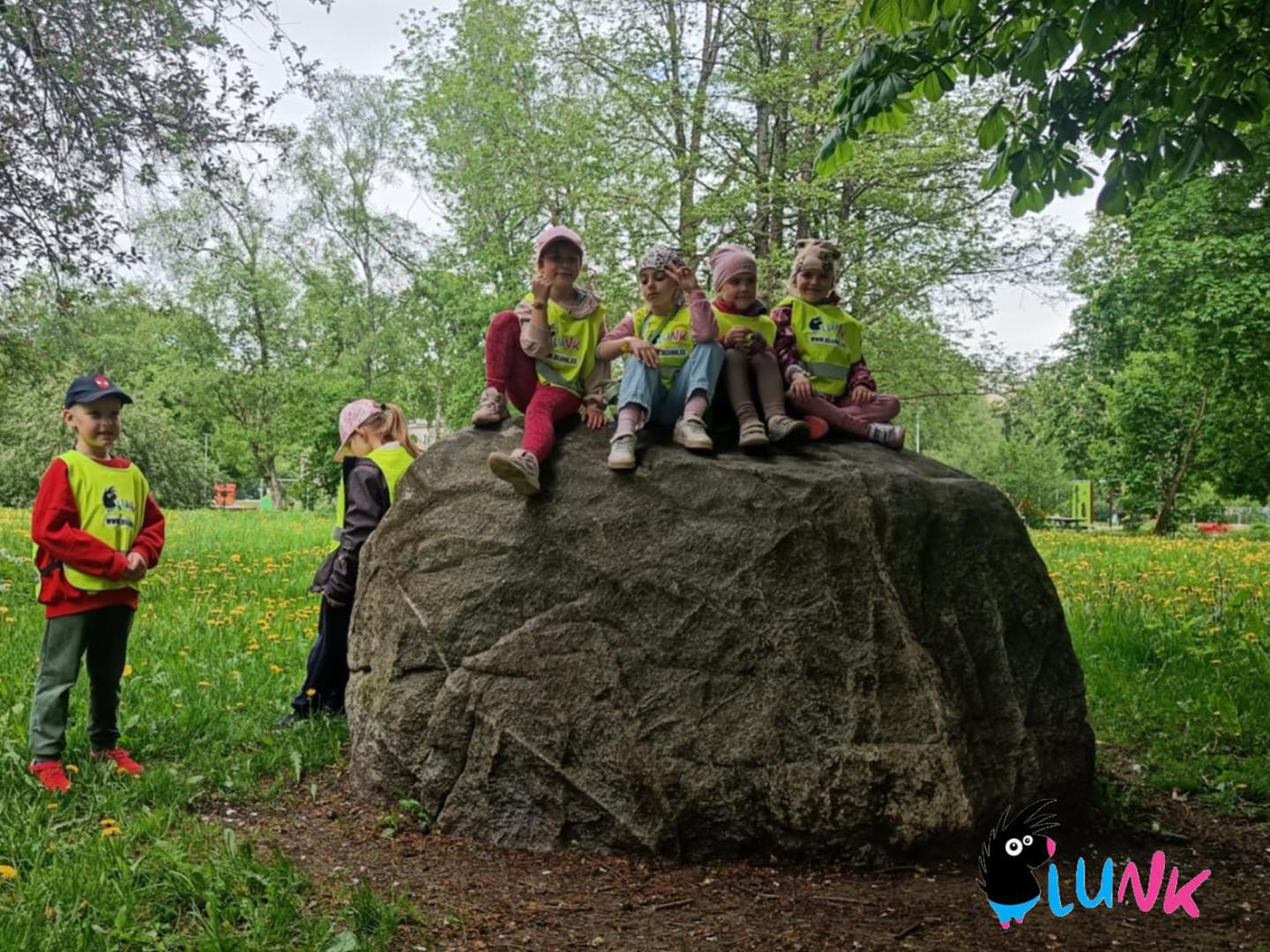
At the moment, we are still quite small. This school year we have been working in about ten places, mostly in Tallinn, but there have also been “small cells” in Saaremaa and Southern Estonia.
In general, the hobby sector has been in a slump at the moment. It feels like society and the economy are under pressure and families are starting to save money where it is “easier” to save money. Food is not being saved much, but hobby activities are being put on hold. This is also affecting us.
At the same time, we have a big plan to move forward with new momentum. Towards spring, starting in March, we want to come stronger. We currently have around 20 interested instructors who are ready to start (they still need training and agreements). We have mapped out kindergartens and schools that are ready to let us into their environment. The signs are positive and I hope that in a year I will be able to say to the same question that we operate all over Estonia and there are many more of us.
Let’s say that I have worked with children and nature is close to my heart. If I want to become a BLUNK instructor. What does this process look like? Even when I live in Kihnu or the other end of Estonia, for example.
Margus Kägu:
We always have a job offer up on our website, we are constantly looking for good people who “swing” in the same rhythm as us. There are a lot of children and there is actually a lot of work, the question is how to get this system going.
It is very important for us that the instructor has previous experience with young children, precisely the age group with whom we work in the nature circle. You can be a very good pedagogue, for example a teacher of high school or older students, but working with young children is a completely different world. We do not have the resources to start completely from scratch and do university-level didactics: how a child develops, how he learns, how he experiences the world through his senses. That is why practical experience is key.
From the nature side, one does not have to be a natural scientist with a master's degree. We talk about everyday things that every adult could generally know - we just do it outdoors and experientially. What is more important is that when the instructor teaches a lesson about, for example, "owls," he prepares in advance and checks what he is saying (at least enough, since the world of owls in Estonian nature is quite diverse). In other words: curiosity, preparation, and honesty are important.
What is the logic behind the selection and training of supervisors – what do you really value and how do you decide?
Margus Kägu:
When candidates come in, we first review their previous experience and education. The wider the geography, the better – the idea is to reach all of Estonia. An interview follows, often starting with a video call.
Then we invite suitable candidates to a practical meeting: we go outside and “play” through a natural circle – we actually go through a situation in one circle, see how a person leads, communicates and perceives rhythm.
And honestly – it becomes clear quite quickly whether there is an “error” or not. Childcare institutions also quickly signal when something is not working: for example, if a supervisor is constantly late. In kindergarten and school, the clock is very important – being late is one of the biggest problems, because the daily schedule is in place and the entire system works on rhythm. The right feeling “how this house works” is very important.
Is there any point in writing at all now? If someone reads this article today and wants to become a supervisor – isn’t it too late?
Margus Kägu:
Of course it makes sense. It’s never too late to write. The question is more about when you can start, but our goal is a community-based approach.
For example, if there is a strong interest in the Pärnu area, then there are many places and opportunities in Pärnu and Pärnu County to organize a nature circle. If we have the person and a community is formed, then we find opportunities: we contact the parties, create contacts and try to bring this opportunity to children and families.
Another view: I am a parent and I want my child to have a stronger connection with nature. How can I get my child into a BLUNK circle – especially if BLUNK is not currently operating in my kindergarten?
Margus Kägu:
This is actually a key question. My experience says that kindergartens and schools are usually willing to cooperate, but the systems are different and sometimes the approach is quite rigid: “we only start the circle in September” and “we finish in May”. In the meantime, starting a circle or adding a new provider may not be easy.
In addition, it is completely understandable that the head of the childcare institution is responsible for everything that happens on their territory. They have to take into account security, procedures, workload and the functioning of the entire building. Therefore, it may happen that some institution says: “We have our own principles,” or “our interest groups are full,” or “we are not accepting new people right now.” Sometimes it also depends on the previous experience and stress level of the manager – the responsibility is great.
You said earlier that some childcare institutions may say “interest groups are full” or “we are not accepting new people”. But the nature circle takes place outdoors – how can it be “full” at all?
Margus Kägu:
Often it is not really a lack of space. It is more a matter of the childcare institution not wanting to add new variables. And honestly, I understand this: managers are trying to maintain stability, security and the functioning of the system. Every new partner or service means additional agreements, additional risks, additional questions – and they already have “a hundred worries” to deal with every day.
There is also another, very practical nuance: in some places, the childcare institution itself does not directly benefit or motivate itself from this circle, because the circle fee does not go into their budget. So, from the perspective of the childcare institution, this is an additional arrangement without a clear “win” – although of course, their main value and motivation is the well-being and development of the children.
Have there been situations where the kindergarten could not officially cooperate, but the circle still took place as a “special solution” somehow?
Margus Kägu:
Yes, it has happened. For example, during the corona period, there were situations where interest circles generally did not take place in kindergartens, but outdoor activities were allowed according to the rules. Then special agreements were made, where parents coordinated with each other and, under the responsibility of the parent, the instructor came to the yard, took the children in the circle, and went out to do activities.
This is a precedent where the childcare facility did not completely “block”, but cooperation was rather exceptional and at the parent’s responsibility. To be honest, I would not want to work like this for a long time – in an ideal world it would be better if the childcare facility found this positivity within itself and allowed to act officially and transparently.
But I also understand that this is their right – each manager interprets responsibility and risks differently. Some are very open: “let’s put up posters, share information, let them come.” Others keep their system very closed and do not want any distractions.
Mida sa soovitaksid lapsevanemale, kes tahaks BLUNKi ringi enda lasteaeda, aga tunneb, et “keegi kuskil blokib”?
Margus Kägu:
Ma ei taha teha üleskutset stiilis “nüüd minge ja suruge”, sest see ei ole mõistlik. Pigem võiks olla rahulik ja professionaalne lähenemine. Mina usun, et lasteasutustes töötavad enamasti väga mõistlikud ja head inimesed – vahel on lihtsalt vaja selgitada ja “lobistada” heas mõttes: anda infot ja näidata, miks see võiks olla väärt võimalus.
Vanemate huvi ja toetav roll on siin väga olulised. Näiteks kui kuskil lasteaias tahetakse ringiga alustada, aga registreerunuid on “natuke vähevõitu”, siis on suur abi, kui need vanemad, kes juba on huvitatud, annavad oma tuttavatele märku ja kutsuvad teisi juurde. Nii tekib vajalik grupp ja siis on kõigil lihtsam: lasteaial, vanematel ja meil.
Ideaalis see toimibki koostöös: vanemate tugi + lasteasutuse koostöövalmidus + meie poolne korraldus.
Kui lasteaia juht tahab BLUNKi huviringi oma majja, aga on piirkonnas, kus teil veel juhendajat pole – mis siis saab? Kas te suudate juhendaja leida?
Margus Kägu:
See on väga asjakohane küsimus ja täpselt see ongi praegu üks suur teema. Me püüame olla ise aktiivsed ja jõuda lasteasutusteni, aga on selge, et me ei saa teha nii, et “tuleme kohe” ja juhendajat pole – see ei tööta. Samamoodi ei saa me öelda juhendajatele “minge kohe” kohta, kus lasteasutuse huvi pole. Seda tuleb teha koos ja samm-sammult.
Kui näiteks kuskil piirkonnas (ütleme kasvõi Põhja-Eestis) on üks lasteasutus, kus huvi on olemas ja on näha, et lapsed/vanemad oleks valmis registreerima, siis me teeme nii:
kõigepealt vaatame üle oma kogukonna: kas sealsamas piirkonnas on keegi sobiv,
kui ei ole, siis hakkame piirkonnas teadlikult otsima – teeme sisuliselt väikese kampaania, et leida juhendaja,
ja väga tihti on just lasteasutusel endal tugev võrgustik: me palume, et nad vaataksid oma kogukonnast (õpetajad, lapsevanemad, kohalikud) – äkki on keegi, kes tahaks ja sobiks juhendajaks. Siis viime otsad kokku.
Kui ringi kohe tööle ei saa, siis me pakume ka loodusprogramme: näiteks rühm või klass saab tulla metsa/õppeprogrammi ja meie juhendaja tuleb kohale ka kaugemalt. Eesmärk on, et päriselt ei oleks olukorda, kus keegi “tahab, tahab, tahab”, aga üldse ei saa. Me teeme selle nimel tööd.
Aga kui tegemist on näiteks Tallinna kesklinna lasteaiaga, millel pole peaaegu üldse õueala – kas siis üldse saab õuesõpet teha?
Margus Kägu:
Saab küll. Õnneks Tallinn pole “džungel” – rohealad ja võimalused on olemas. Ja isegi kui sul ei ole ilusat põlismetsa kõrval, ei tähenda see, et loodusringi ei saa teha.
Tehis- ja linnakeskkond on samuti õppimise teema:
mis on inimese tehtud ja mis on looduse kujundatud,
mis on elus ja mis on eluta,
mida me märkame linnas (linnud, puud, ilm, rütmid, muutused).
Linnud lendavad igal pool – tihased, varesed, harakad, tuvid. Katseid saab teha ka lihtsate vahenditega ja väga väikese “loodusega”. Palju sõltub juhendaja leidlikkusest.
Ausalt öeldes: ma ei usu stsenaariumisse, et “õuesõpet teha ei saa”. Kui lastel on üldse tegevusluba ja nad saavad õue minna, siis saab ka loodusringi teha – tuleb lihtsalt kohandada.
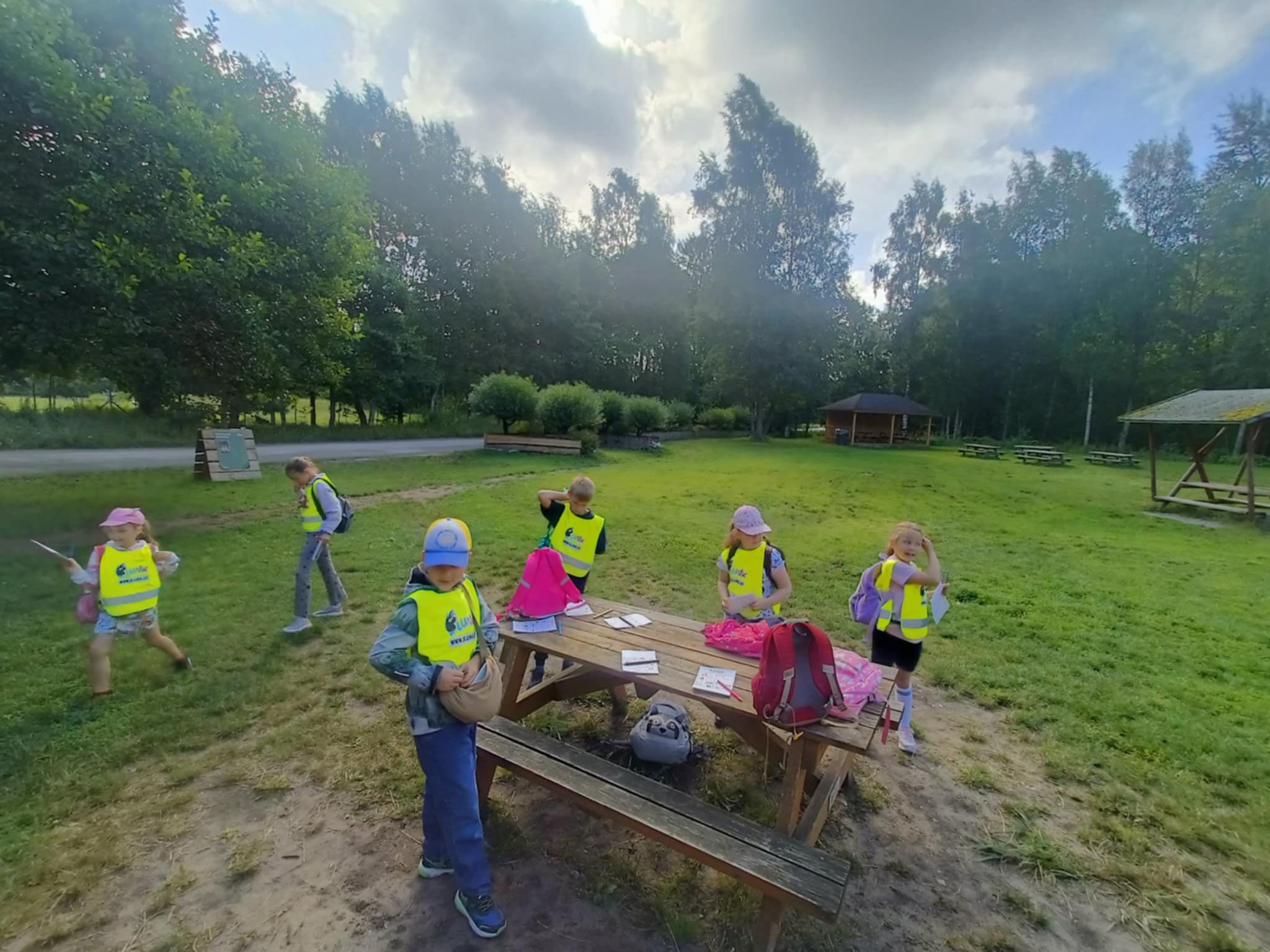
To make the picture very clear: please describe one specific BLUNK interest group meeting from start to finish. How long does it last and what exactly happens there?
Margus Kägu:
It is common practice that a nature circle lasts 45 minutes.
For example: the instructor arrives at the kindergarten premises around four o'clock (depending on the agreement - often after class/meal). Gathering the children usually takes 7–10 minutes: children come from several groups, teachers help with dressing if necessary, and the instructor "takes the group on the train".
Then we move together to the "nest" - a specific gathering point (for example, under a fir tree or an outdoor classroom). The children sit down for a while, a calm start is made: who we are today, what mood we are in, what we notice.
Then the instructor introduces the topic - but immediately in a playful way. For example, the topic could be "the house crow" (or some other common bird). There can be a simple guiding part at the beginning: "listen - did you hear that sound?" or "look who flew?".
A game follows: for example, a role-playing game where the “tit” and “crow” exchange roles and the children run within certain boundaries. The game gives energy and creates emotion – this is very important for young children.
Then comes the “educational” part: the instructor can have pictures of the nest and eggs, discussing:
where this bird nests,
how many eggs there can be,
how to recognize the bird,
what distinguishes it (as much as is appropriate for the age).
At the end, we summarize – I have jokingly used the term “test work”, but it is playful: I ask a few simple questions about what was just said. The children can answer and consolidate.
As a small “reward”, we often use water stamps (allergy-free), on the hand – this remains a memory for the child and creates a routine: “I went to the nature circle”.
Then we move back, the instructor sends the children to the teachers and leaves. Next time the structure is similar, but the topics vary. Children like repetition – it gives a sense of security. We keep the routine, but we change the order and content: sometimes there is a game at the beginning, sometimes at the end; sometimes we talk about a magpie instead of a crow, etc. It is important that the theory does not become too “school-like” – the goal is to maintain interest and attention.
Final word
BLUNK’s experience confirms that children cannot have “too much” of nature and outdoor learning – on the contrary, diversity increases interest, gives confidence and helps children create a real relationship with the environment. Margus Kägu emphasizes that BLUNK does not want to replace kindergarten work, but to offer additional variation and value education: joint action, attention, cooperation and the habit of being outdoors even when the weather is not “ideal”.
The interview also highlights the practical side: safety relies on a competent instructor and the procedures of the childcare institution, the prerequisite for becoming an instructor is previous experience with young children, and starting a circle works best in cooperation – with the childcare institution, parents and the BLUNK community itself. If there is no instructor in the area, one is sought together with the local network or nature programs are offered as an alternative. And most importantly: one 45-minute nature walk has a simple routine, is playful and experiential – so the child leaves not with “learned facts”, but with the feeling that nature is cool and worth exploring further on their own.