
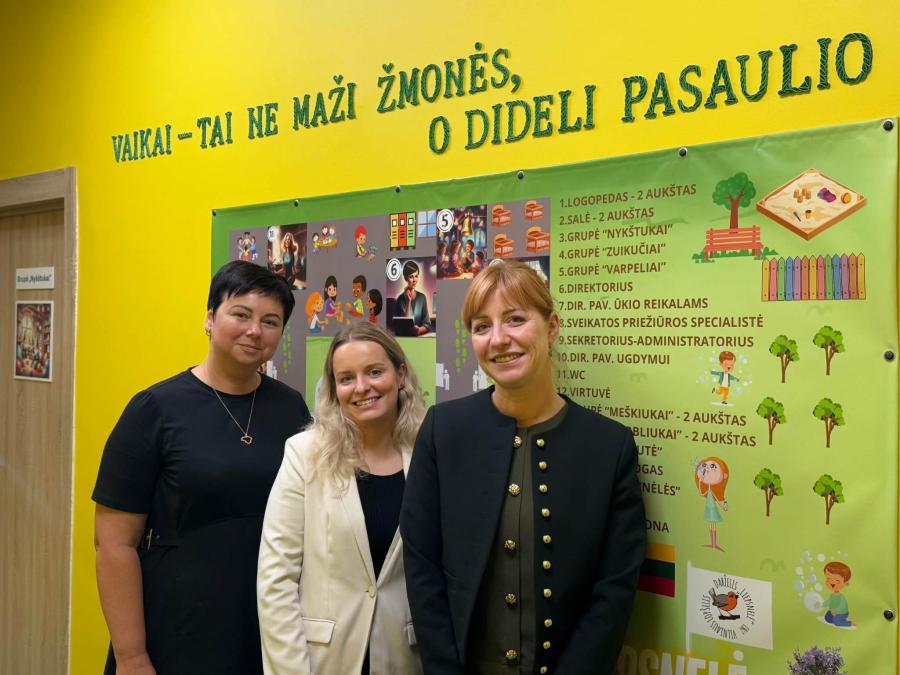
Interview with the Deputy Director for Education at Kindergarten “Liepsnelė”, Svetlana Pilinkovskaja
The daily life of a kindergarten is made up of countless small yet extremely important details – from creative ideas within groups to a supportive word for a colleague. It is within this everyday routine that the energy felt by children, parents, and the entire community is born.
In this interview, we speak with Svetlana Pilinkovskaja, Deputy Director for Education at Vilnius Kindergarten-Nursery “Liepsnelė” – a person who “keeps the engine running” in daily processes. Energetic, positive, and creative, she has accumulated nearly two decades of experience in various educational and administrative roles. In this conversation, she shares her professional journey, her approach to teamwork, working with children and parents, and the role of innovation in everyday kindergarten life.
Finding Meaning in Everyday Kindergarten Life
What gives you the greatest sense of pride in the daily life of the kindergarten?
I wouldn’t single out one specific moment. My greatest pride lies in everyday life itself – seeing satisfied staff members, children’s smiles, and the overall atmosphere. Seeing teachers sitting at children’s eye level and talking with them. For moments like these, you can give so much of yourself. That’s when you know we are like a family and that everyone feels good here – and that is the greatest pride of all.
Growing from Within: The Path to Deputy Director
Could you introduce yourself and describe your role and career path to becoming a deputy director?
I am the Deputy Director at Liepsnelė Kindergarten. My journey here began 19 years ago – I started as a teacher’s assistant and later became a teacher. At that time, the kindergarten operated as a weekly institution, where children stayed for full weeks, so I experienced many different roles and situations.
Later, I pursued further studies and worked as a teacher for about 15 years. After that, I transitioned into the role of Deputy Director. This experience allowed me to gain extensive knowledge and understand the educational process from multiple perspectives.
What motivated you to pursue a leadership role in education?
It was a conscious choice. Just like in sports – you start with training and eventually become a coach. I’ve always thought about educational quality, and from a leadership position it’s easier to influence it. This role suits me – here I can make a real impact.
Which studies or ideas had the greatest influence on your professional growth?
The most significant impact came from my Educational Leadership studies at ISM, which I completed together with the kindergarten director. These studies were very practical – we could immediately apply ideas in our daily work.
What mattered most was the safe environment for discussion: we learned that there are no “stupid” questions and that making mistakes is normal. This was a completely different approach from traditional studies. You are treated as a person – engaged in dialogue, discussion, and shared decision-making.
This experience greatly influenced how I work with my team, communicate with parents, and make everyday decisions. If I had the opportunity, I would gladly enroll in such studies again.
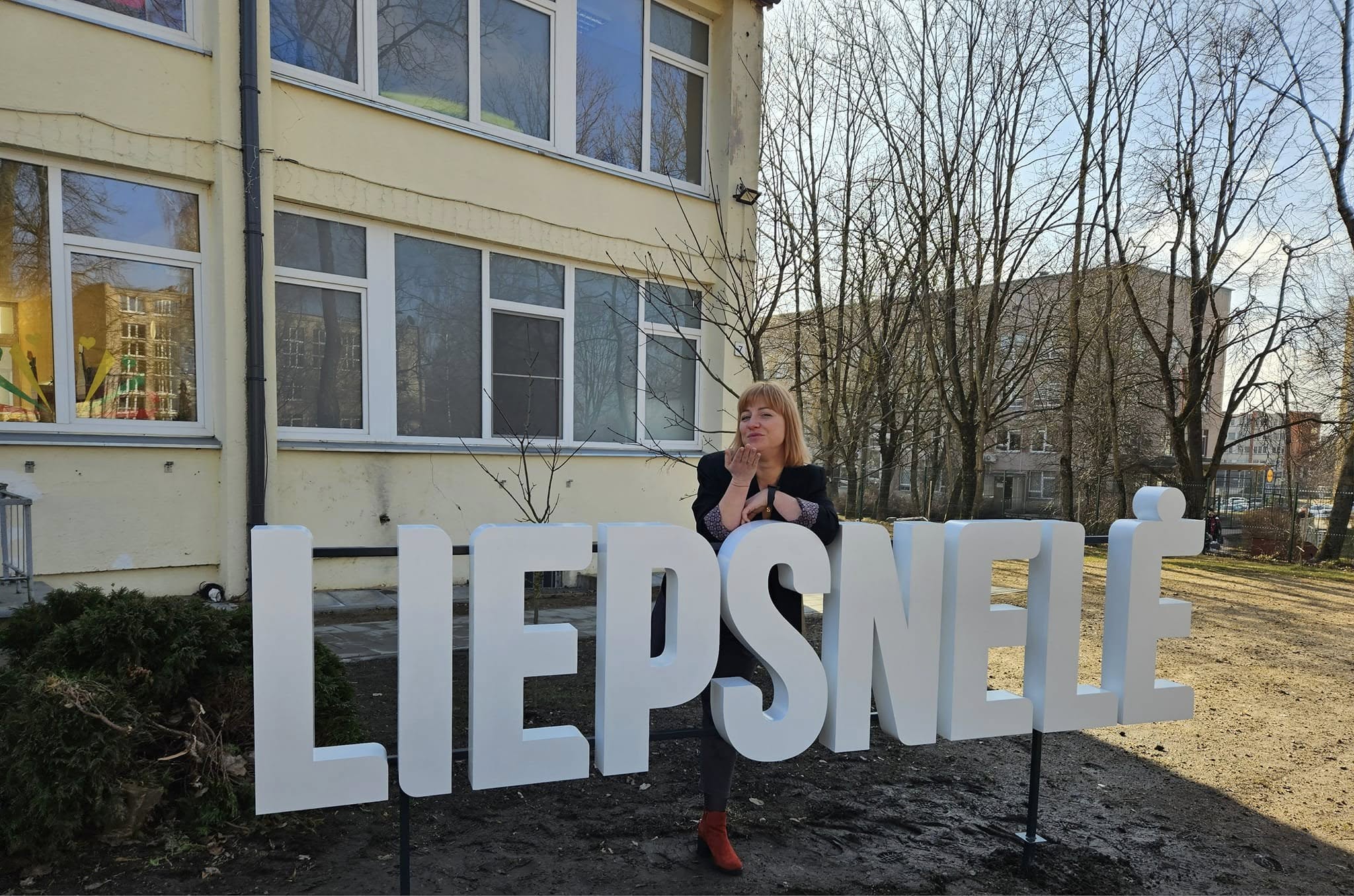
A Creative Team and Supportive Leadership
What do you enjoy most about working in a kindergarten and building a teaching team?
What drives me most is creativity. With a strong and supportive director, so much becomes possible. In our kindergarten, there are no rigid frameworks or templates – we can create projects and initiate activities. We share a common goal: educational quality, and everything we do is guided by that.
Children feel this very clearly – they see our freedom, creativity, and enthusiasm, and they respond to it. Every educational process is unique, just like every child. Releasing creativity is very important to me.
Which methods or strategies best support teachers’ professional growth?
Feedback is key. I provide it constantly, even for small things – I express gratitude, notice effort, and acknowledge contributions. Attention to detail matters.
For example, one group simply displays children’s drawings, while another creates a context – a tree or an anthill where each child creates their own little ant. This turns a drawing display into an idea and a story. Such decisions motivate, build confidence, and encourage further creativity.
Supporting initiatives is also essential. Even a small idea, when encouraged, gives a person confidence to later take on larger projects.
The Child at the Center: Collaboration and Innovation
Why is it important to involve parents in assessing children’s achievements?
Assessment has the greatest value when not only teachers but also parents are involved. This allows us to see the child holistically and notice in time where support is needed.
I have personal experience – my child attended this kindergarten. As a parent, I viewed my child through “rose-colored glasses,” but the assessment process revealed a gap. Together with the teacher, we created a plan: part of the work was done in the kindergarten, part at home. By the time school started, that area had significantly improved. That’s why I strongly believe in this process.
How do you involve parents in the kindergarten community and educational activities?
Parent involvement is very important, but also challenging. We run a home learning continuity project and use QR codes in outdoor spaces, where parents can not only read information but also share their own experiences.
For example, one mother shared her knowledge about “healing” trees, was invited into a group, and children began exploring bacteria and fungi. This is how true collaboration is born.
We also have book exchange initiatives for children and parents. However, it must be acknowledged that engaging parents is not easy – lectures often attract limited participation. Parent education remains an important area that still needs strengthening.
What role do innovations play in your work, and how do you balance them with traditional practices?
I really enjoy innovation – I like change. But the most important thing is to implement it gradually and without pressure. Change must be integrated naturally into everyday activities. Even integrating digital content into simple activities is already a significant innovation.
With updated preschool curricula, we increasingly work through creating contexts. This changes both planning and educational strategies. Teachers no longer initiate activities through instructions but by creating environments. For example, a forest context: trees, mushrooms, leaves appear, and children are “invited” into the environment. From there, children take over, while the teacher observes, analyzes, and evaluates.
One group created a “book hospital” context. Children repaired torn books, waited in line, discussed, and solved problems. Their self-regulation, ability to wait, concentrate, and seek solutions became very visible. One girl brought in a perfectly healthy book, and the children – acting as “doctors” – began discussing why it was there. They debated, proposed solutions, and ultimately concluded on their own that the book was healthy. The teacher didn’t tell them – the children realized it themselves.
Such activities clearly reveal children’s thinking and independence, so we introduce them gradually – starting with a few groups and later expanding across the kindergarten. Teachers invite colleagues to observe these experiences, share insights, and this naturally encourages others to try contextual learning.
Too often, adults – at home and in kindergartens – give excessive instructions: “sit down,” “now we draw,” “now we glue.” Later we wonder why children struggle to think independently. When we give them space to act, think, and discuss, they do it very well on their own.
Using the Eliis Platform
Which Eliis tools or modules do you use most often?
I really like the mobile app – all information and messages come directly to my phone, which is very convenient. I am assigned to all groups, so I can see the overall picture.
I most often use daily activity monitoring, the projects section, and achievement assessment summaries. Having everything in one place saves a lot of time – you log in and immediately see the weekly rhythm, group activities, and children’s information.
Thoughts for Those Considering Leadership
What advice would you give to those aspiring to leadership positions in kindergartens?
A leader is not a superhero. Their role is to help everyone on the team feel like superheroes. Every contribution must be seen and appreciated.
A deputy director should act like a small engine – supporting, motivating, and mediating between parents, teachers, children, and the director. It’s essential to communicate the same information differently to different people, because everyone speaks a different “language.” I truly wanted to be a deputy director – this is my place, and today I wouldn’t want to be in any other position.