
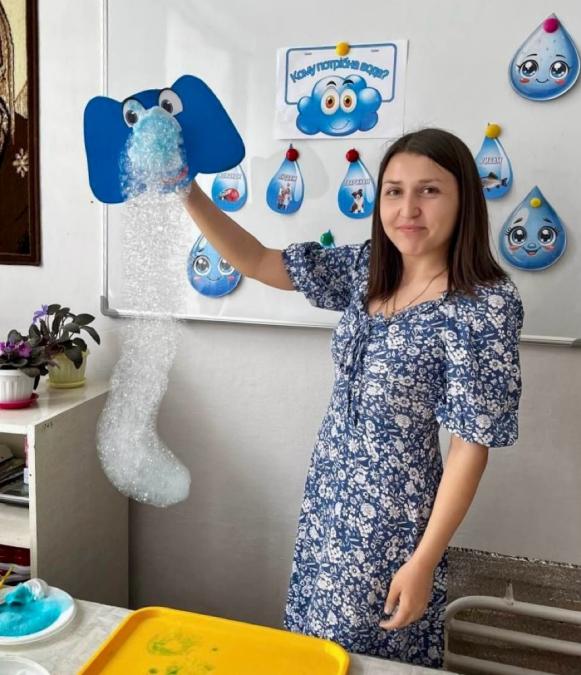
Olha Storozhuk is a teacher of an inclusive preschool group at the Sofia Rusova Primary School in Ivano-Frankivsk. For her, working with children is not just a profession — it is a daily choice made with the heart.
Every day, she stands beside children who are learning to trust the world, take their first steps, hold a spoon, listen, interact, and not be afraid to be themselves. She notices what others often overlook: small victories, quiet progress, and genuine joy in children’s eyes. It is this sincerity, love, and devotion to her work that led Olha Storozhuk to national recognition — she was named among the Top 25 preschool teachers in Ukraine according to the Global Teacher Prize.
We spoke with Ms. Olha about her professional journey, her work in an inclusive group, and the power of small everyday steps.
Ms. Olha, could you tell us about yourself? How did your passion for working with children begin, what influenced your choice of profession, and what is your teaching experience today?
Everything began in my childhood. I attended the “Lastivka” kindergarten in the city of Kolomyia, where the teachers were incredibly kind and sincere. That is where my love for creativity was born — we painted, cut, and created things with our own hands. This love has stayed with me ever since.
From an early age, I loved children and always felt that I wanted to work with them. They are sincere, open, and easy to connect with, so when it came time to choose a profession, I had no doubts.
I received my first education at the Chernivtsi Pedagogical College and later continued my studies at Kamianets-Podilskyi National University. At the same time, I was looking for a job in my field and, despite strong competition, received my first position as a teacher at the Kolomyia Preschool “Dudaryk”. The director had kept my phone number from my internship days and called me exactly when I needed it most. That moment confirmed for me that I was exactly where I belonged.
I have been working in education since 2016 and now have almost nine years of teaching experience.
What were your first thoughts and feelings when you started working as a teacher?I began in a regular, non-inclusive group. At first, it was a little frightening — I lacked experience, and working with children is a huge responsibility because parents entrust us with the most precious thing they have — their children.
At the same time, I received tremendous support from colleagues and parents. They trusted me, and that trust gradually gave me confidence and inner calm.
When did inclusion enter your professional life?
In 2019, after I moved to Ivano-Frankivsk. My husband is from here, we got married, and I relocated. While looking for a new workplace, I found the Sofia Rusova Primary School, which includes a preschool department.
During the interview, the principal immediately mentioned that the group was inclusive. I did not consciously choose inclusion — it happened naturally, but over time I realized that this experience would become an important and valuable stage of my professional growth.
Did your attitude toward the profession change after working in an inclusive group?
Yes — very much so. I began to respect the teaching profession even more. Working with neurotypical children is one thing; working with children with special educational needs is entirely different.
Sometimes it takes a lot of time, patience, and energy to find the right approach and build trust. It is not easy, but step by step, it works. Children open up when they feel kindness and sincerity. They especially love praise. For children with special educational needs, it is crucial that even the smallest achievements are noticed. Every tiny step forward deserves encouragement. That is how I work — with faith in the child and their abilities.
What qualities are most important for a teacher working in an inclusive environment?
First of all — tolerance. And, of course, endurance — a lot of endurance. A teacher must be able to support a child and be there in difficult moments. And most importantly — kindness, kindness from the heart. Without it, this work is impossible.
It is also essential to listen, notice subtle signals, and understand what each child needs. Children feel our emotional state, so calmness and confidence matter greatly. And we must never stop learning — to give children the very best.
How do you teach children to accept one another, to be kind, patient, and supportive?
I talk with children a lot. We have conversations, play different games, and do things together. I teach them respect, acceptance, and support.
But the most important thing is leading by example. I remember one moment clearly: a boy came to kindergarten in a difficult emotional state. He struggled with his feelings, sat down on the floor, and started crying. I approached him calmly, spoke gently, and tried to support him.
And then something very important happened: other children came over on their own — they hugged him, spoke kindly, and stayed by his side. They simply repeated what they see every day. That is the power of an adult’s example.
Tell us about your group.
Our preschool department has five groups, three of them inclusive. The school is small but very warm, with many beautiful traditions.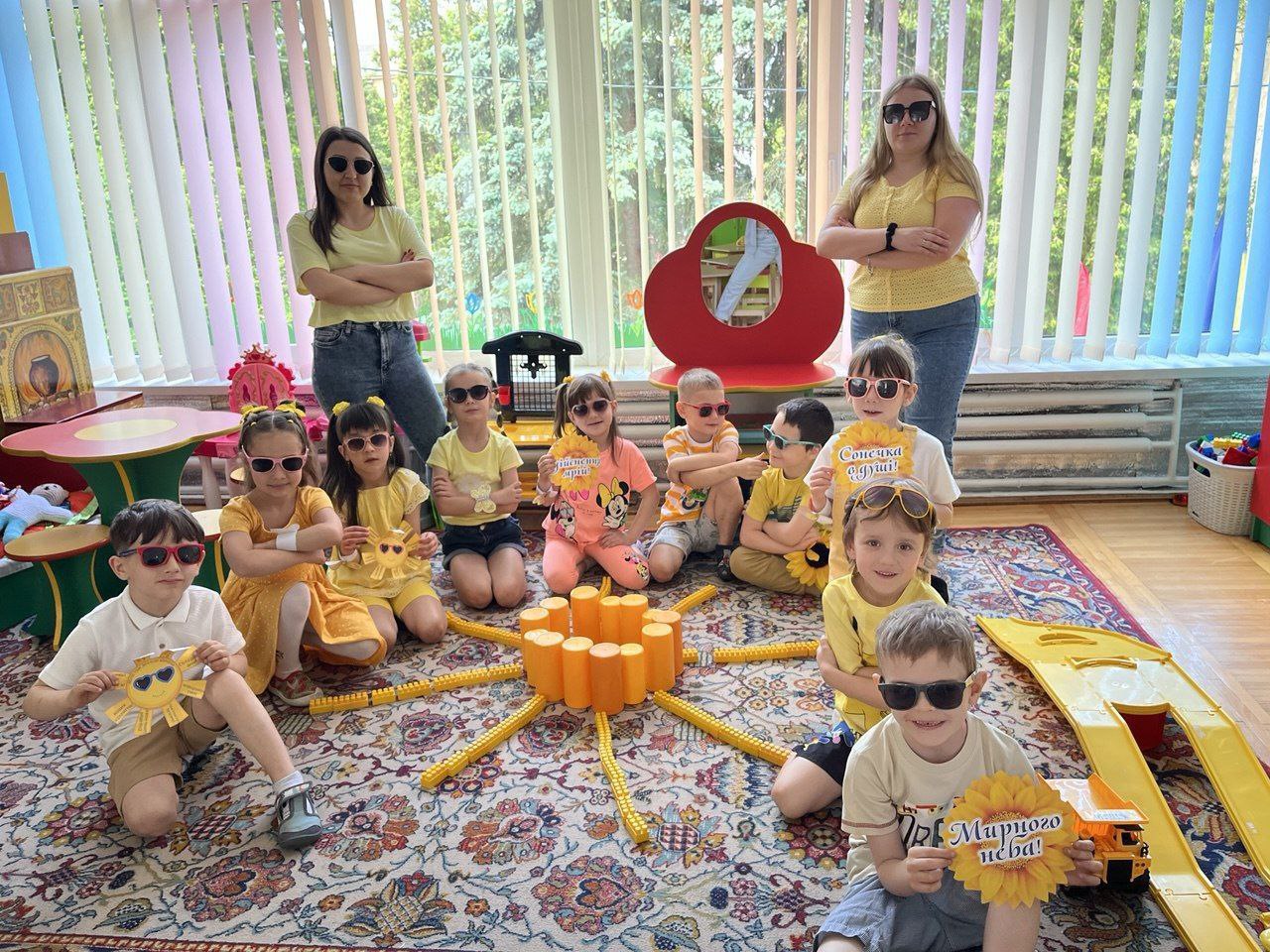
My group has 25 children. They are all very different — so different that it is impossible to describe them with a single word. They are curious, observant, ask many interesting questions, and love it when I conduct experiments, as well as drawing and appliqué using non-traditional techniques.
You mentioned experiments. Could you tell us more about that?
Yes, this is my personal innovative approach. I introduce different experiments — from very simple to more complex ones, always safe and age-appropriate.
During these activities, children feel like real magicians. What I love most is seeing their eyes light up. They are fascinated, eager to try, touch, and participate. Children with special educational needs are especially engaged during these activities.
Recently, we did an experiment with ice called “Rescue the Animal from the Ice Trap.” I froze a small toy in water, and the children used warm water to melt the ice and “save” the animal. They were absolutely delighted. We also experiment with air, water, sand, and soil. We created a “lava lamp,” watching oil and water form moving, colorful bubbles. We explored a non-Newtonian fluid, observing how it behaves differently depending on pressure. Another favorite was “Dancing Colors,” showing how soap interacts with fat in milk, creating bright, rainbow-like patterns. And, of course, many bubble experiments.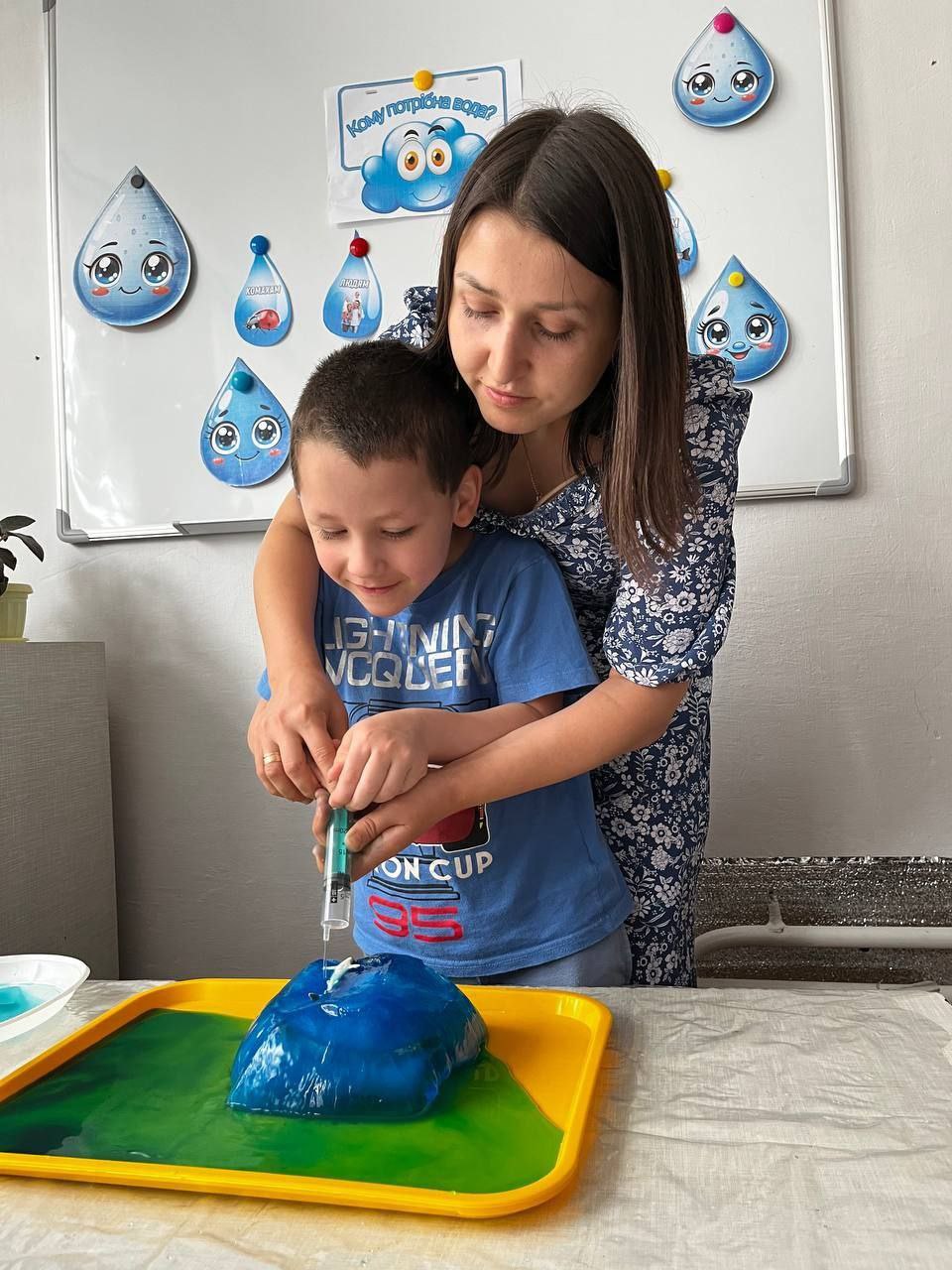
These experiments not only spark curiosity and observation skills but also develop logical thinking and teamwork. Each experiment is a small adventure where a child becomes both an explorer and a discoverer.
How do you notice small steps forward and personal victories of children?
I observe each child very carefully. For example, a child who was once afraid to draw and constantly asked for help — over time, with support and praise, begins to confidently pick up a pencil or brush and draw independently. Or a child who couldn’t dress themselves or tie shoelaces — and later starts helping others. I value even the smallest achievements and always make sure they are seen.
How do you support children in those moments?
With words — always with words. I praise them and say: “You did great,” “See, you managed,” “You were afraid, but you coped.” Sometimes I gently stroke their head or offer tactile support. It is very important for a child to feel seen and believed in.
Which moments in your work with children evoke the strongest emotions for you?
What touches me most is when children support one another — especially when neurotypical children help children with special educational needs. I often say: “You have already completed your task — you drew the picture or made the appliqué. Now you can help someone who finds it difficult.” And they do. They help finish a task, get dressed, find a toy, calm down, or walk back to the group together.
Sometimes a child does not want to return to the group after a walk, and then the children — together with me — talk to them, encourage them, and support them. They help me, and they help each other. This moves me deeply.
This is exactly what I want — for them to be together, united, caring, and supportive. This is my mission.
Do you remember a story that inspired you and gave you strength to move forward? Perhaps a specific moment with children?
There are many such stories, but one touched me especially deeply.
In autumn, during our morning prayer, the school principal congratulated me on a personal achievement — this year I was named among the Top 25 preschool teachers in Ukraine according to the Global Teacher Prize. She told the children that there are thousands of teachers across Ukraine, but only 25 were selected — and among them was their teacher.
Standing next to me were my current children, and nearby were children I had taught the previous year. They are now first graders at the same school. The children listened, looked at me with wide eyes, smiled — and then they started hugging me. All of them.
It was incredibly touching. They seemed even happier for me than I was myself.
In moments like this, you truly understand why you do this work. I want to show children by my own example that they should move forward, not be afraid, and try new things.
Whether you win a competition or not is not what matters. What matters is that you dared to try. And in doing so, you already become number one for yourself.
How do children in the group react to the achievements of peers with special educational needs? Do they notice these changes?
They absolutely notice — and they rejoice sincerely. They see that not long ago a child struggled to hold a spoon or did not want to eat, and now tries to do it independently.
Children with special educational needs often take examples from neurotypical peers — this is the great value of inclusive groups.
A child who once refused to get dressed now tries to put on socks by themselves. Someone who couldn’t sit at the table for long now sits longer and holds a fork better. In class, a child who once did not sit at all and required individual work now joins games and experiments.
Children see these changes. And they genuinely celebrate every small step forward.
You mentioned the Global Teacher Prize. How did you apply, and what does it take to participate?
First of all, you need to apply — to submit an application. I answered all the questions honestly and sincerely. You also need to submit many materials: photos, videos from lessons, and examples of your work with children. All of this is taken into account.
But, in my opinion, the most important thing is sincerity. The organizers truly value it. A teacher is a person with an open and kind heart. Children are naturally drawn to such educators.
Later, the list of the 25 teachers was published on social media. Then came congratulations, introductions, and invitations to share experience. We prepared video presentations and personal video introductions, talking about our methods. It was an incredibly inspiring meeting. Each teacher has their own unique approach — some work with theater, others with mind maps, others with neuro-pedagogy. I presented my experiments, showing photos and videos from my classes. Later, there was an award ceremony where all 25 teachers gathered. It was very special to meet again with people who truly give their hearts to this profession.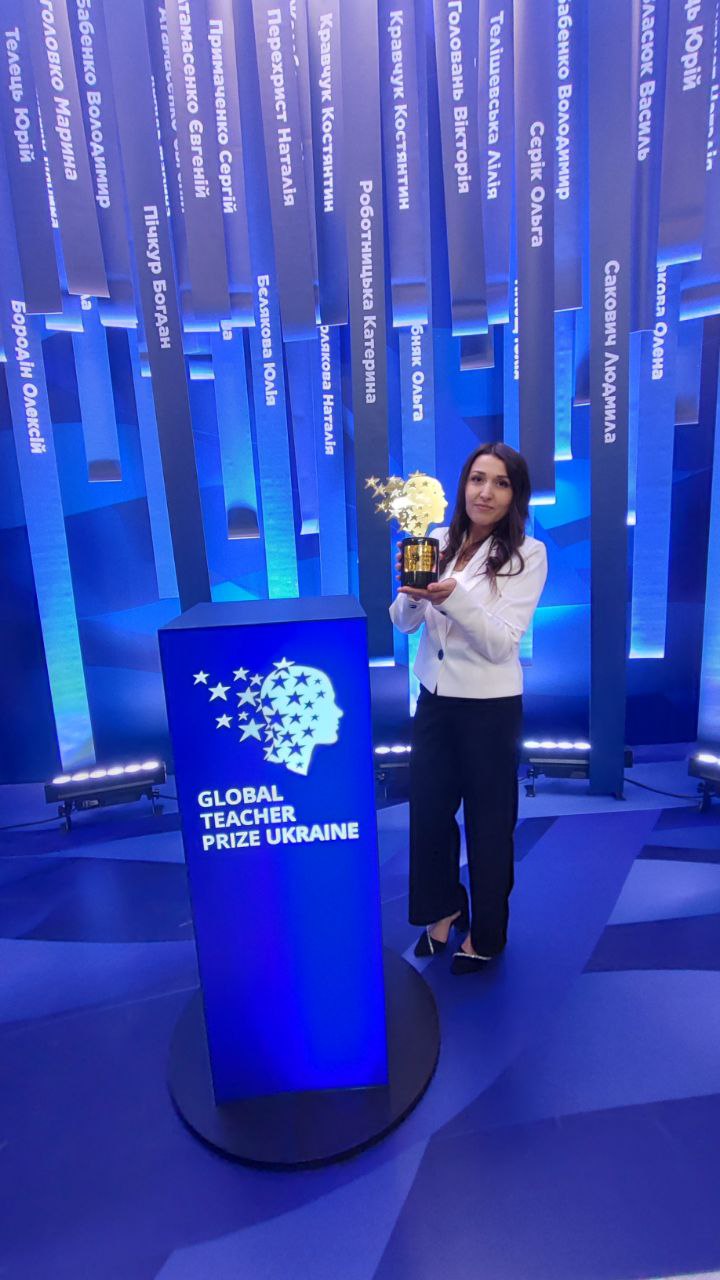
How important is cooperation with parents, especially in the inclusive process?
It is extremely important. I always say: teachers and parents are a bridge in a child’s development. We learn important information about the child from parents, and they learn from us. Together, we see what needs support, what needs improvement, and where help is required. Without cooperation with parents, the development process for a child with special educational needs would be much more difficult.
How do you build trust with families of children with special educational needs?
Through sincerity. I always start by sharing what the child did well and their successes. If there is a difficult moment, I never begin with criticism.
I use what I call the “sandwich method”: first something positive, then the challenge, and finally — we look for a solution together. It works.
Is it always easy to convince parents that their child is capable of great results?
Not always. Parents often want quick results. But development is a process. Everything has its own time. A child should not be compared to others or pressured.
The moment will come when the child will be able to do what others do. The key is patience, support, faith in the child, creating the right conditions, and encouraging independent attempts. Every small victory is a step forward that helps a child feel their own strength and desire to keep moving.
How do parents change when they see their children’s progress?
They are genuinely happy. For them, it feels like a real achievement. They share stories with me — how their child began helping at home, bringing something, assisting, completing small tasks. They are very proud. They see that their child is changing, growing, becoming more confident. And this is the greatest reward — for them and for me.
What does a child’s success mean to you?
It is when a child does something they were once afraid of. When they are not afraid to try. When they know they will be supported, praised, and guided.
I want children near me to feel as comfortable as they do with their parents — to see me as a friend. That is when they gain confidence to try new things, are not afraid of mistakes, and learn to rejoice in small achievements. Every day with children is a new opportunity to watch them discover the world and grow more open, confident, and ready for new achievements.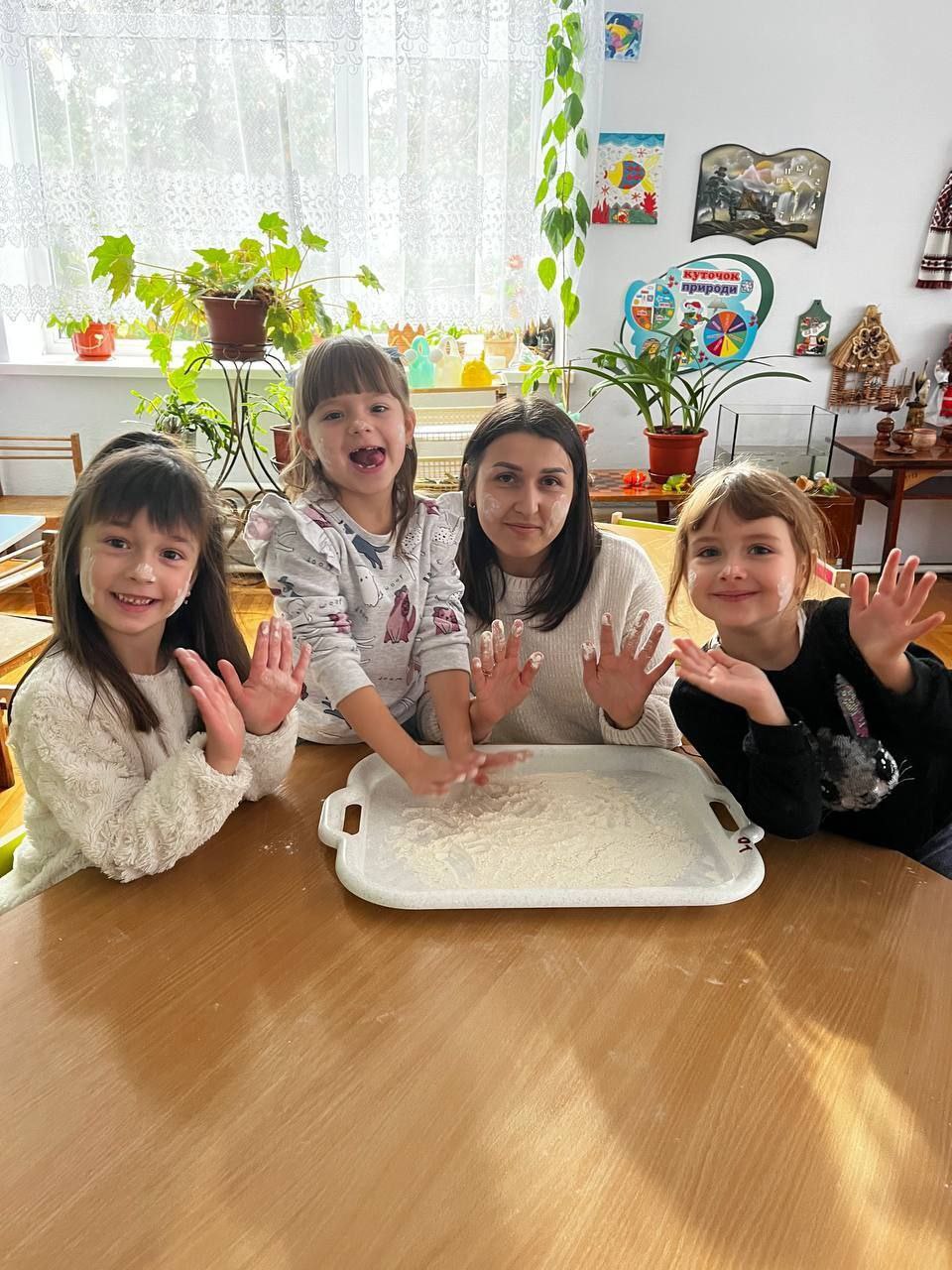
Your school has its own unique traditions and is far from typical. Could you tell us about them? What creates a sense of community in your institution?
We truly have some beautiful traditions. One of the most meaningful is our shared Monday morning prayer. All teachers and children gather in the music hall. After the prayer, the school principal presents certificates and words of appreciation to teachers and children who have participated in competitions or achieved special results.
After that, the priest blesses us with holy water and wishes us a successful week ahead. It is a very warm and emotional moment. When children see that they—or their teacher—are being recognized, their eyes light up. It creates a deep sense of pride, joy, and belonging, and shows them that their efforts truly matter.
Your school is also actively involved in charity work. How did this initiative begin?
The idea of helping others emerged with the start of the full-scale invasion. Like many institutions, we couldn’t remain indifferent. That’s when we began organizing charity workshops, fairs, and performances, with all raised funds directed to supporting our defenders.
For example, we staged a charity performance, “The Turnip,” acted out by teachers—it was a big hit with the children. Together with the kids, we also made traditional candles, decorated willow branches, and held creative workshops. Every hryvnia collected went to the needs of our soldiers.
Very often, children and parents join in collecting essential items—hygiene products, treats, and other necessities. Before Christmas, we visit wounded soldiers at the Ivano-Frankivsk Regional Clinical Hospital. We sing carols, dance, and give handmade gifts created by the children themselves.
There are many heroes there—some with severe injuries. Seeing their smiles is priceless. We give them a piece of joy. And we will continue this initiative together with children and parents, because even small acts of kindness carry great meaning.
How do children respond to charitable activities at school, and how is this work organized?
Children respond very sincerely and with great enthusiasm, because they feel they are helping our defenders. We show them thank-you videos from soldiers, and it fills them with pride. They often ask how so much money was raised and learn that it’s the result of joint efforts—fairs and workshops. We conduct workshops ourselves, and charity fairs are organized together with parents. Children buy small treats or souvenirs and at the same time understand that they are doing something truly good.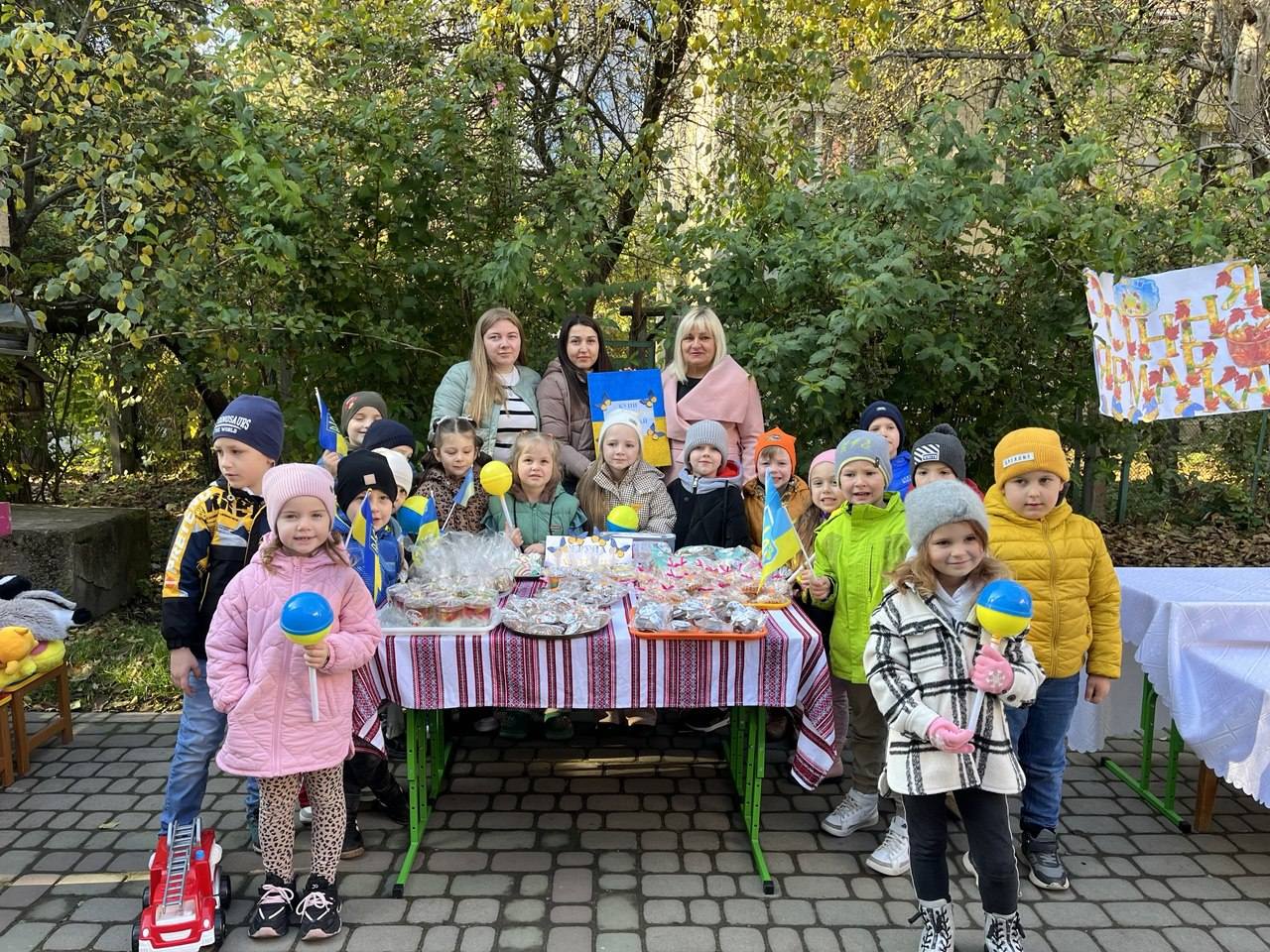
How do you talk to children about the war and the defenders?
We hold patriotic education lessons, always in an age-appropriate way. We explain that brave soldiers are protecting our country and that those of us in the rear can help. That’s why we organize fairs, workshops, and charity events.
Children understand this very well and engage sincerely. They love drawing cards, making talismans, and taking part in shared good deeds. This helps shape gratitude, unity, and love for their country—without fear or unnecessary stress.
What three words best describe your work in an inclusive group?
Patience. Sensitivity. And a kind, loving heart.Children with special educational needs greatly depend on routine, but they also need freedom from pressure. If a child is not ready today, they need time. When they feel safe, they will take that step on their own.
In such moments, the most important thing is to be attentive, to observe, and to offer support at the right time—without disrupting the child’s inner comfort.
What helps you maintain balance and inner strength during these challenging times?
Educational meetings. For me, they are true mental health support. I deeply value communication with colleagues and the exchange of experiences. Whenever I attend early childhood education events, I always come away with new ideas.
These meetings inspire me and give me strength to move forward. They restore inner resources and spark the desire to introduce new approaches at work and to pass on calmness, stability, and confidence to children—something preschool education needs now more than ever.
What values do you want to pass on to children?
Respect, mutual support, kindness, sensitivity, and empathy. I want them to grow into good people—not indifferent or hardened, but sincere and warm-hearted. People who know how to support others, share joy, and preserve inner kindness regardless of circumstances.
What do you dream of as an educator? How do you see the future of inclusion in Ukraine?
I dream of modern, well-equipped inclusive spaces: sensory panels, balance platforms, therapeutic chairs, and fully equipped resource rooms. This would greatly ease the work of educators and open up even more opportunities for every child’s development.
The educational dream I submitted to the Global Teacher Prize was called: “Inclusion in Action. Modern Equipment for the Development of Every Child.”
I envision a future where schools and kindergartens are open to everyone, where educators are well-trained and empathetic, and where society is tolerant and welcoming to every child.
Modern equipment would allow us to support children even more effectively, and I truly believe that one day it will be available in every kindergarten.
I also dream that the profession of early childhood educator will receive the recognition, value, and respect it deserves—becoming prestigious and inspiring more people to choose this path. Because it is educators who shape the future of our children—and of the country as a whole.
🎭 Behind the Scenes of the Profession
At the end of each interview, we ask our heroes a few personal questions that reveal them in a new light — beyond their profession, yet still with the heart of an educator.
What is your favorite children’s book and why?
A collection of fairy tales. Children love it when I read to them before nap time. This is especially true for children with special educational needs — my voice, gentle touch, and the atmosphere of care help them calm down and feel safe.
What advice would you give to your younger self?
Don’t be afraid. Believe in yourself. Try.
If I had been afraid, I would never have applied for the Global Teacher Prize. Whether you win or not — it’s all experience.
What truly matters is loving children and respecting them, as well as respecting yourself and not devaluing your achievements. I often underestimated myself, thinking I could have done something better. But it’s important to praise yourself sometimes, not fear mistakes, and remember that every experience makes us stronger and brings us closer to new successes.
What might surprise our readers about you?
The fact that I made it into the Top 25 from my very first attempt. It was unexpected even for me. I think what won the organizers over was my sincerity and my love for experiments.
I truly love it when children are genuinely interested. Experiments capture their attention instantly, especially children with special educational needs — they spark curiosity, engagement, and joy in learning.