Interview with Saulė Šerėnienė
Chair of the Board of the Association of Heads of Lithuanian Preschool Education Institutions, Director of the Lithuanian Educational Support Association, Lecturer at Kaunas College, and Director of the Kaunas Kindergarten “Želmenėlis”.
Saulė Šerėnienė is an education leader whose field of activity spans the entire educational ecosystem: from everyday work in a kindergarten and direct contact with children and teachers to national-level strategic decisions in the areas of educational support and leadership development. Leading several important associations, working with students at Kaunas College, and being an active member of the education community on a daily basis, she sees the system from the inside—with all its strengths, challenges, and layers of change.
In this interview, we discuss what the educational support network looks like today, what changes are needed in early childhood education, how relationships between parents and educators are evolving, and what competencies and forms of leadership will be required for the future of education.
The Path into Education
– Could you introduce yourself and tell us more about your path in the education sector? How many years have you been in it, and what motivated you to get involved?
I have been connected to the education system for 30 years. In fact, my path began in childhood—I grew up in a family where the teaching profession was highly respected. My mother was a mathematics teacher and later a deputy head of a gymnasium, dedicating 45 years to her work. From her I learned to value education and to see its meaning and mission.
I myself started working as a mathematics teacher, later as a Lithuanian language teacher. After five years in the subject-based system, I moved into social pedagogy, a role I held for 13 years in a general education school. Later, quite unexpectedly, I entered early childhood education—although I used to say I would never work in a kindergarten. Today I have been in this sector for 12 years: I started as a project manager, then became deputy head for education, and now I am a director. In addition, for the past two years I have been lecturing at Kaunas College and contributing to the training of future teachers. It is important to me that they enter the profession with a realistic understanding of the work—relationships with parents, planning, setting boundaries, and communication. Theory can look very appealing, but practice is very different, so I try to bring students a real, grounded sense of the rhythm of the education world.
The Reality of Education Today
– Over all these years, what changes have you observed in education? How are children, parents, and the system itself changing?
I have worked during a period that can truly be called transformative. Children are changing, parents are changing, and therefore we must change as well.
Parents today often lack time for communication—they are in a hurry, talk less, and spend a lot of time on their phones. There are more situations where parents bring lawyers to meetings; mistrust and nitpicking over minor details have increased. Partnership is often replaced by confrontation and the search for educators’ mistakes.
Children are changing too. Some grow up without clear boundaries, without the word “no,” without routines and agreements. At home they may be alone, while in kindergarten they encounter twenty different children—this immediately requires a high level of professional skill and empathy from educators.
Today’s teachers are expected not only to teach but also to help children manage emotions, develop social skills, and learn communication. Developmental levels are often weaker, so teachers must also be able to work almost like special education professionals.
Parental expectations have changed significantly as well. There is an expectation that the kindergarten will adapt to each family’s individual parenting style—Montessori, Suzuki, Waldorf, or some other method sometimes picked up from social media. But in reality, a group needs shared agreements that are essential for the well-being of all children.
The Role of Specialists and Teachers’ Competencies
– How do you assess the current situation of teachers and educational support specialists?
Today a teacher needs a huge range of competencies: from developmental knowledge to psychology, from consulting parents to digital skills. A teacher can no longer be static—children are changing, so educators must change too.
The demand for speech therapists and psychologists is growing. Children’s language skills are weaker, emotional regulation is more complex, and we see more withdrawal and anxiety. Parents sometimes delay seeking help because they fear stigma or others’ opinions.
A good specialist is one who is devoted to the child and sees meaning in their work. The work of a speech therapist, for example, is not easy—it is not just “fun games,” but very specific, systematic practices that must also be repeated at home.
Educational Leadership and Challenges for Heads
– You lead several associations, work in a kindergarten, and teach. What does it mean to be a leader in education today? What challenges do heads and teachers face?
Leading an educational institution today means much more than managing documents or processes—it means constantly being at the center of the community, demonstrating emotional leadership, and being able to unite people. Working in a kindergarten, leading associations, and teaching, I see that the most important tool of a modern leader is communication. If a leader withdraws and stops communicating, problems quickly slip out of control.
That is why my principle, inherited from my former manager, is very simple—doors are always open. Teachers, other staff members, and parents must feel they can come in whenever the need arises. When a leader is accessible, problems are solved here and now, and trust in the community grows.
Emotional resilience is especially necessary for today’s education leader. Many teachers work from the heart, so stress can sometimes overshadow real priorities. A leader cannot afford to lose orientation—the community’s eyes are always on them.
Leadership work in associations is another challenge-filled area. It is often an “uncomfortable” position: you have to go to ministries, parliamentary committees, and speak about expectations, needs, and demands. Each municipality has its own nuances—what matters in one city is not necessarily relevant in another, especially in early childhood education. This requires flexibility and the ability to represent different positions.
There are still cases where leaders come into their roles not because of a sense of mission but because of privileges. For this reason, I actively train and consult future leaders—I want people with real motivation, responsibility, and an understanding of the impact they have on the community to enter the system.
– Which personal qualities do you consider most important for a head of an educational institution and an association leader when uniting teachers toward a common goal?
I would highlight two core qualities—charisma and a good sense of humor. Humor that does not offend or hurt helps manage conflicts, release tension, and create an atmosphere of trust.
Charisma allows a leader to inspire, unite a team, create ideas, and seek new solutions that have not been applied before. This is complemented by public speaking skills, a constant need for growth, and a strong desire to do meaningful work.
But above all, it is essential to love what you do. When a leader genuinely loves their work, they naturally become an example, and the community follows.
Innovation and Everyday Culture
– How is digitalization changing the daily work of specialists and teachers? Are they ready for these changes?
Digitalization brings many opportunities, but also new challenges. This is particularly evident in the work of specialists such as speech therapists. Today we have many apps, games, and interactive tools that can be used on tablets. Children respond enthusiastically—their engagement is often faster, and the activities seem more attractive to them. I am glad that my teachers, who represent several generations, have mastered digital technologies well and work confidently with ICT innovations.
However, another problem arises—children already spend a lot of time in front of screens. Therefore, it is important not to lose live contact. Technology should be only a supporting tool, not the basis of activity. Children need to touch, feel, and experience the real world—a plush toy, a real object, a genuine emotion.
This raises the question: why do we still not have our own, culturally close, child-appropriate emotional education program in Lithuania? Currently, many rely on foreign methodologies such as Kimochi or “Love Dove.” They are good, but children need characters that are closer to their own culture. Why couldn’t we have a “Brave Wolf,” a “Clever Fox,” or other heroes from our own fairy tales and forests?
That is why we chose a character-based methodology in our kindergarten—using theater, rhetoric, and role-playing. It helps children overcome fears through play and stories. One day a child can be the “king of the day” in a tiger costume and thus gain a sense of superpowers. Even simple things like daring to carry plates become possible when a child does it “like a tiger” or “like a hero.”
For today’s children, it is very important to understand: how do I feel? How do I live with this feeling? Characters, playful elements, and real objects help them grasp this much more naturally.
We have many creative, talented practitioners who could create a Lithuanian emotional education program. Digitalization can be an important part of it, but the foundation should still be live connection, cultural familiarity, and real-world experiences.
– Your kindergarten is known for its creative culture and unconventional ideas. Could you tell our Eliis blog readers how these ideas come to life?
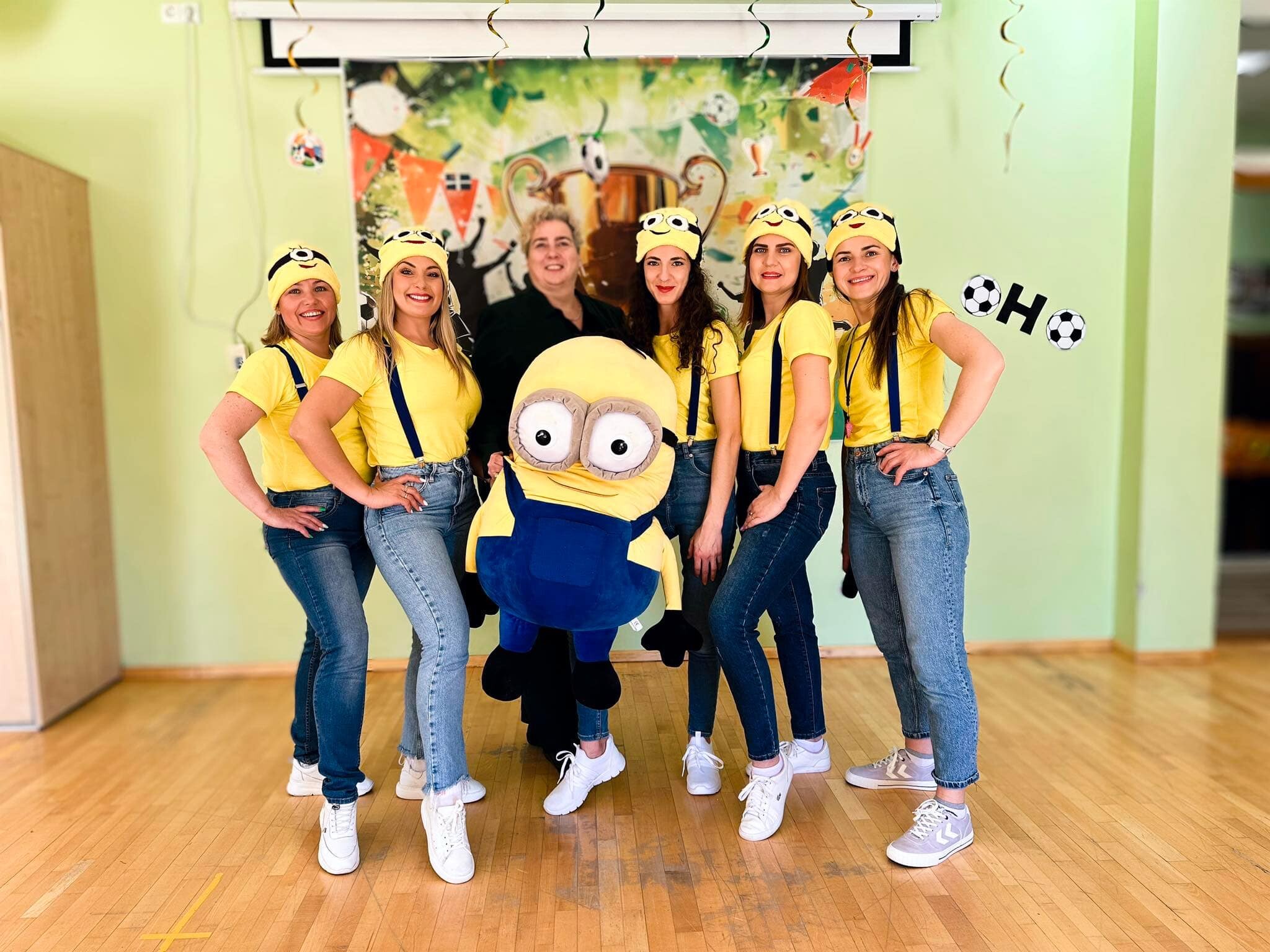
In our institution, we focus strongly on emotions, experience, and play. Each teacher has their own animal character, which helps build a connection with children and allows them to safely explore feelings. Even the director has her own character—a wild boar symbolizing courage and determination.
We also have original celebrations. We are the only ones in Lithuania to organize the Day of Jerome the Goat, when a little goat comes to the kindergarten and children symbolically hand over their whims and emotions to him. It is a playful but very effective method of emotional education.
Innovations must be meaningful. In early childhood education, there should be no “projects for the sake of projects.” I will never understand when teachers participate in five projects with a single photo and take pride in it—as a project professional, it seems to me that every project should be unique and bring educational value to the child. New ideas are valuable only when they create a better experience for children, not when they overload teachers. Digital tools are useful, but in small doses—young children still need the real world, a real person, and an emotional connection.
Education Policy: Unresolved Issues
– How do you assess the current state of the education system in Lithuania? What major challenges remain, and where do you see strengths and growth potential?
The biggest challenge today is excessive documentation. We keep creating new processes, descriptions, and forms, and often cannot keep up. All this takes a lot of time and provides no real benefit to the child. Some young specialists spend most of their working time filling in documents instead of working with children. There are mountains of electronic systems that duplicate one another and minimal human resources to administer them. Schools are better resourced—they can pool subject teachers and have more deputy heads—while kindergartens are very limited. The same people manage systems, prepare documents, supervise the educational process, and ensure provision.
Differences between municipalities are also evident. In some, education is truly a priority—there is more investment in support specialists, better conditions, and support for leaders. In others, education is treated more as a cost item, leading to unequal opportunities for children and teachers.
Leaders still lack managerial freedom. To build a team that meets children’s real needs, flexibility is required, not rigid spreadsheets and excessive regulation. When a system becomes over-regulated, initiative, creativity, and responsibility decline.
Parental trust in educational support is also not as strong as it could be. There is still an attitude that a psychologist’s, speech therapist’s, or social pedagogue’s office means a “problem.” This only shows that society needs more education about the benefits of early support and the fact that specialists are there to help, not to label.
Nevertheless, we have clear strengths. Lithuania’s educational support system is relatively well developed: many institutions have psychologists, speech therapists, and special educators— in many other countries, they work only in regional centers, not within educational institutions themselves. This is a major advantage that must be preserved and strengthened.
Vision and Personal Meaning
– If tomorrow you could come to a kindergarten not as a director but as a teacher, what would you like to do with the children?
First of all, I would choose outdoor activities—something related to animals or insects, like a small educational expedition. I value multi-layered activities that combine movement, nature, and learning about animals or insects.
With older children, it could include singing, rhythm, and observing animals; with younger ones, simply the opportunity to touch, see, and experience. Outdoors offers unlimited possibilities.
It would be an integrated, multifunctional activity: music, movement, nature exploration, discovery. Children need experiences, not just words. They must discover, touch, and feel.
I am a non-traditional teacher. I have always chosen unconventional formats—both in school and in kindergarten. They work better, are more memorable, and bring real results. I want teachers to grow together with children, with lots of positivity, connection, and communication.
– What gives you the greatest sense of meaning today?
Meaning comes from knowing that I am truly creating change in education—and that this change is visible not only in my kindergarten or municipality but also at the national level.
I am currently starting a new life challenge—I will be participating in an international project and traveling to Rwanda with experts to help build an early childhood education system. It is a completely different culture, a different daily reality, and different challenges. The project will last two years—it will involve constant learning, adaptation, and a great deal of responsibility.
I love what I do. And I cannot imagine myself anywhere else.